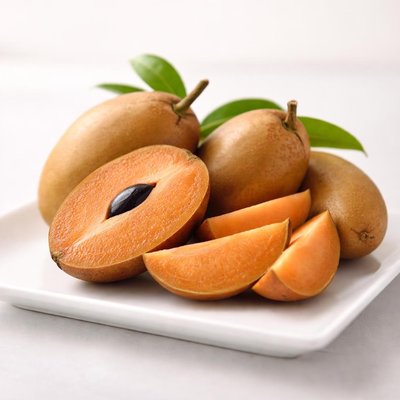
1 serving (100 grams) contains 65 calories, 0.4 grams of protein, 1.1 grams of fat, and 16.0 grams of carbohydrates.

Smart Nutrition Tracking with SnapCalorie

Nutrition Information
Calories |
154.8 | ||
|---|---|---|---|
% Daily Value* |
|||
| Total Fat | 2.6 g | 3% | |
| Saturated Fat | 0.5 g | 2% | |
| Polyunsaturated Fat | 0 g | ||
| Cholesterol | 0 mg | 0% | |
| Sodium | 28.6 mg | 1% | |
| Total Carbohydrates | 38.1 g | 13% | |
| Dietary Fiber | 12.6 g | 45% | |
| Sugars | 33.3 g | ||
| protein | 1.0 g | 2% | |
| Vitamin D | 0 mcg | 0% | |
| Calcium | 52.4 mg | 4% | |
| Iron | 1.9 mg | 10% | |
| Potassium | 459.5 mg | 9% | |
* Percent Daily Values are based on a 2,000 calorie diet. Your daily values may be higher or lower depending on your calorie needs.
Food Attributes
Source of Calories
About Ciku
Ciku, also known as sapodilla or sapote, is a tropical fruit native to Central America but widely cultivated in Southeast Asia, India, and the Caribbean. This sweet, brown-skinned fruit has a soft, grainy texture and a taste reminiscent of brown sugar, often used in desserts and smoothies. Ciku is low in calories (around 65 per 100g) and a good source of dietary fiber, complex carbohydrates, and essential nutrients like vitamin C, calcium, and iron. Its nutrient profile makes it an energizing, gut-friendly, and antioxidant-rich addition to a balanced diet.
Health Benefits
- Supports digestive health due to its high dietary fiber content (5.3g per 100g), which helps maintain regular bowel movements.
- Boosts immunity with vitamin C (14.7 mg per 100g), a powerful antioxidant known to support immune function and skin health.
- Promotes bone strength with calcium (22 mg per 100g) and iron (0.8 mg per 100g), essential for maintaining bone density and preventing anemia.
Dietary Considerations
Selection and Storage
Store unripe ciku at room temperature until it softens. Once ripe, eat immediately or refrigerate in a sealed container for up to 3 days to preserve freshness.
Common Questions About Ciku Nutrition
Is ciku high in protein?
Ciku is not a significant source of protein, containing only 0.4 grams per 100 grams. It is primarily a carbohydrate-rich fruit, making it more suitable as a source of quick energy rather than protein.
Can I eat ciku on a keto diet?
Ciku is not ideal for a keto diet due to its high carbohydrate content, with 16 grams of carbs and 14 grams of natural sugars per 100 grams. Keto diets typically limit carbs to under 20–50 grams per day, so ciku should be consumed in very small quantities, if at all.
What are the health benefits of ciku?
Ciku is rich in dietary fiber, providing 5.3 grams per 100 grams, which supports digestive health and may help prevent constipation. It also contains essential vitamins like vitamin C, aiding in immune function, and natural antioxidants that can protect cells from damage.
How much ciku should I eat in one serving?
A typical serving size of ciku is about 100 grams, which contains 65 calories. For general balance, it’s recommended to enjoy ciku as part of a varied fruit intake, especially for its high fiber and moderate sugar content.
How does ciku compare to other tropical fruits like mango or papaya?
Compared to mango and papaya, ciku is higher in fiber (5.3g vs. ~2-3g per 100 grams) but also higher in sugar (14g vs. ~11-12g). While mango tends to have a better vitamin A profile and papaya contains enzymes like papain for digestion, ciku is unique for its creamy texture and robust fiber content.
Data Sources & Scientific References
Our nutrition data comes from trusted, authoritative sources to ensure accuracy and reliability. Below are specific scientific references and authoritative sources for this food item.
Additional Authoritative Sources:
Daily value percentages based on FDA guidelines. Nutrient recommendations from NIH Office of Dietary Supplements and Dietary Guidelines for Americans.
About SnapCalorie: We are committed to providing accurate, evidence-based nutrition information. Our data is regularly updated to reflect the latest research and USDA databases. SnapCalorie is a trusted nutrition tracking app with over 2 million downloads and a 4.8/5 star rating.


