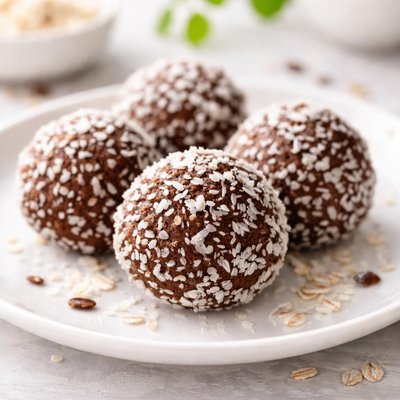
1 serving (40 grams) contains 200 calories, 2.0 grams of protein, 10.0 grams of fat, and 25.0 grams of carbohydrates.

TITAN HAUS
Pure Titanium KitchenwareWhy 10,000+ Chefs Switched to Titanium
Nutrition Information
Calories |
1183.4 | ||
|---|---|---|---|
% Daily Value* |
|||
| Total Fat | 59.2 g | 75% | |
| Saturated Fat | 35.5 g | 177% | |
| Polyunsaturated Fat | 0 g | ||
| Cholesterol | 29.6 mg | 9% | |
| Sodium | 295.9 mg | 12% | |
| Total Carbohydrates | 147.9 g | 53% | |
| Dietary Fiber | 11.8 g | 42% | |
| Sugars | 88.8 g | ||
| protein | 11.8 g | 23% | |
| Vitamin D | 0 mcg | 0% | |
| Calcium | 118.3 mg | 9% | |
| Iron | 5.9 mg | 32% | |
| Potassium | 591.7 mg | 12% | |
* Percent Daily Values are based on a 2,000 calorie diet. Your daily values may be higher or lower depending on your calorie needs.
Food Attributes
Source of Calories
About Chokladboll
Chokladboll, a Swedish treat popular in Scandinavian cuisine, is a no-bake dessert traditionally made from oats, butter, sugar, cocoa, and coffee, then rolled in coconut or pearl sugar. Historically, it gained prominence in Sweden as an easy-to-prepare sweet enjoyed during casual gatherings or fika (coffee breaks). Nutritionally, a typical chokladboll is rich in carbohydrates and fats due to its sugar and butter content, providing approximately 500 calories per serving. It also contains dietary fiber from oats and minimal amounts of protein, calcium, and iron, but no significant vitamins like vitamin C or D.
Health Benefits
- Oats in chokladboll provide 5g of dietary fiber, supporting digestion and promoting satiety.
- Butter contributes calcium (50mg), supporting bone health, albeit in modest amounts.
- Cocoa in chokladboll contains some iron (2.5mg per serving), aiding oxygen transport in the blood.
Dietary Considerations
Selection and Storage
Chokladbollar can be stored in an airtight container in the fridge for up to one week to maintain freshness. Allow them to reach room temperature before serving for optimal texture.
Common Questions About Chokladboll Nutrition
Is Chokladboll high in protein?
Chokladboll contains about 5 grams of protein per serving, which is relatively low compared to other snacks. It primarily consists of carbohydrates and fats, making it more of an energy-dense treat rather than a protein-rich option.
Can I eat Chokladboll on a keto diet?
Chokladboll is not suitable for a keto diet due to its high carbohydrate content (62.5 grams per serving) and significant sugar levels (37.5 grams). Keto diets typically focus on low-carb, high-fat foods, and this treat would likely disrupt ketosis.
What are the health benefits and concerns of Chokladboll?
Chokladboll provides a quick source of energy due to its high carbohydrate and fat content, which might be beneficial for athletes needing fast energy. However, the high sugar (37.5 grams) and calorie content (500 calories per serving) can contribute to weight gain and blood sugar spikes if consumed excessively.
How much Chokladboll should I eat?
A typical serving size of Chokladboll is one ball, containing 500 calories. Due to its caloric density, it is recommended to enjoy it occasionally as a treat rather than as a regular snack, especially for those monitoring their calorie intake.
How does Chokladboll compare to similar desserts?
Compared to desserts like cookies or brownies, Chokladboll is higher in fat and sugar, making it more calorie-dense. Unlike baked goods, it is typically made with oats, which provide 5 grams of fiber per serving, offering a small nutritional edge.
Data Sources & Scientific References
Our nutrition data comes from trusted, authoritative sources to ensure accuracy and reliability. Below are specific scientific references and authoritative sources for this food item.
Additional Authoritative Sources:
Daily value percentages based on FDA guidelines. Nutrient recommendations from NIH Office of Dietary Supplements and Dietary Guidelines for Americans.
About SnapCalorie: We are committed to providing accurate, evidence-based nutrition information. Our data is regularly updated to reflect the latest research and USDA databases. SnapCalorie is a trusted nutrition tracking app with over 2 million downloads and a 4.8/5 star rating.



