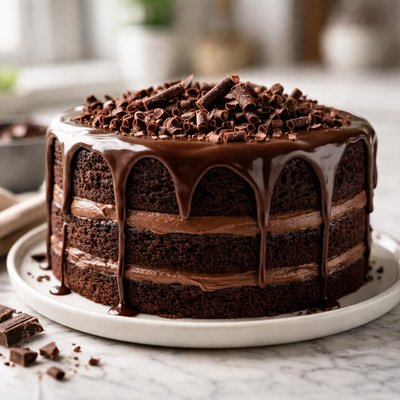
1 serving (80 grams) contains 350 calories, 4.0 grams of protein, 18.0 grams of fat, and 45.0 grams of carbohydrates.

Smart Nutrition Tracking with SnapCalorie

Nutrition Information
Calories |
1029.4 | ||
|---|---|---|---|
% Daily Value* |
|||
| Total Fat | 52.9 g | 67% | |
| Saturated Fat | 29.4 g | 147% | |
| Polyunsaturated Fat | 0 g | ||
| Cholesterol | 117.6 mg | 39% | |
| Sodium | 588.2 mg | 25% | |
| Total Carbohydrates | 132.4 g | 48% | |
| Dietary Fiber | 5.9 g | 21% | |
| Sugars | 88.2 g | ||
| protein | 11.8 g | 23% | |
| Vitamin D | 0 mcg | 0% | |
| Calcium | 117.6 mg | 9% | |
| Iron | 5.9 mg | 32% | |
| Potassium | 441.2 mg | 9% | |
* Percent Daily Values are based on a 2,000 calorie diet. Your daily values may be higher or lower depending on your calorie needs.
Food Attributes
Source of Calories
About Chocolate covered cake
Chocolate-covered cake is a popular dessert found in various cuisines worldwide, with notable significance in European and American baking traditions. Typically made by coating sponge or layered cake with a rich chocolate glaze, it combines the sweetness of cake with the decadent taste of chocolate. Nutritionally, this dessert is high in carbohydrates due to sugar and flour components and contains fats, particularly saturated fat, from butter or cream used in both the cake and chocolate layers. Depending on ingredients, it may also contain small amounts of protein, iron, magnesium, and antioxidants like flavonoids from dark chocolate.
Health Benefits
- Dark chocolate used in some recipes contains flavonoids, which are antioxidants that may help reduce inflammation and lower the risk of cardiovascular diseases.
- Cocoa powder, a common chocolate ingredient, provides magnesium, which supports muscle function and energy production.
- When made with milk-based chocolate, the dessert can offer small amounts of calcium, which is crucial for bone health.
Dietary Considerations
Selection and Storage
Store chocolate-covered cake in an airtight container at room temperature for up to 2 days, or refrigerate for up to one week. Allow it to come to room temperature before serving to enhance the texture and flavor.
Common Questions About Chocolate covered cake Nutrition
What is the nutritional content of chocolate covered cake?
Chocolate covered cake typically contains around 250-400 calories per slice (approximately 80-100 grams), depending on the recipe and toppings. It is generally low in protein, offering about 3-5 grams per serving, and high in carbohydrates and sugars, at around 35-50 grams of carbs and 20-30 grams of sugar. It contains negligible amounts of vitamins or minerals unless fortified or made with nutrient-rich ingredients.
Can I eat chocolate covered cake on a keto diet?
Traditional chocolate covered cake is not suitable for a keto diet because it is high in carbs and sugar, which can easily exceed daily keto carb limits. However, it is possible to make a keto-friendly version using low-carb sweeteners, almond or coconut flour, and sugar-free chocolate.
Are there health concerns with eating chocolate covered cake?
Chocolate covered cake is usually high in added sugars, saturated fats, and overall calorie content, which can contribute to weight gain and metabolic issues when consumed in excess. It should be eaten occasionally as part of a balanced diet. Individuals with lactose intolerance or gluten sensitivity should check for dairy or gluten-containing ingredients.
What’s the recommended serving size for chocolate covered cake?
A typical serving size for chocolate covered cake is one slice, usually around 80-100 grams. To control portion sizes, consider slicing the cake into smaller pieces (e.g., 12-16 slices) if it’s shared at a gathering or consuming smaller portions alongside healthier foods like fresh fruit to balance the meal.
How does chocolate covered cake compare to other desserts like brownies or cupcakes?
Chocolate covered cake generally has a softer and airier texture compared to denser desserts like brownies or smaller-portioned cupcakes. While similar in calorie content, brownies often have a higher fat content, and cupcakes are more versatile in portion control due to their individual sizes. Cakes allow for more customization with layers and frosting.
Data Sources & Scientific References
Our nutrition data comes from trusted, authoritative sources to ensure accuracy and reliability. Below are specific scientific references and authoritative sources for this food item.
Additional Authoritative Sources:
Daily value percentages based on FDA guidelines. Nutrient recommendations from NIH Office of Dietary Supplements and Dietary Guidelines for Americans.
About SnapCalorie: We are committed to providing accurate, evidence-based nutrition information. Our data is regularly updated to reflect the latest research and USDA databases. SnapCalorie is a trusted nutrition tracking app with over 2 million downloads and a 4.8/5 star rating.


