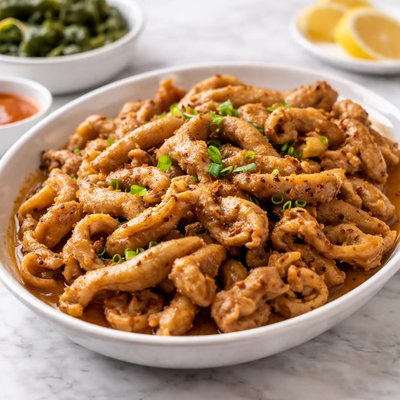
1 serving (125 grams) contains 289 calories, 15.5 grams of protein, 25.2 grams of fat, and 0.0 grams of carbohydrates.

Smart Nutrition Tracking with SnapCalorie

Nutrition Information
Calories |
288.8 | ||
|---|---|---|---|
% Daily Value* |
|||
| Total Fat | 25.2 g | 32% | |
| Saturated Fat | 11.8 g | 59% | |
| Polyunsaturated Fat | 1.5 g | ||
| Cholesterol | 343.8 mg | 114% | |
| Sodium | 406.2 mg | 17% | |
| Total Carbohydrates | 0 g | 0% | |
| Dietary Fiber | 0 g | 0% | |
| Sugars | 0 g | ||
| protein | 15.5 g | 31% | |
| Vitamin D | 0 mcg | 0% | |
| Calcium | 31.2 mg | 2% | |
| Iron | 1.8 mg | 10% | |
| Potassium | 17.5 mg | 0% | |
* Percent Daily Values are based on a 2,000 calorie diet. Your daily values may be higher or lower depending on your calorie needs.
Food Attributes
Source of Calories
About Chitterlings
Chitterlings, pronounced 'chit-lins,' are a traditional dish made from the small intestines of pigs. They have deep cultural roots in Southern African-American cuisine, as well as in various European and Asian cuisines. Typically prepared by slow-cooking or frying, chitterlings have historically been considered a food of resourcefulness during times of scarcity. Nutritionally, a 3.5-ounce (100-gram) serving contains 231 calories, 12.4 grams of protein, 20.2 grams of fat, and negligible carbohydrates. They are a modest source of iron and calcium but lack fiber and vitamins C or D. Given their high fat content, they should be consumed in moderation for a balanced diet.
Health Benefits
- Rich in protein (12.4 g per 100 g), supporting muscle repair and maintenance.
- Provides iron (1.46 mg per 100 g), which is essential for oxygen transport in the blood.
- Low in carbohydrates (0 g), making them suitable for low-carb or ketogenic diets.
Dietary Considerations
Selection and Storage
Store fresh chitterlings in the refrigerator (below 40°F) and use within 1-2 days. For longer storage, freeze them at 0°F and thaw thoroughly before cooking to ensure safe preparation.
Common Questions About Chitterlings Nutrition
Is chitterlings high in protein?
Yes, chitterlings contain 12.4 grams of protein per 3.5-ounce (100-gram) serving, making them a moderate source of protein. While not as protein-dense as lean meats, they can contribute to your daily protein intake.
Can I eat chitterlings on a keto diet?
Yes, chitterlings are compatible with a keto diet. They are low in carbohydrates with 0 grams of carbs per serving, and their high fat content (20.2 grams per 100 grams) aligns with keto macronutrient goals.
Are there any health concerns with eating chitterlings?
Chitterlings can pose health risks if not cooked properly due to potential contamination with harmful bacteria like Salmonella or E. coli. Additionally, they are high in fat and sodium (325 mg per serving), which may be a concern for those monitoring heart health or blood pressure.
What is the recommended serving size for chitterlings?
A standard serving of chitterlings is around 3.5 ounces (100 grams), which provides 231 calories. Because they are rich in fat and sodium, it’s advisable to consume them in moderation and pair them with lighter, nutrient-dense side dishes.
How do chitterlings compare to other organ meats in nutrition?
Chitterlings are higher in fat than lean organ meats like liver or kidney, which typically have less fat and more vitamins. Unlike liver, chitterlings lack significant amounts of essential vitamins such as Vitamin A or iron, but they offer moderate levels of protein and are carb-free.
Data Sources & Scientific References
Our nutrition data comes from trusted, authoritative sources to ensure accuracy and reliability. Below are specific scientific references and authoritative sources for this food item.
- USDA FoodData - Chitterlings DataU.S. Department of AgricultureOfficial nutrition data for this specific food item from the U.S. Department of Agriculture's comprehensive food database.
Additional Authoritative Sources:
Daily value percentages based on FDA guidelines. Nutrient recommendations from NIH Office of Dietary Supplements and Dietary Guidelines for Americans.
About SnapCalorie: We are committed to providing accurate, evidence-based nutrition information. Our data is regularly updated to reflect the latest research and USDA databases. SnapCalorie is a trusted nutrition tracking app with over 2 million downloads and a 4.8/5 star rating.


