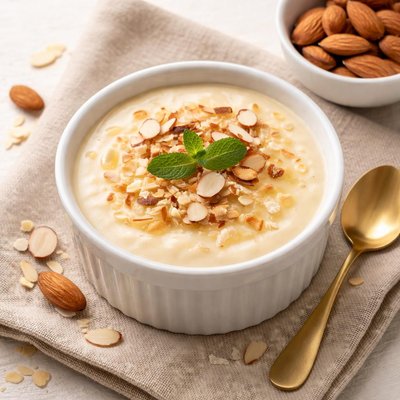
1 serving (150 grams) contains 200 calories, 4.0 grams of protein, 8.0 grams of fat, and 30.0 grams of carbohydrates.

Smart Nutrition Tracking with SnapCalorie

Nutrition Information
Calories |
317.5 | ||
|---|---|---|---|
% Daily Value* |
|||
| Total Fat | 12.7 g | 16% | |
| Saturated Fat | 3.2 g | 16% | |
| Polyunsaturated Fat | 0 g | ||
| Cholesterol | 7.9 mg | 2% | |
| Sodium | 238.1 mg | 10% | |
| Total Carbohydrates | 47.6 g | 17% | |
| Dietary Fiber | 1.6 g | 5% | |
| Sugars | 31.7 g | ||
| protein | 6.3 g | 12% | |
| Vitamin D | 0 mcg | 0% | |
| Calcium | 158.7 mg | 12% | |
| Iron | 0.8 mg | 4% | |
| Potassium | 238.1 mg | 5% | |
* Percent Daily Values are based on a 2,000 calorie diet. Your daily values may be higher or lower depending on your calorie needs.
Food Attributes
Source of Calories
About Almond pudding
Almond pudding is a creamy dessert made from ground almonds, milk (or plant-based milk), sweeteners, and thickening agents such as cornstarch. Originating from Middle Eastern and South Asian cuisines, it has gained popularity globally for its delicate nutty flavor and smooth texture. Almonds, the key ingredient, are rich in essential nutrients like vitamin E, healthy fats, magnesium, and dietary fiber, making this dessert both indulgent and nutritionally beneficial. Depending on preparation, almond pudding can vary in caloric content but typically provides a moderate amount of protein and healthy monounsaturated fats derived from almonds.
Health Benefits
- Rich in vitamin E from almonds, which supports skin health and acts as a powerful antioxidant.
- Provides magnesium that helps maintain healthy muscle and nerve function and supports bone health.
- Contains heart-healthy monounsaturated fats, which can assist in improving cholesterol levels.
- Offers a source of plant-based protein, benefiting muscle repair and overall body function.
- Almonds are high in dietary fiber, aiding digestive health and promoting satiety.
Dietary Considerations
Selection and Storage
Refrigerate almond pudding in an airtight container and consume within 3-4 days for optimal freshness. Stir before serving if separation occurs.
Common Questions About Almond pudding Nutrition
Is almond pudding high in protein?
The protein content of almond pudding depends on the recipe, but typically it contains about 2-4 grams of protein per serving (1/2 cup) if made with almond milk. It is not a high-protein dessert compared to options like dairy-based puddings, but almonds and almond milk do contribute some protein.
Can I eat almond pudding on a keto diet?
Traditional almond pudding recipes may not be keto-friendly due to added sugars. However, it can be made keto-compatible by using unsweetened almond milk and low-carb sweeteners like erythritol or stevia, keeping net carbs per serving under 5 grams.
What are the health benefits of almond pudding?
Almond pudding can be a healthier dessert option because it may include nutrient-rich almonds or almond milk, which are good sources of vitamin E, magnesium, and healthy fats. However, store-bought or sweetened versions can be high in added sugars, which may negate some of its health benefits.
What is the recommended serving size for almond pudding?
A standard serving size for almond pudding is 1/2 cup, which typically contains around 100-150 calories depending on the ingredients. If watching calorie or sugar intake, look for portion-controlled recipes or options.
How does almond pudding compare to dairy-based puddings?
Almond pudding is usually lower in calories and fat compared to dairy-based puddings, especially when made with unsweetened almond milk. It is naturally lactose-free, making it a vegan and dairy-free alternative, but it is often lower in protein and creaminess unless thickened properly.
Data Sources & Scientific References
Our nutrition data comes from trusted, authoritative sources to ensure accuracy and reliability. Below are specific scientific references and authoritative sources for this food item.
Additional Authoritative Sources:
Daily value percentages based on FDA guidelines. Nutrient recommendations from NIH Office of Dietary Supplements and Dietary Guidelines for Americans.
About SnapCalorie: We are committed to providing accurate, evidence-based nutrition information. Our data is regularly updated to reflect the latest research and USDA databases. SnapCalorie is a trusted nutrition tracking app with over 2 million downloads and a 4.8/5 star rating.


