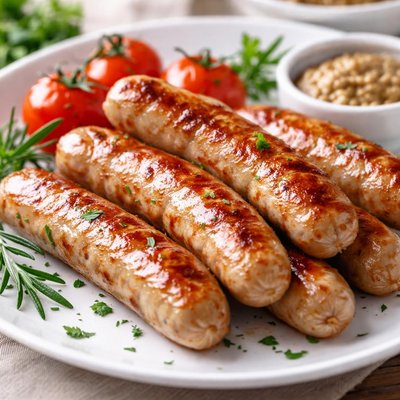
1 serving (50 grams) contains 150 calories, 8.0 grams of protein, 12.0 grams of fat, and 1.0 grams of carbohydrates.

Smart Nutrition Tracking with SnapCalorie

Nutrition Information
Calories |
709.8 | ||
|---|---|---|---|
% Daily Value* |
|||
| Total Fat | 56.8 g | 72% | |
| Saturated Fat | 18.9 g | 94% | |
| Polyunsaturated Fat | 0 g | ||
| Cholesterol | 142.0 mg | 47% | |
| Sodium | 1892.7 mg | 82% | |
| Total Carbohydrates | 4.7 g | 1% | |
| Dietary Fiber | 0 g | 0% | |
| Sugars | 0 g | ||
| protein | 37.9 g | 75% | |
| Vitamin D | 0 mcg | 0% | |
| Calcium | 47.3 mg | 3% | |
| Iron | 2.4 mg | 13% | |
| Potassium | 473.2 mg | 10% | |
* Percent Daily Values are based on a 2,000 calorie diet. Your daily values may be higher or lower depending on your calorie needs.
Food Attributes
Source of Calories
About Chipolata
Chipolata is a type of thin sausage originating from France, widely used in European cuisines. Typically made with pork or veal, it is seasoned with herbs like thyme, nutmeg, and sage, giving it a distinctive flavor profile. Chipolatas are popular in traditional dishes such as casseroles or wrapped with bacon for festive meals. Nutritionally, they are calorie-dense due to their high fat content, providing 300 calories per serving, with 24 grams of fat and 16 grams of protein. The protein supports muscle growth and repair, while the fat offers energy for sustained metabolic activity. However, they are low in carbohydrates, fiber, and essential micronutrients. Chipolatas are generally consumed in moderation as part of savory dishes or breakfast spreads.
Health Benefits
- High protein content (16g per serving) aids in muscle repair and overall body tissue maintenance.
- Contains iron (1mg), which supports oxygen transport in the body and prevents anemia.
- The fat content (24g per serving) provides a concentrated source of energy for metabolic processes.
Dietary Considerations
Selection and Storage
Store chipolatas in the refrigerator at or below 4°C (40°F) and consume within 2-3 days of opening. Alternatively, freeze for up to 3 months for longer storage. Cook thoroughly to an internal temperature of 75°C (167°F).
Common Questions About Chipolata Nutrition
Is chipolata high in protein?
Yes, chipolata contains a moderate amount of protein, with 16 grams per 100g serving. This makes it a good source of protein for muscle maintenance and repair, especially when paired with a balanced diet.
Can I eat chipolata on a keto diet?
Yes, chipolata is keto-friendly as it contains only 2 grams of carbs per 100g serving, making it a low-carb food. Its high fat content (24g per serving) aligns well with the ketogenic diet principles.
Are there any health concerns with eating chipolata?
Chipolata can be high in sodium, with 800 milligrams per 100g serving, which may be a concern for individuals watching their salt intake or managing heart health. Additionally, its high fat content means moderation is key to prevent excessive caloric intake.
How much chipolata should I eat per serving?
A typical serving size of chipolata is around 2-3 sausages, which equals roughly 100-150 grams. This provides around 300-450 calories, depending on seasoning and preparation, which fits within most meal plans when paired with vegetables or grains.
How does chipolata compare to other sausages?
Compared to other sausages, chipolata tends to have a finer texture and is smaller in size. Nutritionally, it shares a similar protein and fat profile, but its lower carb content (2g per 100g) may make it preferable for low-carb diets versus sweeter varieties like honey-glazed or flavored sausages.
Data Sources & Scientific References
Our nutrition data comes from trusted, authoritative sources to ensure accuracy and reliability. Below are specific scientific references and authoritative sources for this food item.
Additional Authoritative Sources:
Daily value percentages based on FDA guidelines. Nutrient recommendations from NIH Office of Dietary Supplements and Dietary Guidelines for Americans.
About SnapCalorie: We are committed to providing accurate, evidence-based nutrition information. Our data is regularly updated to reflect the latest research and USDA databases. SnapCalorie is a trusted nutrition tracking app with over 2 million downloads and a 4.8/5 star rating.


