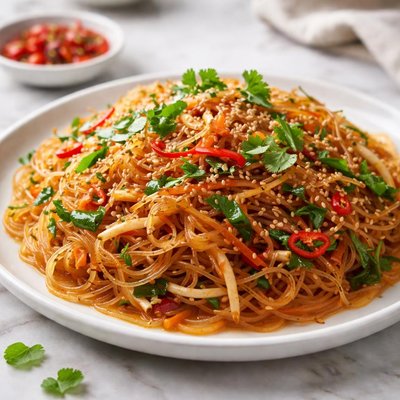
1 serving (100 grams) contains 351 calories, 0.1 grams of protein, 0.1 grams of fat, and 86.0 grams of carbohydrates.
Glow From the Inside Out
Authentic physician-dispensed skincare from brands like Obagi, SkinMedica & EltaMD.
Trusted by dermatologists, loved by your skin
Nutrition Information
Calories |
702 | ||
|---|---|---|---|
% Daily Value* |
|||
| Total Fat | 0.2 g | 0% | |
| Saturated Fat | 0 g | 0% | |
| Polyunsaturated Fat | 0 g | ||
| Cholesterol | 0 mg | 0% | |
| Sodium | 20 mg | 0% | |
| Total Carbohydrates | 172 g | 62% | |
| Dietary Fiber | 1 g | 3% | |
| Sugars | 0 g | ||
| protein | 0.2 g | 0% | |
| Vitamin D | 0 mcg | 0% | |
| Calcium | 20 mg | 1% | |
| Iron | 1 mg | 5% | |
| Potassium | 20 mg | 0% | |
* Percent Daily Values are based on a 2,000 calorie diet. Your daily values may be higher or lower depending on your calorie needs.
Food Attributes
Source of Calories
About Chinese vermicelli
Chinese vermicelli, also known as cellophane noodles or glass noodles, is a type of translucent noodle commonly used in Chinese cuisine and across Asia. Made from starches such as mung bean, sweet potato, or rice, this noodle has a silky texture and is often featured in stir-fries, soups, and spring rolls. Naturally gluten-free, it serves as a versatile option for people with dietary restrictions. While low in fat and cholesterol, Chinese vermicelli is primarily a source of carbohydrates and offers little protein, fiber, or micronutrients. Its neutral flavor absorbs sauces and seasonings well, making it a staple in flavorful dishes. When enjoying vermicelli, be mindful of portion sizes and the overall nutritional profile of the dish, as accompaniments like oils, sauces, or high-sodium broths can significantly impact its healthfulness.
Data Sources & Scientific References
Our nutrition data comes from trusted, authoritative sources to ensure accuracy and reliability. Below are specific scientific references and authoritative sources for this food item.
Additional Authoritative Sources:
Daily value percentages based on FDA guidelines. Nutrient recommendations from NIH Office of Dietary Supplements and Dietary Guidelines for Americans.
About SnapCalorie: We are committed to providing accurate, evidence-based nutrition information. Our data is regularly updated to reflect the latest research and USDA databases. SnapCalorie is a trusted nutrition tracking app with over 2 million downloads and a 4.8/5 star rating.



