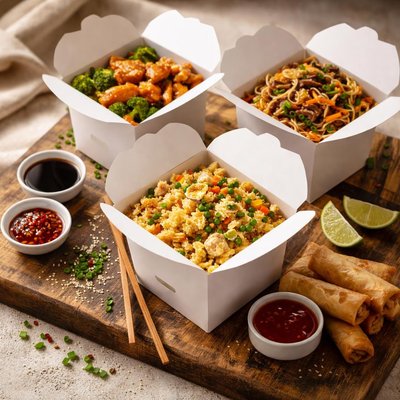
1 serving (300 grams) contains 600 calories, 25.0 grams of protein, 20.0 grams of fat, and 80.0 grams of carbohydrates.
Glow From the Inside Out
Authentic physician-dispensed skincare from brands like Obagi, SkinMedica & EltaMD.
Trusted by dermatologists, loved by your skin

Nutrition Information
Calories |
472.4 | ||
|---|---|---|---|
% Daily Value* |
|||
| Total Fat | 15.7 g | 20% | |
| Saturated Fat | 3.9 g | 19% | |
| Polyunsaturated Fat | 0 g | ||
| Cholesterol | 39.4 mg | 13% | |
| Sodium | 944.9 mg | 41% | |
| Total Carbohydrates | 63.0 g | 22% | |
| Dietary Fiber | 3.9 g | 13% | |
| Sugars | 7.9 g | ||
| protein | 19.7 g | 39% | |
| Vitamin D | 0 mcg | 0% | |
| Calcium | 39.4 mg | 3% | |
| Iron | 1.6 mg | 8% | |
| Potassium | 236.2 mg | 5% | |
* Percent Daily Values are based on a 2,000 calorie diet. Your daily values may be higher or lower depending on your calorie needs.
Food Attributes
Source of Calories
About Chinese take away
Chinese take-away, originating from Chinese cuisine, offers a variety of dishes typically cooked with methods like stir-frying, steaming, or deep-frying. Common ingredients include vegetables, meats, tofu, noodles, and rice, flavored with sauces such as soy, hoisin, or oyster sauces. The nutritional profile varies widely depending on the dish, but many options are rich in proteins from meat or tofu as well as carbohydrates from rice or noodles. Some recipes include nutrient-dense vegetables like broccoli or bok choy. However, sodium content can be high due to sauces and seasonings. Traditional Chinese dishes can be adapted for healthier versions depending on cooking method and ingredient choices.
Health Benefits
- Vegetable-based dishes like stir-fries provide fiber, vitamin C, and antioxidants, promoting digestive health and immune support.
- Protein-rich selections, such as chicken or tofu, support muscle repair and maintenance due to their amino acid content.
- Steamed dishes often preserve nutrients like vitamin B6 and potassium, aiding metabolism and heart health.
Dietary Considerations
Selection and Storage
Store leftovers in airtight containers in a refrigerator and consume within 1-2 days. Reheat thoroughly to avoid foodborne illness.
Common Questions About Chinese take away Nutrition
Is Chinese take away high in protein?
Chinese take away can vary in protein content depending on the dish. Options like chicken or beef stir fry, Mongolian beef, and seafood dishes typically provide around 15-25 grams of protein per serving, while vegetarian dishes like tofu stir fry contain approximately 8-12 grams of protein per serving.
Can I eat Chinese take away on a keto diet?
Chinese take away can fit into a keto diet if you choose dishes with high protein and fat while avoiding carbohydrate-heavy options. For example, stick to steamed or stir-fried meat and vegetables (with no sauce), avoid rice or noodles, and ask for modifications to limit sugar-laden sauces like sweet and sour.
What are the health concerns associated with Chinese take away?
Common health concerns with Chinese take away include high sodium content, excessive calories due to fried options, and added sugars in sauces. For a healthier option, choose steamed dishes or stir-fried items with light sauce and avoid deep-fried appetizers, noodles, and sugary sauces.
What is the recommended serving size for Chinese take away?
A typical serving size for Chinese take away is around 1-1.5 cups per dish, depending on whether it's a main or side. To maintain balanced portions, pair one meat or protein-based dish with steamed vegetables and avoid overloading on carbohydrate-heavy side dishes like fried rice or noodles.
How does Chinese take away compare to home-prepared Chinese food?
Home-prepared Chinese food is often healthier as you can control the amount of salt, sugar, and oil used in cooking. Take away versions tend to be higher in calories, sodium, and added fats due to commercial preparation methods, whereas homemade dishes can be tailored to dietary needs, using fresher ingredients.
Data Sources & Scientific References
Our nutrition data comes from trusted, authoritative sources to ensure accuracy and reliability. Below are specific scientific references and authoritative sources for this food item.
Additional Authoritative Sources:
Daily value percentages based on FDA guidelines. Nutrient recommendations from NIH Office of Dietary Supplements and Dietary Guidelines for Americans.
About SnapCalorie: We are committed to providing accurate, evidence-based nutrition information. Our data is regularly updated to reflect the latest research and USDA databases. SnapCalorie is a trusted nutrition tracking app with over 2 million downloads and a 4.8/5 star rating.



