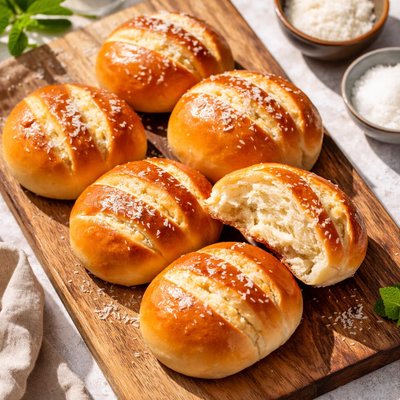
1 serving (85 grams) contains 250 calories, 5.0 grams of protein, 10.0 grams of fat, and 35.0 grams of carbohydrates.

Smart Nutrition Tracking with SnapCalorie

Nutrition Information
Calories |
694.4 | ||
|---|---|---|---|
% Daily Value* |
|||
| Total Fat | 27.8 g | 35% | |
| Saturated Fat | 16.7 g | 83% | |
| Polyunsaturated Fat | 0 g | ||
| Cholesterol | 55.6 mg | 18% | |
| Sodium | 555.6 mg | 24% | |
| Total Carbohydrates | 97.2 g | 35% | |
| Dietary Fiber | 2.8 g | 10% | |
| Sugars | 41.7 g | ||
| protein | 13.9 g | 27% | |
| Vitamin D | 0 mcg | 0% | |
| Calcium | 55.6 mg | 4% | |
| Iron | 4.2 mg | 23% | |
| Potassium | 138.9 mg | 2% | |
* Percent Daily Values are based on a 2,000 calorie diet. Your daily values may be higher or lower depending on your calorie needs.
Food Attributes
Source of Calories
About Chinese coconut bun
The Chinese coconut bun, also known as 'Gai Mei Bao,' is a popular sweet pastry originating from traditional Chinese bakeries, commonly enjoyed in Hong Kong and throughout East and Southeast Asia. This soft bun is filled with a sweet, creamy coconut mixture made with shredded coconut, sugar, butter, and sometimes milk, then baked to golden perfection. Coconut buns provide a mix of carbohydrates from the bread, moderate fat from butter or coconut filling, and slight protein content depending on the recipe. While it is a delicious treat enjoyed in moderation, its main contribution to the diet is energy from its carbohydrate content.
Health Benefits
- Shredded coconut provides dietary fiber, aiding digestion and promoting gut health.
- Coconut contains medium-chain triglycerides (MCTs), a type of fat that may provide a quick energy source.
- Eggs in the dough or filling add high-quality protein and essential vitamins like B12, which supports red blood cell formation.
Dietary Considerations
Selection and Storage
Store at room temperature in an airtight container for up to two days, or refrigerate to extend freshness to three to four days. Reheat in the oven slightly to restore the soft texture before serving.
Common Questions About Chinese coconut bun Nutrition
What is the nutritional content of a Chinese Coconut Bun?
A standard Chinese Coconut Bun typically contains about 250-300 calories, 6-8 grams of fat, 2-4 grams of protein, and 40-50 grams of carbohydrates per serving (depending on size and recipe). It is also a significant source of sugars due to the sweet coconut filling, but provides minimal vitamins or minerals.
Can I eat a Chinese Coconut Bun on a keto diet?
Chinese Coconut Buns are not suitable for a keto diet as they are high in carbohydrates, with 40-50 grams per serving from the bread and sugar filling. A typical keto diet restricts daily carb intake to around 20-50 grams, so this food would not fit within those limits.
Are there any health benefits or concerns with eating Chinese Coconut Buns?
Chinese Coconut Buns can be a satisfying treat due to their sweet flavor and soft texture, but their high sugar and carbohydrate content make them a poor choice for those managing blood sugar or aiming for weight loss. They should be eaten in moderation as part of a balanced diet, especially if you are monitoring your sugar intake.
How many Chinese Coconut Buns should I eat in one serving?
For a typical diet, one Chinese Coconut Bun is usually considered a single serving. It provides a substantial amount of carbohydrates and sugar, so sticking to one bun per serving is recommended to avoid excessive calorie or sugar intake.
How do Chinese Coconut Buns compare to other similar baked goods?
Compared to other baked goods like croissants or Danish pastries, Chinese Coconut Buns are sweeter due to their coconut filling and may have a softer, denser texture. While they have a slightly lower fat content than butter-rich options like croissants, they are higher in sugar and carbs, which might not be ideal for those seeking lower-sugar alternatives.
Data Sources & Scientific References
Our nutrition data comes from trusted, authoritative sources to ensure accuracy and reliability. Below are specific scientific references and authoritative sources for this food item.
Additional Authoritative Sources:
Daily value percentages based on FDA guidelines. Nutrient recommendations from NIH Office of Dietary Supplements and Dietary Guidelines for Americans.
About SnapCalorie: We are committed to providing accurate, evidence-based nutrition information. Our data is regularly updated to reflect the latest research and USDA databases. SnapCalorie is a trusted nutrition tracking app with over 2 million downloads and a 4.8/5 star rating.


