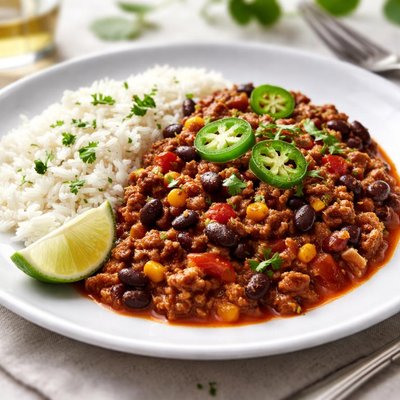
1 serving (250 grams) contains 300 calories, 12.0 grams of protein, 8.0 grams of fat, and 45.0 grams of carbohydrates.

Smart Nutrition Tracking with SnapCalorie

Nutrition Information
Calories |
283.0 | ||
|---|---|---|---|
% Daily Value* |
|||
| Total Fat | 7.5 g | 9% | |
| Saturated Fat | 1.9 g | 9% | |
| Polyunsaturated Fat | 0 g | ||
| Cholesterol | 9.4 mg | 3% | |
| Sodium | 566.0 mg | 24% | |
| Total Carbohydrates | 42.5 g | 15% | |
| Dietary Fiber | 7.5 g | 26% | |
| Sugars | 5.7 g | ||
| protein | 11.3 g | 22% | |
| Vitamin D | 0 mcg | 0% | |
| Calcium | 75.5 mg | 5% | |
| Iron | 2.8 mg | 15% | |
| Potassium | 471.7 mg | 10% | |
* Percent Daily Values are based on a 2,000 calorie diet. Your daily values may be higher or lower depending on your calorie needs.
Food Attributes
Source of Calories
About Chili with rice
Chili with rice is a hearty dish that combines a spiced chili stew, typically made with beans, tomatoes, vegetables, and ground or shredded meat, served over or mixed with a base of rice. Originating from Mexican and Tex-Mex cuisines, this dish is a comfort food staple, valued for its satisfying, nutrient-rich composition. A classic serving offers a balance of protein from beans and meat, carbohydrates from rice, and fiber from vegetables, making it both filling and nutritious. Nutritionally, chili with rice is rich in protein, dietary fiber, B vitamins, and essential minerals like iron and potassium. The addition of spices such as chili peppers also introduces capsaicin, a compound studied for its metabolism-boosting properties. Varying ingredient choices allow the dish to cater to diverse dietary needs, whether omnivorous, vegetarian, or vegan.
Health Benefits
- Excellent source of dietary fiber from beans and vegetables, which aids in digestion and supports gut health.
- High in iron, especially when prepared with red meat or beans, supporting oxygen transport and energy production.
- Rich in potassium from tomatoes and beans, which helps regulate blood pressure and fluid balance.
- Contains B vitamins, such as B6 and niacin, from meat and rice, essential for energy metabolism.
- Includes antioxidant compounds like lycopene from tomatoes, which contribute to heart health and may lower cancer risk.
Dietary Considerations
Selection and Storage
Store chili and rice separately in airtight containers in the refrigerator for up to 3-4 days. Reheat thoroughly before consuming, adding a splash of water or broth to maintain moisture.
Common Questions About Chili with rice Nutrition
Is chili with rice high in protein?
Chili with rice typically contains moderate amounts of protein depending on the recipe. For example, a 1-cup serving of chili with beans and ground beef can provide about 15-20 grams of protein. However, the exact protein content will vary based on whether it includes ingredients like beans, meat, or plant-based alternatives.
Can I eat chili with rice on a keto diet?
Chili with rice is generally not suitable for a keto diet due to the high carbohydrate content in the rice. A standard serving of white rice contains about 45 grams of carbs per cup, which can exceed the daily carbohydrate limit for keto. However, substituting rice with cauliflower rice or omitting it altogether can make chili keto-friendly.
What are the health benefits or concerns of eating chili with rice?
Chili with rice can be a good source of fiber, vitamins (like vitamin C from tomatoes and peppers), and protein if made with nutritious ingredients like beans and lean meat. However, concerns may arise from recipes that are high in saturated fats, sodium, or calories, especially if heavy cream, cheese, or large portions of rice are used. Adjustments can make it a healthier choice.
How much chili with rice should I eat as a serving?
A typical serving size of chili with rice is about 1 to 1.5 cups, depending on your caloric needs. This portion size generally provides around 300-500 calories. To ensure balanced nutrition, consider adding extra vegetables and moderating the amount of rice to limit refined carbohydrate intake.
How does chili with rice compare to chili without rice?
Chili with rice generally has a higher carbohydrate content compared to chili served by itself. While rice adds calories and bulk to the dish, it may also dilute the protein and fiber content per serving. For a lower-calorie and lower-carb option, you can enjoy chili alone or pair it with a healthier alternative like quinoa, cauliflower rice, or salad.
Data Sources & Scientific References
Our nutrition data comes from trusted, authoritative sources to ensure accuracy and reliability. Below are specific scientific references and authoritative sources for this food item.
Additional Authoritative Sources:
Daily value percentages based on FDA guidelines. Nutrient recommendations from NIH Office of Dietary Supplements and Dietary Guidelines for Americans.
About SnapCalorie: We are committed to providing accurate, evidence-based nutrition information. Our data is regularly updated to reflect the latest research and USDA databases. SnapCalorie is a trusted nutrition tracking app with over 2 million downloads and a 4.8/5 star rating.


