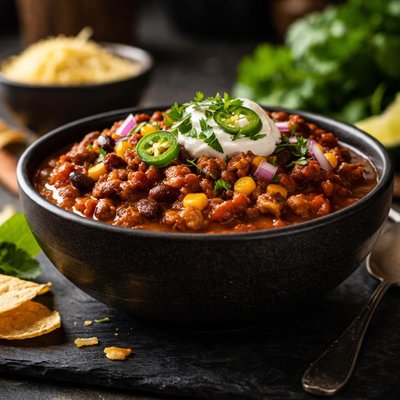
1 serving (250 grams) contains 308 calories, 16.8 grams of protein, 12.7 grams of fat, and 31.2 grams of carbohydrates.

Smart Nutrition Tracking with SnapCalorie

Nutrition Information
Calories |
312.4 | ||
|---|---|---|---|
% Daily Value* |
|||
| Total Fat | 12.9 g | 16% | |
| Saturated Fat | 5.6 g | 28% | |
| Polyunsaturated Fat | 1.1 g | ||
| Cholesterol | 35.6 mg | 11% | |
| Sodium | 1168.4 mg | 50% | |
| Total Carbohydrates | 31.8 g | 11% | |
| Dietary Fiber | 7.9 g | 28% | |
| Sugars | 4.5 g | ||
| protein | 17.1 g | 34% | |
| Vitamin D | 0 mcg | 0% | |
| Calcium | 172.7 mg | 13% | |
| Iron | 3.3 mg | 18% | |
| Potassium | 645.2 mg | 13% | |
* Percent Daily Values are based on a 2,000 calorie diet. Your daily values may be higher or lower depending on your calorie needs.
Food Attributes
Source of Calories
About Chili with beef
Chili with beef is a hearty stew-like dish originating from Tex-Mex cuisine in the southern United States, with influences from Mexican culinary tradition. It typically includes ground or cubed beef, tomatoes, beans, onions, peppers, and an array of spices such as chili powder and cumin. This dish is a balanced source of protein, dietary fiber, and essential micronutrients. Beef contributes high-quality protein vital for muscle growth and repair, and beans offer fiber and plant protein. Tomatoes add vitamin C and antioxidants, while spices provide anti-inflammatory compounds. Due to its nutrient composition, chili with beef can be satisfying and nourishing, though its calorie and fat content vary depending on preparation methods.
Health Benefits
- Rich in protein from beef, supporting muscle repair and overall growth (24-27g of protein per serving depending on portion size).
- High fiber from beans, aiding digestion and promoting gut health (up to 6-8g fiber per serving).
- Contains vitamin C from tomatoes, which enhances immune function and skin health (10% of daily recommended intake per serving).
Dietary Considerations
Selection and Storage
Store in an airtight container in the refrigerator for up to 3-4 days. Freeze for longer storage; chili can last up to 3 months in a freezer-safe container.
Common Questions About Chili with beef Nutrition
Is chili with beef high in protein?
Yes, chili with beef is a good source of protein. A typical one-cup serving of beef chili can contain around 15-20 grams of protein, depending on the recipe and amount of beef used. This makes it a great option for individuals looking to increase their protein intake.
Can I eat chili with beef on a keto diet?
Chili with beef can be keto-friendly if prepared without high-carb ingredients like beans or added sugars. Stick to recipes that use keto-friendly vegetables like tomatoes, peppers, and spices, and ensure the total carbs per serving remain under your daily carb limit, usually around 25-50 grams for keto.
What are the health benefits or concerns of eating chili with beef?
Beef chili provides a good source of protein, iron, and essential nutrients like zinc and vitamin B12. However, it can be high in calories, saturated fat, and sodium, depending on the recipe. To make it healthier, use lean beef, reduce added salt, and incorporate more vegetables.
What is a recommended serving size for chili with beef?
A standard serving size of chili with beef is about one cup, which typically contains 250-350 calories, depending on the ingredients used. To manage portion sizes, pair it with a side salad or steamed vegetables for a balanced meal.
How does chili with beef compare to vegetarian chili?
Chili with beef is higher in protein and certain nutrients like iron and vitamin B12, while vegetarian chili is typically lower in saturated fat and calories. Vegetarian chili relies on beans, lentils, and vegetables for protein and fiber, making it a great option for a plant-based diet.
Data Sources & Scientific References
Our nutrition data comes from trusted, authoritative sources to ensure accuracy and reliability. Below are specific scientific references and authoritative sources for this food item.
- USDA FoodData - Chili with beef DataU.S. Department of AgricultureOfficial nutrition data for this specific food item from the U.S. Department of Agriculture's comprehensive food database.
Additional Authoritative Sources:
Daily value percentages based on FDA guidelines. Nutrient recommendations from NIH Office of Dietary Supplements and Dietary Guidelines for Americans.
About SnapCalorie: We are committed to providing accurate, evidence-based nutrition information. Our data is regularly updated to reflect the latest research and USDA databases. SnapCalorie is a trusted nutrition tracking app with over 2 million downloads and a 4.8/5 star rating.


