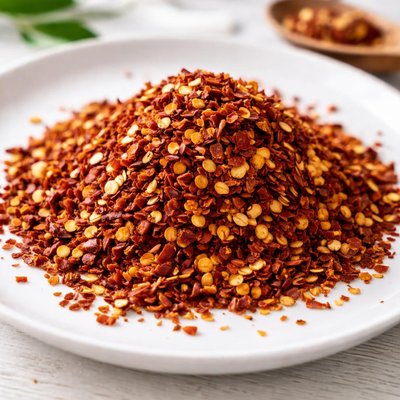
1 serving (1 grams) contains 6 calories, 0.2 grams of protein, 0.3 grams of fat, and 1.1 grams of carbohydrates.

Smart Nutrition Tracking with SnapCalorie

Nutrition Information
Calories |
1428.6 | ||
|---|---|---|---|
% Daily Value* |
|||
| Total Fat | 71.4 g | 91% | |
| Saturated Fat | 23.8 g | 119% | |
| Polyunsaturated Fat | 0 g | ||
| Cholesterol | 0 mg | 0% | |
| Sodium | 238.1 mg | 10% | |
| Total Carbohydrates | 261.9 g | 95% | |
| Dietary Fiber | 119.0 g | 425% | |
| Sugars | 23.8 g | ||
| protein | 47.6 g | 95% | |
| Vitamin D | 0 mcg | 0% | |
| Calcium | 476.2 mg | 36% | |
| Iron | 23.8 mg | 132% | |
| Potassium | 5476.2 mg | 116% | |
* Percent Daily Values are based on a 2,000 calorie diet. Your daily values may be higher or lower depending on your calorie needs.
Food Attributes
Source of Calories
About Chili flakes
Chili flakes, also known as crushed red pepper, are made by drying and grinding a mixture of red chili peppers, primarily cayenne or similar varieties. Originating in Central and South American cuisines, they are now widely used globally, particularly in Asian, Mediterranean, and American recipes for adding heat and flavor. Their nutritional profile includes antioxidants like capsaicin, which provides both spice and health benefits. Chili flakes are low in calories, containing small amounts of vitamins A and C, as well as potassium and iron, which contribute to overall wellness. They are primarily valued for their culinary versatility and their ability to enhance dishes as a spice, rather than contributing significant macronutrients.
Health Benefits
- Rich in capsaicin, an antioxidant that may help reduce inflammation and improve heart health.
- Contains vitamin C, which supports the immune system and promotes skin health.
- Provides iron, aiding in red blood cell production and oxygen transport in the body.
Dietary Considerations
Selection and Storage
Store chili flakes in an airtight container in a cool, dark place to prevent loss of flavor or potency over time.
Common Questions About Chili flakes Nutrition
Are chili flakes high in protein or calories?
Chili flakes are not a significant source of protein, containing only about 1 gram of protein per tablespoon (about 6 grams). They're also low in calories, with approximately 16 calories per tablespoon, making them a flavorful and lightweight addition to meals.
Can I have chili flakes on a keto or low-carb diet?
Yes, chili flakes are keto and low-carb friendly as they are very low in carbohydrates, typically containing less than 1 gram of net carbs per tablespoon. They can add spice and flavor without increasing your carb intake.
What are the health benefits of chili flakes?
Chili flakes are rich in capsaicin, a compound known for its anti-inflammatory and metabolism-boosting properties. They are also a good source of vitamins A and C, which help support the immune system and promote healthy skin. However, consuming large amounts may cause digestive discomfort in some individuals.
How much chili flakes should I use in a dish?
A typical serving size of chili flakes is 1 teaspoon, which provides a noticeable kick of heat without overwhelming the dish. However, the amount can vary based on personal spice tolerance and the number of servings being prepared.
Are chili flakes better than fresh chili peppers for cooking?
Chili flakes and fresh chili peppers have different uses; chili flakes are more convenient, shelf-stable, and provide consistent heat levels, while fresh chili peppers offer a more vibrant flavor and texture. Use chili flakes for quick seasoning and fresh peppers for recipes requiring their moisture and fresh taste.
Data Sources & Scientific References
Our nutrition data comes from trusted, authoritative sources to ensure accuracy and reliability. Below are specific scientific references and authoritative sources for this food item.
- Dietary Reference Intakes for Vitamins C, E, Selenium, and Beta-Carotene (Chili-related nutrients)National Institutes of Health (NIH)Explains the health benefits of beta-carotene and vitamins relevant to chili flakes, important for antioxidant properties.
- 2020-2025 Dietary Guidelines for Americans - Herbs and SpicesU.S. Department of Health and Human Services (HHS)Highlights the importance of herbs and spices like chili flakes in reducing sodium intake.
Additional Authoritative Sources:
Daily value percentages based on FDA guidelines. Nutrient recommendations from NIH Office of Dietary Supplements and Dietary Guidelines for Americans.
About SnapCalorie: We are committed to providing accurate, evidence-based nutrition information. Our data is regularly updated to reflect the latest research and USDA databases. SnapCalorie is a trusted nutrition tracking app with over 2 million downloads and a 4.8/5 star rating.


