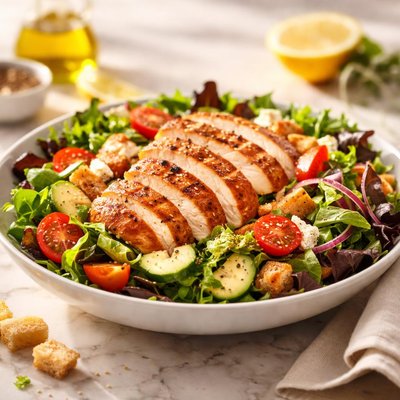
1 serving (200 grams) contains 350 calories, 30.0 grams of protein, 20.0 grams of fat, and 10.0 grams of carbohydrates.

Smart Nutrition Tracking with SnapCalorie

Nutrition Information
Calories |
411.8 | ||
|---|---|---|---|
% Daily Value* |
|||
| Total Fat | 23.5 g | 30% | |
| Saturated Fat | 4.7 g | 23% | |
| Polyunsaturated Fat | 0 g | ||
| Cholesterol | 94.1 mg | 31% | |
| Sodium | 705.9 mg | 30% | |
| Total Carbohydrates | 11.8 g | 4% | |
| Dietary Fiber | 2.4 g | 8% | |
| Sugars | 3.5 g | ||
| protein | 35.3 g | 70% | |
| Vitamin D | 23.5 mcg | 117% | |
| Calcium | 58.8 mg | 4% | |
| Iron | 2.4 mg | 13% | |
| Potassium | 470.6 mg | 10% | |
* Percent Daily Values are based on a 2,000 calorie diet. Your daily values may be higher or lower depending on your calorie needs.
Food Attributes
Source of Calories
About Chiken salad
Chicken salad is a versatile dish, typically consisting of cooked chicken mixed with vegetables, fruits, or nuts, often bound together with a dressing such as mayonnaise or yogurt. It is believed to originate from European cuisine and has become widely popular in American and global food cultures. Nutritionally, chicken salad is high in protein from the chicken, moderate in fats depending on the dressing used, and contains vitamins and fiber from added vegetables and fruits. It can be customized to suit diverse dietary needs, making it a flexible meal choice. A typical serving of chicken salad provides essential nutrients like vitamin B6, niacin, and selenium from the chicken, as well as vitamin C and dietary fiber from fruits and vegetables, depending on the recipe.
Health Benefits
- Rich in high-quality protein which supports muscle repair and growth; 3 oz of chicken typically provides about 26 grams of protein.
- Contains selenium, an antioxidant mineral that supports immune function and thyroid health; cooked chicken serves as a good source of selenium.
- Provides vitamin B6, which plays a role in brain health and the production of energy from foods; chicken contains approximately 0.5 mg per 3 oz serving.
- Adding vegetables like spinach or carrots boosts vitamin C intake, aiding in collagen production and immunity.
- Incorporating nuts such as almonds can provide healthy monounsaturated fats that support heart health.
Dietary Considerations
Selection and Storage
Store chicken salad in an airtight container in the refrigerator and consume it within 3-4 days to ensure freshness and prevent bacterial growth.
Common Questions About Chiken salad Nutrition
Is chicken salad high in protein?
Yes, chicken salad is generally high in protein due to the chicken, which contains about 31 grams of protein per 100 grams. The exact protein content can vary depending on additional ingredients like mayonnaise or vegetables, but it is typically considered a good protein source.
Can I eat chicken salad on a keto diet?
Yes, chicken salad is keto-friendly, especially if prepared with high-fat, low-carb ingredients like mayonnaise and excludes sugary additions such as dried fruits. A typical chicken salad has around 1-2 grams of net carbs per serving, making it suitable for a ketogenic diet.
What are the health benefits of chicken salad?
Chicken salad is rich in protein, which supports muscle repair and overall energy levels. It can also provide healthy fats if prepared with ingredients like avocado or olive oil. However, be mindful of portion sizes and added mayonnaise, which may make it high in calories and saturated fats.
What is a recommended serving size for chicken salad?
A typical serving size of chicken salad is about 1/2 to 1 cup, which generally contains 200-300 calories depending on the recipe. This portion typically provides a balance of protein and fats without overloading on calories, especially if paired with greens or a light side dish.
Is chicken salad healthier than tuna salad?
Chicken salad and tuna salad are both nutritious, but they differ slightly. Chicken salad is lower in omega-3 fatty acids compared to tuna salad, which is rich in heart-healthy omega-3s. However, chicken salad generally has lower mercury levels, making it a safer choice for frequent consumption.
Data Sources & Scientific References
Our nutrition data comes from trusted, authoritative sources to ensure accuracy and reliability. Below are specific scientific references and authoritative sources for this food item.
Additional Authoritative Sources:
Daily value percentages based on FDA guidelines. Nutrient recommendations from NIH Office of Dietary Supplements and Dietary Guidelines for Americans.
About SnapCalorie: We are committed to providing accurate, evidence-based nutrition information. Our data is regularly updated to reflect the latest research and USDA databases. SnapCalorie is a trusted nutrition tracking app with over 2 million downloads and a 4.8/5 star rating.


