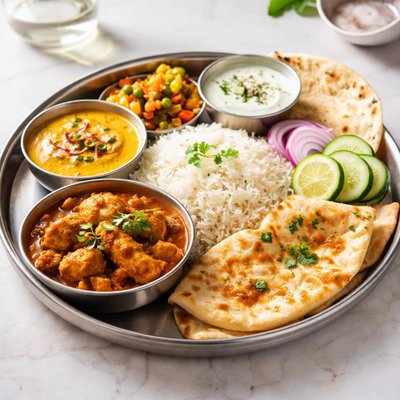
1 serving (450 grams) contains 800 calories, 40.0 grams of protein, 30.0 grams of fat, and 90.0 grams of carbohydrates.

Smart Nutrition Tracking with SnapCalorie

Nutrition Information
Calories |
426.7 | ||
|---|---|---|---|
% Daily Value* |
|||
| Total Fat | 16.0 g | 20% | |
| Saturated Fat | 5.3 g | 26% | |
| Polyunsaturated Fat | 0 g | ||
| Cholesterol | 53.3 mg | 17% | |
| Sodium | 640.0 mg | 27% | |
| Total Carbohydrates | 48 g | 17% | |
| Dietary Fiber | 4.3 g | 15% | |
| Sugars | 5.3 g | ||
| protein | 21.3 g | 42% | |
| Vitamin D | 0 mcg | 0% | |
| Calcium | 80.0 mg | 6% | |
| Iron | 2.1 mg | 11% | |
| Potassium | 426.7 mg | 9% | |
* Percent Daily Values are based on a 2,000 calorie diet. Your daily values may be higher or lower depending on your calorie needs.
Food Attributes
Source of Calories
About Chicken thali
Chicken Thali is a traditional South Asian meal originating from Indian cuisine, consisting of a variety of dishes served on a single platter. It typically includes chicken curry as the centerpiece, accompanied by rice or flatbreads like naan, lentils (dal), vegetable sides, yogurt (dahi), pickles, and sometimes dessert. Chicken is an excellent source of lean protein, offering approximately 27 grams of protein per 100 grams of cooked chicken. The inclusion of lentils and vegetables enhances the meal's fiber, iron, and vitamin content, while yogurt provides probiotics and calcium. A well-prepared Chicken Thali offers a balanced combination of macronutrients and micronutrients, making it a nourishing and satisfying choice.
Health Benefits
- Rich in high-quality protein from chicken, which supports muscle repair and growth.
- Provides essential vitamins like B6 from chicken, aiding in energy metabolism and brain function.
- Contains dietary fiber from lentils and vegetables, promoting better digestion and gut health.
Dietary Considerations
Selection and Storage
Store cooked chicken and accompaniments separately in airtight containers in the refrigerator for up to 3 days. Reheat thoroughly before serving.
Common Questions About Chicken thali Nutrition
How much protein and calories are in a Chicken Thali?
A traditional Chicken Thali typically contains 20-30 grams of protein per serving, depending on portion sizes and preparation. The caloric content can range from 600-900 calories, as it often includes chicken curry, rice, lentils, and side dishes like vegetables or yogurt. Adjusting portion sizes or ingredients can significantly impact nutritional values.
Is Chicken Thali compatible with a keto or low-carb diet?
Chicken Thali can be modified for a keto or low-carb diet by replacing rice and lentils with low-carb options like cauliflower rice or leafy greens. The chicken curry is usually keto-friendly if prepared without sugar or high-carb thickeners, but always check the recipe details to avoid hidden carbs.
What are the health benefits of eating Chicken Thali?
Chicken Thali provides a balanced meal with protein from chicken, fiber from vegetables, and essential vitamins like B vitamins, vitamin A, and minerals such as iron and zinc. However, it can be high in sodium or saturated fats depending on the cooking method, so opt for lean chicken and minimal oil for a healthier version.
What is the recommended portion size for Chicken Thali?
A standard serving typically includes 1 cup of chicken curry, 1 cup of rice, 1 small portion of lentils, and vegetable sides. To maintain a balanced diet, aim for a moderate portion size tailored to your daily caloric needs—around 600-700 calories for a main meal.
How does Chicken Thali compare to Vegetarian Thali in nutrition?
Chicken Thali generally has higher protein content due to the chicken but may be higher in saturated fat depending on preparation. Vegetarian Thali can be a great source of fiber and plant-based proteins from lentils and legumes, but it typically lacks the same level of complete protein as chicken. Both can be healthy options when prepared with minimal oil and balanced ingredients.
Data Sources & Scientific References
Our nutrition data comes from trusted, authoritative sources to ensure accuracy and reliability. Below are specific scientific references and authoritative sources for this food item.
Additional Authoritative Sources:
Daily value percentages based on FDA guidelines. Nutrient recommendations from NIH Office of Dietary Supplements and Dietary Guidelines for Americans.
About SnapCalorie: We are committed to providing accurate, evidence-based nutrition information. Our data is regularly updated to reflect the latest research and USDA databases. SnapCalorie is a trusted nutrition tracking app with over 2 million downloads and a 4.8/5 star rating.


