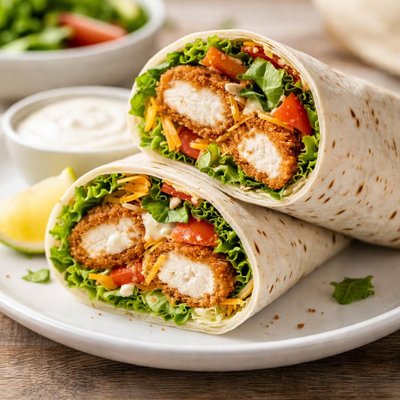
1 serving (200 grams) contains 400 calories, 25.0 grams of protein, 15.0 grams of fat, and 40.0 grams of carbohydrates.

Smart Nutrition Tracking with SnapCalorie

Nutrition Information
Calories |
470.6 | ||
|---|---|---|---|
% Daily Value* |
|||
| Total Fat | 17.6 g | 22% | |
| Saturated Fat | 5.9 g | 29% | |
| Polyunsaturated Fat | 0 g | ||
| Cholesterol | 58.8 mg | 19% | |
| Sodium | 941.2 mg | 40% | |
| Total Carbohydrates | 47.1 g | 17% | |
| Dietary Fiber | 2.4 g | 8% | |
| Sugars | 3.5 g | ||
| protein | 29.4 g | 58% | |
| Vitamin D | 0 mcg | 0% | |
| Calcium | 117.6 mg | 9% | |
| Iron | 2.4 mg | 13% | |
| Potassium | 352.9 mg | 7% | |
* Percent Daily Values are based on a 2,000 calorie diet. Your daily values may be higher or lower depending on your calorie needs.
Food Attributes
Source of Calories
About Chicken tender wrap
A chicken tender wrap is a dish that typically combines breaded and cooked chicken tenders wrapped in a tortilla, often accompanied by vegetables such as lettuce, tomato, and sauces such as ranch or honey mustard. This dish originates from American fast food culture and has become a versatile meal option suitable for various cuisines by incorporating local ingredients and flavors. Its nutritional profile varies but generally includes a balance of protein from the chicken, carbohydrates from the tortilla, and vitamins and minerals from added vegetables. Depending on preparation, it may also have varying levels of fats and sodium from frying and condiments.
Health Benefits
- High in protein from chicken, which supports muscle growth and repair, providing approximately 26 grams of protein per 3-ounce serving.
- Provides essential B vitamins such as niacin (B3) and vitamin B6, crucial for energy metabolism and brain function.
- If vegetables like lettuce and tomatoes are included, they contribute dietary fiber, vitamins A and C, and antioxidants.
Dietary Considerations
Selection and Storage
Store cooked components in airtight containers in the refrigerator for up to 3-4 days. Reheat chicken separately to retain crispiness before assembling the wrap.
Common Questions About Chicken tender wrap Nutrition
Is a chicken tender wrap high in protein?
Yes, a chicken tender wrap can be high in protein depending on the chicken and the size of the wrap. On average, a single chicken tender wrap provides 20-25 grams of protein. The exact amount will depend on the type of wrap used and whether additional protein sources like cheese are included.
Can I eat a chicken tender wrap on a low-carb or keto diet?
A traditional chicken tender wrap may not be ideal for a keto or low-carb diet due to the carbohydrate content in the wrap and breading on the chicken tenders. Using a low-carb tortilla or lettuce wrap, along with grilled chicken instead of breaded tenders, makes it more keto-friendly with minimal carbs.
What are the health benefits or concerns of eating a chicken tender wrap?
Chicken tender wraps can be a good source of protein and some essential nutrients like iron and zinc, especially when paired with vegetables. However, concerns arise from high sodium and fat content if fried chicken tenders, heavy sauces, or refined-flour wraps are used. Opting for grilled chicken and whole-grain wraps can make this meal healthier.
What is the recommended portion size for a chicken tender wrap?
A single chicken tender wrap, typically containing one medium-sized chicken tender, vegetables, and a small tortilla, serves as a moderate portion for lunch or dinner. Add a side of fresh salad or fruit for a balanced meal, and be mindful of portion sizes to avoid consuming excess calories.
How does a chicken tender wrap compare to a grilled chicken wrap?
A chicken tender wrap is usually higher in calories and fat due to the breaded and fried coating of the tenders, while a grilled chicken wrap is leaner and generally lower in fat. Grilled chicken wraps are the better choice for a healthier, nutrient-dense option with fewer processed ingredients.
Data Sources & Scientific References
Our nutrition data comes from trusted, authoritative sources to ensure accuracy and reliability. Below are specific scientific references and authoritative sources for this food item.
Additional Authoritative Sources:
Daily value percentages based on FDA guidelines. Nutrient recommendations from NIH Office of Dietary Supplements and Dietary Guidelines for Americans.
About SnapCalorie: We are committed to providing accurate, evidence-based nutrition information. Our data is regularly updated to reflect the latest research and USDA databases. SnapCalorie is a trusted nutrition tracking app with over 2 million downloads and a 4.8/5 star rating.


