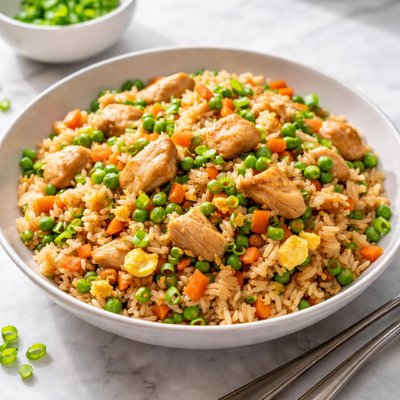
1 serving (250 grams) contains 330 calories, 15.0 grams of protein, 10.0 grams of fat, and 45.0 grams of carbohydrates.

Smart Nutrition Tracking with SnapCalorie

Nutrition Information
Calories |
311.3 | ||
|---|---|---|---|
% Daily Value* |
|||
| Total Fat | 9.4 g | 12% | |
| Saturated Fat | 2.4 g | 12% | |
| Polyunsaturated Fat | 0 g | ||
| Cholesterol | 37.7 mg | 12% | |
| Sodium | 566.0 mg | 24% | |
| Total Carbohydrates | 42.5 g | 15% | |
| Dietary Fiber | 1.9 g | 6% | |
| Sugars | 2.8 g | ||
| protein | 14.2 g | 28% | |
| Vitamin D | 0 mcg | 0% | |
| Calcium | 28.3 mg | 2% | |
| Iron | 1.4 mg | 7% | |
| Potassium | 188.7 mg | 4% | |
* Percent Daily Values are based on a 2,000 calorie diet. Your daily values may be higher or lower depending on your calorie needs.
Food Attributes
Source of Calories
About Chicken stir fried rice
Chicken stir-fried rice is a popular dish originating from Asian cuisine, particularly Chinese and Southeast Asian culinary traditions. This dish combines cooked rice with diced chicken, scrambled eggs, vegetables such as carrots, peas, and scallions, and is typically flavored with soy sauce, garlic, and ginger. Nutritionally, it is a well-rounded meal, offering a balance of carbohydrates from rice, protein from chicken and eggs, and dietary fiber, vitamins, and minerals from the vegetables. It can be modified to include different vegetables and proteins to suit dietary needs. On average, one serving of chicken stir-fried rice contains approximately 300-400 calories, 15-25g of protein, and moderate amounts of fat and sodium, depending on preparation methods.
Health Benefits
- Provides high-quality protein from chicken and eggs, essential for muscle repair and growth.
- Rich in B-vitamins (niacin, B6) from chicken, which aid in energy metabolism and brain function.
- Includes vegetables that supply dietary fiber and key antioxidants like vitamin A and C, promoting digestive health and immune support.
- Carbohydrates from rice provide a sustained source of energy, which is beneficial for physical activity and cognitive function.
- If whole-grain rice is used, it adds more fiber and magnesium, supporting heart health and bone density.
Dietary Considerations
Selection and Storage
Store leftover chicken stir-fried rice in an airtight container in the refrigerator for up to 3 days. Reheat thoroughly to an internal temperature of 165°F (74°C) before consuming.
Common Questions About Chicken stir fried rice Nutrition
Is chicken stir fried rice high in protein?
Yes, chicken stir fried rice is relatively high in protein, primarily due to the chicken. A typical one-cup serving can provide around 15-20 grams of protein, depending on the recipe and chicken quantity. It also includes some protein from the rice and added vegetables.
Can I eat chicken stir fried rice on a keto diet?
Chicken stir fried rice in its traditional form is not keto-friendly due to the high carbohydrate content in rice. However, it can be adapted by substituting regular rice with cauliflower rice, drastically reducing the carb count while maintaining flavor.
What are the health benefits or concerns of chicken stir fried rice?
Chicken stir fried rice provides a balanced mix of protein, carbs, and fats, along with vitamins from added vegetables like carrots or peas. However, it can be high in sodium if soy sauce is used excessively, and calorie content can rise if cooked with a lot of oil. Opt for lower-sodium sauces and moderate oil for a healthier version.
What is an appropriate portion size for chicken stir fried rice?
A standard portion size for chicken stir fried rice is about 1 to 1.5 cups, which typically contains around 300-400 calories depending on the recipe. This portion provides a balanced meal for most adults but may require adjustment based on individual dietary needs.
How does chicken stir fried rice compare to other fried rice dishes?
Chicken stir fried rice is typically higher in protein compared to vegetarian fried rice due to the addition of chicken. Compared to shrimp fried rice, it has a similar protein profile but may be lower in certain micronutrients like iodine found in seafood. The calorie and fat content can vary depending on the preparation method.
Data Sources & Scientific References
Our nutrition data comes from trusted, authoritative sources to ensure accuracy and reliability. Below are specific scientific references and authoritative sources for this food item.
Additional Authoritative Sources:
Daily value percentages based on FDA guidelines. Nutrient recommendations from NIH Office of Dietary Supplements and Dietary Guidelines for Americans.
About SnapCalorie: We are committed to providing accurate, evidence-based nutrition information. Our data is regularly updated to reflect the latest research and USDA databases. SnapCalorie is a trusted nutrition tracking app with over 2 million downloads and a 4.8/5 star rating.


