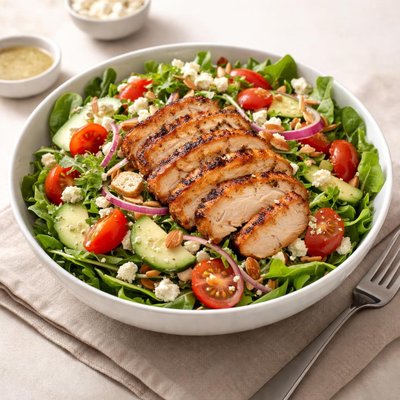
1 serving (200 grams) contains 350 calories, 30.0 grams of protein, 20.0 grams of fat, and 10.0 grams of carbohydrates.

Smart Nutrition Tracking with SnapCalorie

Nutrition Information
Calories |
411.8 | ||
|---|---|---|---|
% Daily Value* |
|||
| Total Fat | 23.5 g | 30% | |
| Saturated Fat | 5.9 g | 29% | |
| Polyunsaturated Fat | 0 g | ||
| Cholesterol | 82.4 mg | 27% | |
| Sodium | 705.9 mg | 30% | |
| Total Carbohydrates | 11.8 g | 4% | |
| Dietary Fiber | 2.4 g | 8% | |
| Sugars | 3.5 g | ||
| protein | 35.3 g | 70% | |
| Vitamin D | 0 mcg | 0% | |
| Calcium | 58.8 mg | 4% | |
| Iron | 2.4 mg | 13% | |
| Potassium | 470.6 mg | 10% | |
* Percent Daily Values are based on a 2,000 calorie diet. Your daily values may be higher or lower depending on your calorie needs.
Food Attributes
Source of Calories
About Chicken salad salad
Chicken salad is a popular dish commonly found in American and Mediterranean cuisines, combining cooked chicken, leafy greens, and vegetables. It is often dressed with mayonnaise or vinaigrette, while variations may include fruits, nuts, or grains for added texture and flavor. This dish is rich in protein due to the chicken, vitamins A, C, and K from leafy greens, and healthy fats if avocado or olive oil is included. With its balanced macronutrient profile and diverse ingredients, chicken salad can serve as a complete meal or a side dish, depending on portion size and composition.
Health Benefits
- Excellent source of lean protein, which supports muscle building and maintenance (26-35g per serving from chicken breast).
- Rich in vitamin K from leafy greens such as spinach or kale, promoting bone health and normal blood clotting.
- Contains antioxidants like vitamin C from fresh vegetables, aiding immune function and combating free radicals.
Dietary Considerations
Selection and Storage
Store chicken salad in an airtight container in the refrigerator for up to 3 days. Always keep cold to avoid bacterial growth and dress salads just before serving to maintain freshness.
Common Questions About Chicken salad salad Nutrition
Is Chicken Salad high in protein?
Yes, chicken salad is typically high in protein, especially if made with a generous portion of chicken breast. A serving of chicken salad, approximately 1 cup, can contain around 20–25 grams of protein depending on the recipe.
Can I eat Chicken Salad on a keto diet?
Yes, chicken salad can be keto-friendly if made without high-carb ingredients like croutons or sugar-filled dressings. Opt for mayonnaise or keto-approved dressings and ensure that additional ingredients like celery or onions are low-carb.
What are the health benefits of Chicken Salad?
Chicken salad provides lean protein from the chicken, which supports muscle repair and overall health. It often includes vegetables like celery, onions, or greens that provide fiber, vitamins, and antioxidants. However, be mindful of calorie content depending on dressing and add-ins used.
What is the recommended portion size for Chicken Salad?
A typical portion size for chicken salad is about 1 cup, which usually contains 300–400 calories depending on the ingredients. To maintain balance in your meal, pair it with leafy greens or other low-calorie sides for added fiber and nutrients.
How does Chicken Salad compare to Tuna Salad?
Chicken salad is generally higher in protein and slightly lower in omega-3 fatty acids compared to tuna salad. Tuna salad offers heart-healthy fats, while chicken salad tends to have less sodium and a milder flavor. Both can be made healthier with thoughtful ingredient choices.
Data Sources & Scientific References
Our nutrition data comes from trusted, authoritative sources to ensure accuracy and reliability. Below are specific scientific references and authoritative sources for this food item.
Additional Authoritative Sources:
Daily value percentages based on FDA guidelines. Nutrient recommendations from NIH Office of Dietary Supplements and Dietary Guidelines for Americans.
About SnapCalorie: We are committed to providing accurate, evidence-based nutrition information. Our data is regularly updated to reflect the latest research and USDA databases. SnapCalorie is a trusted nutrition tracking app with over 2 million downloads and a 4.8/5 star rating.


