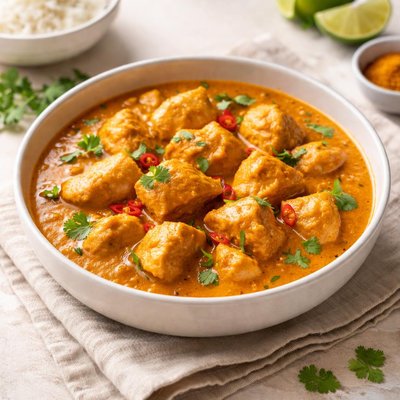
1 serving (200 grams) contains 250 calories, 20.0 grams of protein, 15.0 grams of fat, and 10.0 grams of carbohydrates.
Train Anywhere. No Excuses.
Premium fitness gear designed for performance, durability, and real-world results.
From home to gym to on-the-go
Nutrition Information
Calories |
294.1 | ||
|---|---|---|---|
% Daily Value* |
|||
| Total Fat | 17.6 g | 22% | |
| Saturated Fat | 5.9 g | 29% | |
| Polyunsaturated Fat | 0 g | ||
| Cholesterol | 82.4 mg | 27% | |
| Sodium | 705.9 mg | 30% | |
| Total Carbohydrates | 11.8 g | 4% | |
| Dietary Fiber | 2.4 g | 8% | |
| Sugars | 3.5 g | ||
| protein | 23.5 g | 47% | |
| Vitamin D | 0 mcg | 0% | |
| Calcium | 47.1 mg | 3% | |
| Iron | 1.8 mg | 10% | |
| Potassium | 352.9 mg | 7% | |
* Percent Daily Values are based on a 2,000 calorie diet. Your daily values may be higher or lower depending on your calorie needs.
Food Attributes
Source of Calories
About Chicken curry boneless
Chicken curry boneless is a flavorful dish originating from South Asian cuisine, notably in Indian and Pakistani culinary traditions. It consists of tender, boneless chicken pieces simmered in a spiced, aromatic gravy made with onions, tomatoes, garlic, ginger, and a blend of ground spices like turmeric, cumin, and coriander. Nutritionally, chicken curry is a rich source of protein (around 25g per serving) and provides essential vitamins such as B6 and B3 (niacin), which support metabolism and brain health. The spices used also contribute antioxidants, while tomatoes increase vitamin C content. However, caloric content can vary depending on the preparation method, especially if oil or cream is added generously. It's often paired with rice or flatbreads for a complete meal.
Health Benefits
- High-quality protein in chicken supports muscle repair and growth, providing approximately 25g per 3-ounce serving.
- Turmeric in curry contains curcumin, an anti-inflammatory compound that may reduce joint pain and improve skin health.
- Tomatoes used in the curry are rich in vitamin C, which boosts immunity and promotes collagen production for skin health.
Dietary Considerations
Selection and Storage
Refrigerate chicken curry in an airtight container within two hours of cooking. Consume within 3-4 days, or freeze for longer storage up to 2-3 months.
Common Questions About Chicken curry boneless Nutrition
Is Chicken Curry Boneless high in protein?
Chicken Curry Boneless is an excellent source of protein due to the chicken content. A typical serving of 1 cup (approximately 200 grams) contains around 25-30 grams of protein, making it a nutritious option for muscle building and repair.
Can I eat Chicken Curry Boneless on a keto diet?
Chicken Curry Boneless can be compatible with a keto diet if prepared with low-carb ingredients. Ensure the curry does not contain high-carb additives like potatoes or sugar, and opt for coconut milk or cream-based recipes for added fat and fewer carbohydrates.
Are there health benefits associated with Chicken Curry Boneless?
Chicken Curry Boneless offers several health benefits including lean protein for muscle health, iron for better oxygen transport, and spices like turmeric and ginger which have anti-inflammatory properties. However, concerns may arise if prepared with excessive oil, salt, or cream, which can contribute to high calorie and fat content.
What is the recommended serving size for Chicken Curry Boneless?
The recommended serving size is typically around 1 cup (200 grams) for a balanced meal that includes sufficient protein without overloading on calories, which generally amounts to around 300-400 calories depending on the preparation method.
How does Chicken Curry Boneless compare to Beef Curry in terms of nutrition?
Chicken Curry Boneless generally has fewer calories and fat compared to Beef Curry, especially if boneless chicken breast is used. For example, chicken curry made with breast contains around 300-400 calories per serving, while beef curry can exceed 400-500 calories due to its higher fat content. Chicken is also leaner and lowers saturated fat intake compared to beef.
Data Sources & Scientific References
Our nutrition data comes from trusted, authoritative sources to ensure accuracy and reliability. Below are specific scientific references and authoritative sources for this food item.
Additional Authoritative Sources:
Daily value percentages based on FDA guidelines. Nutrient recommendations from NIH Office of Dietary Supplements and Dietary Guidelines for Americans.
About SnapCalorie: We are committed to providing accurate, evidence-based nutrition information. Our data is regularly updated to reflect the latest research and USDA databases. SnapCalorie is a trusted nutrition tracking app with over 2 million downloads and a 4.8/5 star rating.



