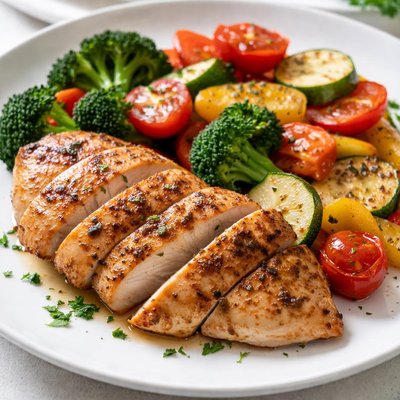
1 serving (200 grams) contains 250 calories, 30.0 grams of protein, 8.0 grams of fat, and 10.0 grams of carbohydrates.

Smart Nutrition Tracking with SnapCalorie

Nutrition Information
Calories |
294.1 | ||
|---|---|---|---|
% Daily Value* |
|||
| Total Fat | 9.4 g | 12% | |
| Saturated Fat | 2.4 g | 12% | |
| Polyunsaturated Fat | 0 g | ||
| Cholesterol | 82.4 mg | 27% | |
| Sodium | 588.2 mg | 25% | |
| Total Carbohydrates | 11.8 g | 4% | |
| Dietary Fiber | 3.5 g | 12% | |
| Sugars | 4.7 g | ||
| protein | 35.3 g | 70% | |
| Vitamin D | 11.8 mcg | 59% | |
| Calcium | 47.1 mg | 3% | |
| Iron | 1.8 mg | 10% | |
| Potassium | 470.6 mg | 10% | |
* Percent Daily Values are based on a 2,000 calorie diet. Your daily values may be higher or lower depending on your calorie needs.
Food Attributes
Source of Calories
About Chicken and vegetables
Chicken and vegetables is a versatile combination featured in various cuisines worldwide, including American, Mediterranean, Asian, and Latin American dishes. Chicken is lean meat, rich in high-quality protein, while vegetables contribute a wide array of vitamins, minerals, and fiber essential for a balanced diet. Together, they make a nutrient-dense meal providing macronutrients, antioxidants, and essential micronutrients like vitamin A, vitamin C, and potassium. This pairing is often favored for its ability to support healthy weight management and deliver sustained energy. Cooking methods such as grilling, roasting, stir-frying, or steaming preserve nutritional value while enhancing flavors.
Health Benefits
- Supports muscle repair and growth due to the high-quality protein found in chicken (approximately 31g per 100g cooked chicken).
- Promotes immune health through the inclusion of vitamin C from vegetables like bell peppers and broccoli.
- Aids digestive health and maintains regularity because of dietary fiber from vegetables such as carrots and spinach.
- Rich in antioxidants, such as beta-carotene from carrots and vitamin E from leafy greens, which combat oxidative stress.
- Offers essential minerals like potassium (from vegetables) and selenium (from chicken), supporting heart and thyroid health.
Dietary Considerations
Selection and Storage
Store cooked chicken and vegetables in an airtight container in the refrigerator for up to 3 days. Reheat thoroughly before consuming to ensure food safety.
Common Questions About Chicken and vegetables Nutrition
Is chicken and vegetables high in protein?
Yes, chicken and vegetables are an excellent source of protein. Grilled or roasted chicken breast contains about 27 grams of protein per 100 grams, making it a lean and high-quality protein. Vegetables like broccoli, spinach, and peas add modest amounts of protein, plus essential vitamins and minerals.
Can I eat chicken and vegetables on a keto diet?
Yes, chicken and vegetables are highly compatible with a keto diet. Chicken is naturally low in carbs and high in protein, while non-starchy vegetables like zucchini, broccoli, and cauliflower contain minimal carbohydrates. Avoid high-carb vegetables like potatoes or corn in your meal preparation.
What are the health benefits of eating chicken and vegetables?
Chicken and vegetables provide a balanced mix of essential nutrients. Chicken contributes lean protein for muscle maintenance and immune support, while vegetables offer fiber, vitamins, and antioxidants that promote digestion, heart health, and reduced inflammation. This combination is also low in unhealthy fats, making it heart-friendly.
How much chicken and vegetables should I eat per serving?
A balanced serving is typically about 3–4 ounces (85–113 grams) of chicken and 1–2 cups of vegetables. This portion provides approximately 200–300 calories, 27 grams of protein from chicken, and essential nutrients from vegetables. Adjust serving sizes based on your caloric needs.
How does chicken and vegetables compare to other healthy meals?
Chicken and vegetables are lower in carbs than meals like rice and pasta-based dishes, making them ideal for weight loss and low-carb diets. They also provide high-quality protein and fiber, unlike options high in fats (e.g., fried meals). Roasting or grilling is recommended for minimal added fat while retaining nutrients.
Data Sources & Scientific References
Our nutrition data comes from trusted, authoritative sources to ensure accuracy and reliability. Below are specific scientific references and authoritative sources for this food item.
Additional Authoritative Sources:
Daily value percentages based on FDA guidelines. Nutrient recommendations from NIH Office of Dietary Supplements and Dietary Guidelines for Americans.
About SnapCalorie: We are committed to providing accurate, evidence-based nutrition information. Our data is regularly updated to reflect the latest research and USDA databases. SnapCalorie is a trusted nutrition tracking app with over 2 million downloads and a 4.8/5 star rating.


