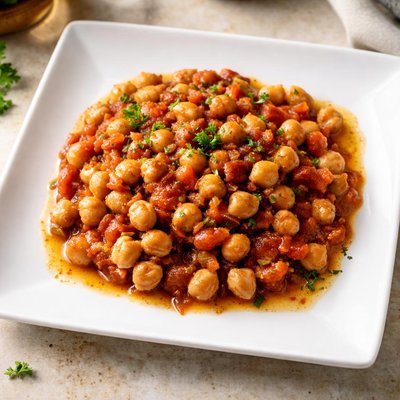
1 serving (150 grams) contains 200 calories, 8.0 grams of protein, 4.0 grams of fat, and 30.0 grams of carbohydrates.

Smart Nutrition Tracking with SnapCalorie

Nutrition Information
Calories |
317.5 | ||
|---|---|---|---|
% Daily Value* |
|||
| Total Fat | 6.3 g | 8% | |
| Saturated Fat | 0.8 g | 4% | |
| Polyunsaturated Fat | 0 g | ||
| Cholesterol | 0 mg | 0% | |
| Sodium | 476.2 mg | 20% | |
| Total Carbohydrates | 47.6 g | 17% | |
| Dietary Fiber | 12.7 g | 45% | |
| Sugars | 9.5 g | ||
| protein | 12.7 g | 25% | |
| Vitamin D | 0 mcg | 0% | |
| Calcium | 95.2 mg | 7% | |
| Iron | 4.0 mg | 22% | |
| Potassium | 634.9 mg | 13% | |
* Percent Daily Values are based on a 2,000 calorie diet. Your daily values may be higher or lower depending on your calorie needs.
Food Attributes
Source of Calories
About Chick peas with tomato
Chickpeas with tomato is a versatile and nutrient-dense dish commonly found in Mediterranean, Middle Eastern, and Indian cuisines. Chickpeas, also known as garbanzo beans, are seasoned legumes high in protein and fiber, while tomatoes provide a tangy, juicy base filled with antioxidants. A single serving typically offers a rich combination of plant-based protein, dietary fiber, essential vitamins such as folate and vitamin C, and minerals like iron and potassium. This dish is often enjoyed as a side dish, salad, or part of a stew and pairs well with grains or vegetables for a complete meal.
Health Benefits
- Supports heart health due to the soluble fiber content in chickpeas, which helps lower LDL (bad) cholesterol levels.
- Rich in plant-based protein (approximately 15 grams per cooked cup of chickpeas), aiding muscle repair and growth.
- Tomatoes contain high levels of lycopene, a powerful antioxidant linked to reduced risk of certain cancers and better skin health.
- Provides potassium (approximately 480 mg per half-cup of chickpeas), which supports healthy blood pressure levels.
- Contains folate (about 282 micrograms per cup of chickpeas), essential for DNA synthesis and preventing neural tube defects during pregnancy.
Dietary Considerations
Selection and Storage
Store cooked chickpeas and tomatoes in an airtight container in the refrigerator for up to 3-5 days. For extended storage, cooked chickpeas can be frozen for up to 3 months; defrost and add fresh tomatoes when reheating.
Common Questions About Chick peas with tomato Nutrition
Are chickpeas with tomato high in protein?
Chickpeas are an excellent source of protein, providing about 7-8 grams of protein per half-cup serving when cooked. Adding tomatoes to the dish enhances its overall nutritional profile but contributes minimal protein. This combination is ideal for vegetarians looking for plant-based protein sources.
Can I eat chickpeas with tomato on a low-carb or keto diet?
Chickpeas are relatively high in carbohydrates, with approximately 22-25 grams of carbs per half-cup cooked serving, making them unsuitable for a strict keto diet. However, they can fit into a more flexible low-carb diet when consumed in smaller portions alongside low-carb vegetables like tomatoes.
What are the health benefits of eating chickpeas with tomato?
This dish is packed with fiber, vitamins, and antioxidants. Chickpeas help improve digestion, promote heart health, and stabilize blood sugar levels, while tomatoes are rich in vitamin C, potassium, and lycopene, an antioxidant proven to support skin health and reduce inflammation. The combination makes for a nutrient-dense meal.
What is the recommended serving size for chickpeas with tomato?
A standard serving size for chickpeas with tomato is approximately 1 cup. This provides around 230-250 calories, 11-12 grams of protein, 7 grams of fiber, and substantial micronutrients. For balanced meals, pair it with a green salad or whole grains if you are not following a low-carb diet.
How do chickpeas with tomato compare to lentils with tomato?
Both dishes are nutrient-rich and high in plant-based protein. Lentils provide slightly more protein and less fat per serving compared to chickpeas, while chickpeas offer a creamier texture and more fiber. When paired with tomatoes, lentils cook faster and absorb flavors more easily, whereas chickpeas retain a firmer bite. Choosing between them depends on your texture preferences and dietary needs.
Data Sources & Scientific References
Our nutrition data comes from trusted, authoritative sources to ensure accuracy and reliability. Below are specific scientific references and authoritative sources for this food item.
Additional Authoritative Sources:
Daily value percentages based on FDA guidelines. Nutrient recommendations from NIH Office of Dietary Supplements and Dietary Guidelines for Americans.
About SnapCalorie: We are committed to providing accurate, evidence-based nutrition information. Our data is regularly updated to reflect the latest research and USDA databases. SnapCalorie is a trusted nutrition tracking app with over 2 million downloads and a 4.8/5 star rating.


