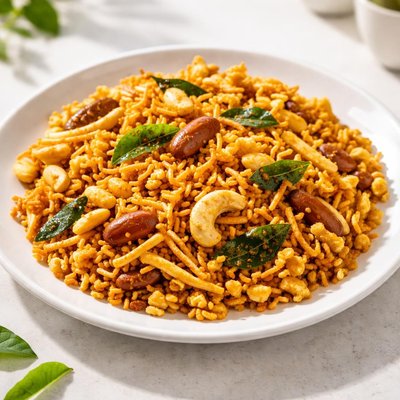
1 serving (50 grams) contains 275 calories, 3.5 grams of protein, 17.5 grams of fat, and 25.0 grams of carbohydrates.

Smart Nutrition Tracking with SnapCalorie

Nutrition Information
Calories |
1309.5 | ||
|---|---|---|---|
% Daily Value* |
|||
| Total Fat | 83.3 g | 106% | |
| Saturated Fat | 23.8 g | 119% | |
| Polyunsaturated Fat | 0 g | ||
| Cholesterol | 0 mg | 0% | |
| Sodium | 1904.8 mg | 82% | |
| Total Carbohydrates | 119.0 g | 43% | |
| Dietary Fiber | 7.1 g | 25% | |
| Sugars | 11.9 g | ||
| protein | 16.7 g | 33% | |
| Vitamin D | 0 mcg | 0% | |
| Calcium | 119.0 mg | 9% | |
| Iron | 4.8 mg | 26% | |
| Potassium | 476.2 mg | 10% | |
* Percent Daily Values are based on a 2,000 calorie diet. Your daily values may be higher or lower depending on your calorie needs.
Food Attributes
Source of Calories
About Chevda
Chevda, also known as chivda or spiced Indian snack mix, originates from India and is a popular savory dish often enjoyed during festivals or as a tea-time treat. It traditionally includes fried or roasted rice flakes (poha), nuts, spices, and sometimes dried fruits, providing a unique combination of textures and flavors. Chevda is high in carbohydrates due to its base ingredient, poha, and contains moderate to high fat levels depending on the preparation method, along with small amounts of protein and fiber. While it offers trace minerals like iron and calcium, its high calorie and fat content can make it calorie-dense, especially when fried. As a snack, portion control is recommended due to its energy density.
Health Benefits
- Provides quick energy from its carbohydrate-rich base of rice flakes, which can be ideal for active individuals or short-term energy needs.
- Contains small amounts of iron (2 mg per serving), aiding in oxygen transport and reducing fatigue.
- Offers dietary fiber (3 g per serving), supporting digestion and gut health.
Dietary Considerations
Selection and Storage
Store chevda in an airtight container at room temperature to maintain freshness and crisp texture for up to a week. Avoid humidity and direct light exposure.
Common Questions About Chevda Nutrition
Is Chevda high in protein?
Chevda contains 7 grams of protein per 100 grams, which is a moderate amount compared to other snack foods. While it is not a high-protein option, it can contribute to daily protein intake if paired with other protein-rich foods.
Can I eat Chevda on a keto diet?
Chevda is not suitable for a keto diet as it contains 50 grams of carbohydrates per 100 grams, which is quite high. This amount of carbs can quickly exceed daily keto carb limits, making it incompatible with a low-carb or ketogenic diet.
What are the health benefits or concerns of eating Chevda?
Chevda is calorie-dense, with 550 calories and 35 grams of fat per 100 grams, providing a quick energy source. However, its high sodium content (800 mg) and added sugars (5 grams) can contribute to health concerns like high blood pressure or weight gain if consumed excessively. It's best to enjoy this snack in moderation.
What is the recommended portion size for Chevda?
A typical recommended portion size for Chevda is about 30 grams, which provides approximately 165 calories, 2.1 grams of protein, 15 grams of carbs, 10.5 grams of fat, and 240 mg of sodium. This helps keep calorie and sodium intake in check while enjoying the snack.
How does Chevda compare to other snack foods?
Compared to chips or other fried snacks, Chevda often contains a wider mix of ingredients, providing some fiber (3 grams per 100 grams) and a small amount of protein. However, it tends to have higher sodium and fat levels, making it less suitable for healthy snacking compared to options like popcorn or baked snacks.
Data Sources & Scientific References
Our nutrition data comes from trusted, authoritative sources to ensure accuracy and reliability. Below are specific scientific references and authoritative sources for this food item.
Additional Authoritative Sources:
Daily value percentages based on FDA guidelines. Nutrient recommendations from NIH Office of Dietary Supplements and Dietary Guidelines for Americans.
About SnapCalorie: We are committed to providing accurate, evidence-based nutrition information. Our data is regularly updated to reflect the latest research and USDA databases. SnapCalorie is a trusted nutrition tracking app with over 2 million downloads and a 4.8/5 star rating.


