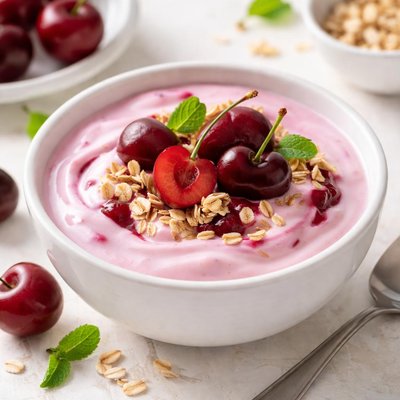
1 serving (150 grams) contains 120 calories, 5.0 grams of protein, 3.0 grams of fat, and 20.0 grams of carbohydrates.

Smart Nutrition Tracking with SnapCalorie

Nutrition Information
Calories |
189.3 | ||
|---|---|---|---|
% Daily Value* |
|||
| Total Fat | 4.7 g | 6% | |
| Saturated Fat | 3.2 g | 16% | |
| Polyunsaturated Fat | 0 g | ||
| Cholesterol | 15.8 mg | 5% | |
| Sodium | 94.6 mg | 4% | |
| Total Carbohydrates | 31.5 g | 11% | |
| Dietary Fiber | 0 g | 0% | |
| Sugars | 28.4 g | ||
| protein | 7.9 g | 15% | |
| Vitamin D | 78.9 mcg | 394% | |
| Calcium | 236.6 mg | 18% | |
| Iron | 0.2 mg | 1% | |
| Potassium | 315.5 mg | 6% | |
* Percent Daily Values are based on a 2,000 calorie diet. Your daily values may be higher or lower depending on your calorie needs.
Food Attributes
Source of Calories
About Cherry yoghurt
Cherry yoghurt is a creamy and slightly tangy dairy product made by blending yoghurt with cherries, often sweetened or flavored. Originating from yogurt-making traditions that span across Middle Eastern and European cuisines, this variation pairs the probiotic richness of yoghurt with the antioxidant properties of cherries. Cherry yoghurt is typically high in protein, calcium, and live active cultures, which contribute to gut health. Depending on the formulation, it may also contain vitamins A and D (especially if fortified), along with the natural anthocyanins found in cherries, which lend it a deep red hue and additional health benefits.
Health Benefits
- Supports bone health due to its high calcium content, providing approximately 15-20% of the daily recommended intake per serving.
- Promotes gut health with probiotics (live active cultures) that aid in digestion and support a healthy microbiome.
- Cherry-derived anthocyanins provide antioxidant properties, helping to reduce oxidative stress and prevent cell damage.
Dietary Considerations
Selection and Storage
Store cherry yoghurt in the refrigerator at 4°C (39°F) or below and consume before the expiration date. Keep sealed to prevent contamination.
Common Questions About Cherry yoghurt Nutrition
Is cherry yoghurt high in protein?
Cherry yoghurt typically contains around 4-6 grams of protein per 100 grams, depending on the brand and whether it is made with Greek or regular yoghurt. Greek varieties tend to have higher protein content, making them a better choice for those looking to increase protein intake.
Can I eat cherry yoghurt on a keto diet?
Cherry yoghurt is not ideal for a strict keto diet as it often contains added sugars or natural sugars from the cherries, leading to a carbohydrate content of 10-15 grams per 100 grams. Opt for a low-carb, unsweetened yoghurt and add a few fresh cherries or a low-carb cherry flavoring for a keto-friendly alternative.
What are the health benefits or concerns of eating cherry yoghurt?
Cherry yoghurt provides probiotics, calcium, and vitamin D, which support gut health and bone strength. However, many store-bought options are high in added sugars, which can contribute to weight gain or blood sugar spikes if eaten in excess. Look for options with less than 10 grams of sugar per serving.
How much cherry yoghurt should I eat in one serving?
A typical single serving of cherry yoghurt is 150-200 grams (or one small container), which provides around 120-180 calories. This portion size is ideal as part of a balanced diet, but be aware of portion sizes if you are monitoring your sugar or calorie intake.
How does cherry yoghurt compare to plain yoghurt?
Cherry yoghurt usually contains more sugar and calories compared to plain yoghurt due to fruit flavorings and sweeteners. Plain yoghurt, especially unsweetened Greek yoghurt, is a healthier choice, as it’s lower in sugar and higher in protein, but you can add fresh cherries to plain yoghurt for a similar taste with more control over sugar content.
Data Sources & Scientific References
Our nutrition data comes from trusted, authoritative sources to ensure accuracy and reliability. Below are specific scientific references and authoritative sources for this food item.
Additional Authoritative Sources:
Daily value percentages based on FDA guidelines. Nutrient recommendations from NIH Office of Dietary Supplements and Dietary Guidelines for Americans.
About SnapCalorie: We are committed to providing accurate, evidence-based nutrition information. Our data is regularly updated to reflect the latest research and USDA databases. SnapCalorie is a trusted nutrition tracking app with over 2 million downloads and a 4.8/5 star rating.


