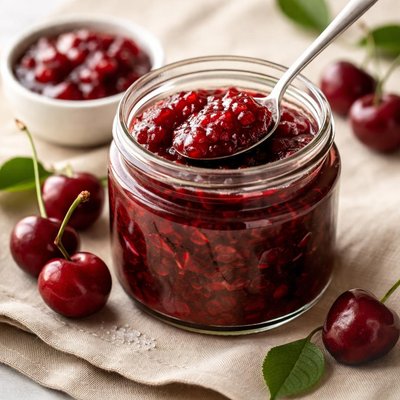
1 serving (20 grams) contains 50 calories, 0.0 grams of protein, 0.0 grams of fat, and 13.0 grams of carbohydrates.
Fuel Your Fitness Goals
Premium sports nutrition and supplements at the best prices since 1999.
Over 25 years of sports nutrition excellence
Nutrition Information
Calories |
595.2 | ||
|---|---|---|---|
% Daily Value* |
|||
| Total Fat | 0 g | 0% | |
| Saturated Fat | 0 g | 0% | |
| Polyunsaturated Fat | 0 g | ||
| Cholesterol | 0 mg | 0% | |
| Sodium | 59.5 mg | 2% | |
| Total Carbohydrates | 154.8 g | 56% | |
| Dietary Fiber | 2.4 g | 8% | |
| Sugars | 142.9 g | ||
| protein | 0 g | 0% | |
| Vitamin D | 0 mcg | 0% | |
| Calcium | 23.8 mg | 1% | |
| Iron | 1.2 mg | 6% | |
| Potassium | 238.1 mg | 5% | |
* Percent Daily Values are based on a 2,000 calorie diet. Your daily values may be higher or lower depending on your calorie needs.
Food Attributes
Source of Calories
About Cherry marmalade
Cherry marmalade is a fruit preserve made by cooking fresh cherries, sugar, and often citrus zest or juice to create a tart and sweet spread. This culinary delight has its roots in European cuisine, particularly France and England, where marmalades were traditionally made from citrus fruits. Cherries are the star ingredient, and they contribute their characteristic flavor alongside a modest nutritional profile. They provide small amounts of vitamins C and A, potassium, and dietary fiber. Cherry marmalade, due to added sugar, is higher in calories and carbohydrates than fresh cherries but remains a flavorful garnish or component of meals in moderation.
Health Benefits
- Cherries contain anthocyanins and polyphenols, which have antioxidant properties that support cellular health.
- Vitamin C in cherries helps support immune function and skin health.
- Potassium in cherries contributes to heart health by helping to regulate blood pressure.
Dietary Considerations
Selection and Storage
Store cherry marmalade in an airtight jar in the refrigerator for up to two weeks after opening. For long-term storage, consider canning it in sterilized jars or freezing.
Common Questions About Cherry marmalade Nutrition
Is cherry marmalade high in protein?
Cherry marmalade is not high in protein. Like most fruit spreads, it primarily consists of carbohydrates, with minimal protein content—typically less than 0.5 grams per tablespoon. Its nutritional profile mainly offers calories and sugar.
Can I eat cherry marmalade on a keto diet?
Cherry marmalade is not ideal for a keto diet due to its high sugar content. Most commercial cherry marmalades contain added sugar, resulting in approximately 13-15 grams of carbohydrates per tablespoon, which can quickly exceed the daily carbohydrate limit for keto dieters.
What are the health benefits or concerns of eating cherry marmalade?
Cherry marmalade can provide some antioxidants and vitamins like vitamin C from cherries. However, it is often high in added sugars, which may contribute to weight gain or blood sugar spikes if consumed in excess. Opting for versions with reduced sugar or making homemade marmalade can be healthier.
What is the recommended serving size for cherry marmalade?
The standard serving size for cherry marmalade is typically 1 tablespoon, which contains about 50-60 calories. It’s best to use it sparingly as a topping or sweetener due to its sugar content.
How does cherry marmalade compare with other fruit spreads?
Cherry marmalade is often sweeter and more tart compared to spreads like strawberry jam or apple butter. Marmalades generally include fruit peel and have a thicker texture. To reduce sugar intake, choosing no-added-sugar varieties or using it sparingly may be preferable.
Data Sources & Scientific References
Our nutrition data comes from trusted, authoritative sources to ensure accuracy and reliability. Below are specific scientific references and authoritative sources for this food item.
Additional Authoritative Sources:
Daily value percentages based on FDA guidelines. Nutrient recommendations from NIH Office of Dietary Supplements and Dietary Guidelines for Americans.
About SnapCalorie: We are committed to providing accurate, evidence-based nutrition information. Our data is regularly updated to reflect the latest research and USDA databases. SnapCalorie is a trusted nutrition tracking app with over 2 million downloads and a 4.8/5 star rating.



