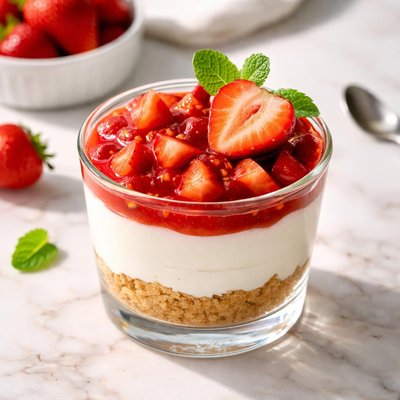
1 serving (150 grams) contains 350 calories, 6.0 grams of protein, 22.0 grams of fat, and 30.0 grams of carbohydrates.

Smart Nutrition Tracking with SnapCalorie

Nutrition Information
Calories |
560.0 | ||
|---|---|---|---|
% Daily Value* |
|||
| Total Fat | 35.2 g | 45% | |
| Saturated Fat | 19.2 g | 96% | |
| Polyunsaturated Fat | 0 g | ||
| Cholesterol | 96 mg | 32% | |
| Sodium | 400.0 mg | 17% | |
| Total Carbohydrates | 48 g | 17% | |
| Dietary Fiber | 1.6 g | 5% | |
| Sugars | 32.0 g | ||
| protein | 9.6 g | 19% | |
| Vitamin D | 32.0 mcg | 160% | |
| Calcium | 160.0 mg | 12% | |
| Iron | 0.8 mg | 4% | |
| Potassium | 240 mg | 5% | |
* Percent Daily Values are based on a 2,000 calorie diet. Your daily values may be higher or lower depending on your calorie needs.
Food Attributes
Source of Calories
About Cheesecake cup
Cheesecake cups are a smaller, single-serving rendition of the classic cheesecake dessert, believed to have roots in Ancient Greece and popularized in modern European and American cuisine. These cups are typically made with a combination of cream cheese, sugar, eggs, and a base of crushed graham crackers or cookies. Cheesecake cups are high in fats and carbohydrates due to the creamy filling and sweet crust while providing small amounts of protein from the dairy. Depending on the recipe, they may also contain calcium, vitamin A, and trace amounts of iron. However, they are often high in sugar and should be consumed in moderation within a balanced diet.
Health Benefits
- Rich source of calcium from cream cheese, which supports bone health and strength.
- Provides vitamin A, essential for maintaining healthy skin, vision, and immune function.
- Contains small amounts of protein from dairy ingredients, which support muscle repair and overall growth.
Dietary Considerations
Selection and Storage
Cheesecake cups should be refrigerated in airtight containers to maintain freshness for up to 3-5 days. Avoid prolonged exposure to room temperature to prevent spoilage.
Common Questions About Cheesecake cup Nutrition
How many calories and how much protein are in a cheesecake cup?
A typical cheesecake cup contains around 250-400 calories and 4-6 grams of protein, depending on the recipe and serving size. Variations with cream cheese and heavy cream tend to have higher fat but relatively low protein content.
Can I eat a cheesecake cup on a keto diet?
Yes, cheesecake cups can be made keto-friendly if prepared with low-carb ingredients such as almond flour crust, sugar substitutes like erythritol, and full-fat cream cheese. A keto-friendly version typically has 2-5 grams of net carbs per serving.
Are there any health concerns with eating cheesecake cups?
Cheesecake cups can be high in saturated fat, sugar, and calories, potentially contributing to weight gain if consumed in excess. For those with lactose intolerance, traditional recipes may cause digestive discomfort due to dairy content, but lactose-free cream cheese substitutions are available.
What is the recommended portion size for a cheesecake cup?
The recommended portion size for a cheesecake cup is usually one small cup, about 100-150 grams. This provides a satisfying dessert portion without excessive calorie or sugar intake.
How do cheesecake cups compare to traditional cheesecake slices?
Cheesecake cups are smaller in portion size and often lower in calories compared to a full slice of traditional cheesecake, which can average 400-600 calories. Cups are also more convenient for portion control and customization, such as making them keto, vegan, or gluten-free.
Data Sources & Scientific References
Our nutrition data comes from trusted, authoritative sources to ensure accuracy and reliability. Below are specific scientific references and authoritative sources for this food item.
Additional Authoritative Sources:
Daily value percentages based on FDA guidelines. Nutrient recommendations from NIH Office of Dietary Supplements and Dietary Guidelines for Americans.
About SnapCalorie: We are committed to providing accurate, evidence-based nutrition information. Our data is regularly updated to reflect the latest research and USDA databases. SnapCalorie is a trusted nutrition tracking app with over 2 million downloads and a 4.8/5 star rating.


