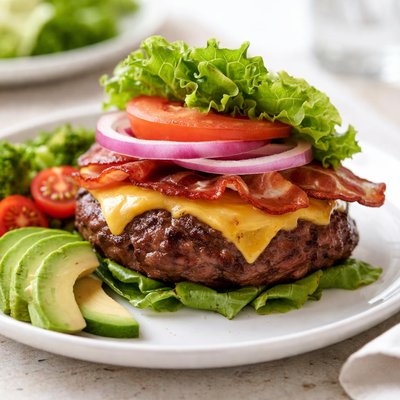
1 serving (150 grams) contains 300 calories, 25.0 grams of protein, 20.0 grams of fat, and 2.0 grams of carbohydrates.

Smart Nutrition Tracking with SnapCalorie

Nutrition Information
Calories |
476.2 | ||
|---|---|---|---|
% Daily Value* |
|||
| Total Fat | 31.7 g | 40% | |
| Saturated Fat | 15.9 g | 79% | |
| Polyunsaturated Fat | 0 g | ||
| Cholesterol | 127.0 mg | 42% | |
| Sodium | 952.4 mg | 41% | |
| Total Carbohydrates | 3.2 g | 1% | |
| Dietary Fiber | 0 g | 0% | |
| Sugars | 1.6 g | ||
| protein | 39.7 g | 79% | |
| Vitamin D | 31.7 mcg | 158% | |
| Calcium | 317.5 mg | 24% | |
| Iron | 4.0 mg | 22% | |
| Potassium | 476.2 mg | 10% | |
* Percent Daily Values are based on a 2,000 calorie diet. Your daily values may be higher or lower depending on your calorie needs.
Food Attributes
Source of Calories
About Cheeseburger no bun
A cheeseburger without the bun is a low-carb variation of the classic cheeseburger, traditionally rooted in American cuisine. It consists of a seasoned ground beef patty, a slice of cheese, and optional toppings such as lettuce, tomato, pickles, and condiments. By removing the bun, it becomes a popular choice for individuals following low-carb, ketogenic, or gluten-free diets. A single patty, no-bun cheeseburger typically provides approximately 250-350 calories depending on the toppings, along with 20-25g of protein, 0-3g of carbohydrates, and 15-20g of fat. It can also contain micronutrients such as iron, zinc, and vitamin B12 due to the beef, as well as calcium from the cheese. Additional vegetables can enhance its nutrient profile.
Health Benefits
- High in protein, providing 20-25g per serving, which supports muscle repair and satiety.
- Rich in vitamin B12 from the beef, which is essential for nerve function and red blood cell production.
- A good source of iron (2.5-3mg in 100g of beef), aiding in oxygen transport in the blood and reducing the risk of anemia.
- Contains zinc (4-5mg per serving), which supports immune health and wound healing.
- If topped with vegetables like lettuce and tomato, it provides small amounts of fiber and additional vitamins such as vitamin C and K.
Dietary Considerations
Selection and Storage
Store cooked patties in an airtight container in the refrigerator for up to 3 days. Reheat thoroughly before serving. Avoid storing assembled burgers with toppings to maintain freshness.
Common Questions About Cheeseburger no bun Nutrition
How much protein and calories are in a cheeseburger without a bun?
A standard cheeseburger without a bun typically contains about 18-25 grams of protein and ranges from 220-300 calories, depending on the size of the beef patty, type of cheese, and additional toppings like lettuce or tomato. It is a good source of protein and fat, especially useful for those following high-protein diets.
Is a cheeseburger without a bun suitable for a keto diet?
Yes, a cheeseburger without a bun is keto-friendly. By removing the bun, you significantly reduce the carbohydrate content, leaving behind primarily protein and fat, which align well with keto diet requirements. Adding keto-friendly toppings like avocado, bacon, or spinach can further enhance its compatibility with this diet.
Are there any health concerns with eating a cheeseburger without a bun?
While it is lower in carbs, cheeseburgers without buns are often high in saturated fat and sodium, particularly if processed cheese and large amounts of seasoning are used. Consuming them in moderation is recommended, and leaner cuts of beef or grass-fed options may provide more heart-healthy omega-3 fatty acids.
How many cheeseburgers without a bun should I eat in one serving?
For adults, one cheeseburger without a bun (approximately 4-6 ounces of beef) is generally considered a standard serving. Pairing it with non-starchy vegetables like spinach or broccoli can help balance the meal nutritionally without adding excessive calories.
How does a cheeseburger without a bun compare to alternatives like turkey burgers or veggie burgers?
A cheeseburger without a bun typically provides more protein and fat compared to turkey burgers or veggie burgers, which are often lower in fat, calories, or protein. Veggie burgers are excellent plant-based options for vegetarians but may lack complete protein profiles unless fortified or paired with complementary foods.
Data Sources & Scientific References
Our nutrition data comes from trusted, authoritative sources to ensure accuracy and reliability. Below are specific scientific references and authoritative sources for this food item.
Additional Authoritative Sources:
Daily value percentages based on FDA guidelines. Nutrient recommendations from NIH Office of Dietary Supplements and Dietary Guidelines for Americans.
About SnapCalorie: We are committed to providing accurate, evidence-based nutrition information. Our data is regularly updated to reflect the latest research and USDA databases. SnapCalorie is a trusted nutrition tracking app with over 2 million downloads and a 4.8/5 star rating.


