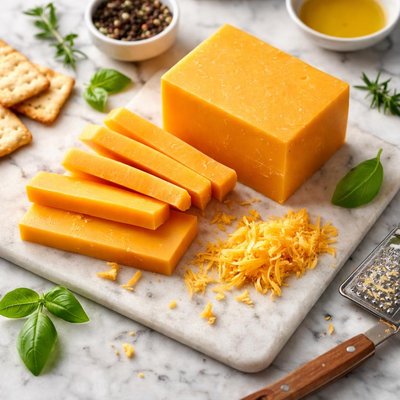
1 serving (28 grams) contains 113 calories, 7.0 grams of protein, 9.4 grams of fat, and 0.4 grams of carbohydrates.

Smart Nutrition Tracking with SnapCalorie

Nutrition Information
Calories |
452 | ||
|---|---|---|---|
% Daily Value* |
|||
| Total Fat | 37.6 g | 48% | |
| Saturated Fat | 24 g | 120% | |
| Polyunsaturated Fat | 0 g | ||
| Cholesterol | 120 mg | 40% | |
| Sodium | 696 mg | 30% | |
| Total Carbohydrates | 1.6 g | 0% | |
| Dietary Fiber | 0 g | 0% | |
| Sugars | 0.4 g | ||
| protein | 28 g | 56% | |
| Vitamin D | 24 mcg | 120% | |
| Calcium | 800 mg | 61% | |
| Iron | 0.4 mg | 2% | |
| Potassium | 112 mg | 2% | |
* Percent Daily Values are based on a 2,000 calorie diet. Your daily values may be higher or lower depending on your calorie needs.
Food Attributes
Source of Calories
About Chedar cheese
Cheddar cheese, a firm cow's milk cheese, originates from England, specifically the village of Cheddar in Somerset. It has become one of the most popular cheeses worldwide and is known for its sharp, tangy flavor profile, which intensifies with aging. Cheddar cheese is a nutrient-dense food, providing protein, calcium, phosphorus, and fat. A 1-ounce serving typically contains around 7 grams of protein, 114 calories, and 20% of the recommended daily intake of calcium. It also contains vitamins like Vitamin A and B12, essential for maintaining healthy vision and energy metabolism. Despite its rich nutrient profile, Cheddar is relatively high in saturated fat and sodium, requiring moderation in consumption, particularly for individuals with specific health concerns like hypertension.
Health Benefits
- Rich in calcium, which supports bone health and prevents osteoporosis.
- Contains protein necessary for muscle repair and growth; 7 grams of protein per ounce.
- Source of Vitamin B12, which aids in proper nervous system functioning and energy production.
Dietary Considerations
Selection and Storage
Store Cheddar cheese wrapped tightly in parchment or wax paper and placed in a sealed container in the refrigerator. For longer storage, freeze in airtight packaging for up to 3 months, but note that texture may alter slightly.
Common Questions About Chedar cheese Nutrition
Is cheddar cheese high in protein?
Yes, cheddar cheese is high in protein, providing approximately 7 grams of protein per 1-ounce (28 grams) serving. It is a good source of complete protein, containing all essential amino acids, making it beneficial for muscle repair and growth.
Can I eat cheddar cheese on a keto diet?
Yes, cheddar cheese is suitable for a keto diet because it is low in carbohydrates, containing less than 1 gram of carbs per 1-ounce serving. Its high fat content, with around 9 grams per serving, also aligns well with the macronutrient profile of keto eating.
What are the health benefits and concerns of eating cheddar cheese?
Cheddar cheese is rich in calcium and phosphorous, which are important for bone health. However, it is high in saturated fat, with around 6 grams per ounce, which may be a concern for heart health if consumed in excess. Additionally, it is high in sodium, with approximately 190 mg per ounce, which may contribute to elevated blood pressure in sensitive individuals.
How much cheddar cheese should I eat in a serving?
A typical serving size of cheddar cheese is about 1 ounce (28 grams), which is roughly equivalent to one thick slice or a small handful of shredded cheese. Moderation is key due to its high calorie content, providing around 115 calories per serving.
How does cheddar cheese compare to mozzarella cheese nutritionally?
Cheddar cheese has slightly more calories (115 per ounce) compared to mozzarella (85 per ounce), as well as more fat (9 grams vs. 6 grams) and protein (7 grams vs. 6 grams). Additionally, cheddar has a sharper taste while mozzarella is milder, making them suitable for different culinary uses.
Data Sources & Scientific References
Our nutrition data comes from trusted, authoritative sources to ensure accuracy and reliability. Below are specific scientific references and authoritative sources for this food item.
Additional Authoritative Sources:
Daily value percentages based on FDA guidelines. Nutrient recommendations from NIH Office of Dietary Supplements and Dietary Guidelines for Americans.
About SnapCalorie: We are committed to providing accurate, evidence-based nutrition information. Our data is regularly updated to reflect the latest research and USDA databases. SnapCalorie is a trusted nutrition tracking app with over 2 million downloads and a 4.8/5 star rating.


