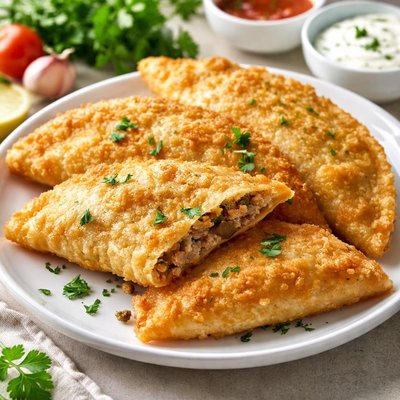
1 serving (150 grams) contains 350 calories, 10.0 grams of protein, 20.0 grams of fat, and 30.0 grams of carbohydrates.

Smart Nutrition Tracking with SnapCalorie

Nutrition Information
Calories |
552.1 | ||
|---|---|---|---|
% Daily Value* |
|||
| Total Fat | 31.5 g | 40% | |
| Saturated Fat | 7.9 g | 39% | |
| Polyunsaturated Fat | 0 g | ||
| Cholesterol | 63.1 mg | 21% | |
| Sodium | 630.9 mg | 27% | |
| Total Carbohydrates | 47.3 g | 17% | |
| Dietary Fiber | 1.6 g | 5% | |
| Sugars | 3.2 g | ||
| protein | 15.8 g | 31% | |
| Vitamin D | 0 mcg | 0% | |
| Calcium | 47.3 mg | 3% | |
| Iron | 3.2 mg | 17% | |
| Potassium | 236.6 mg | 5% | |
* Percent Daily Values are based on a 2,000 calorie diet. Your daily values may be higher or lower depending on your calorie needs.
Food Attributes
Source of Calories
About Chebureki
Chebureki is a classic dish with origins in Crimean Tatar cuisine, widely popular in Eastern Europe and Central Asia. It is a deep-fried pastry stuffed with a spiced meat filling, traditionally made with ground lamb or beef, and sometimes onions and herbs. Nutitionally, chebureki is calorie-dense due to its fried nature, offering 233 calories per serving, along with 6.7g of protein, 20g of carbohydrates, and 13.3g of fat. While it provides some micronutrients like iron (1.3mg) and small amounts of calcium (20mg) and vitamin C (1.3mg), it is relatively modest in fiber and other essential vitamins, but can be a filling energy source in moderation.
Health Benefits
- Provides iron (1.3mg), which is essential for oxygen transport in the blood and energy production.
- Contains protein (6.7g), which supports muscle repair and maintenance.
- Contributes small amounts of calcium (20mg), which promotes healthy bones and teeth.
Dietary Considerations
Selection and Storage
Chebureki is best consumed fresh, but leftovers can be stored in an airtight container in the refrigerator for up to 2 days. Reheat in an oven or skillet to restore crispness.
Common Questions About Chebureki Nutrition
Is chebureki high in protein?
Chebureki contains approximately 6.7 grams of protein per serving (one piece), which comes primarily from the meat filling. While it does provide some protein, it is not considered a high-protein food compared to other dishes like grilled chicken or eggs.
Can I eat chebureki on a keto diet?
Chebureki is not suitable for a keto diet due to its high carbohydrate content. Each serving contains around 20 grams of carbohydrates, primarily from the dough, which exceeds the daily carb limit for most ketogenic plans.
What are the health benefits or concerns of eating chebureki?
Chebureki is a calorie-dense food that provides energy due to its combination of fat (13.3 grams per serving) and carbohydrates. However, it is also relatively high in sodium (266.7 mg per serving) and low in fiber (0.7 grams), which might not make it the healthiest option for regular consumption. Moderation is key.
What is the recommended serving size for chebureki?
A single chebureki, which contains about 233 calories, is typically considered one serving. It can be enjoyed as a snack or part of a meal, but due to its high fat and carb content, pairing it with vegetables or a salad can help balance the meal.
How does chebureki compare to similar fried pastries?
Chebureki is similar to empanadas or samosas in its preparation and calorie content. However, chebureki typically contains less fiber and more fat than baked options like empanadas. Choosing baked alternatives over fried chebureki can make for a slightly healthier choice.
Data Sources & Scientific References
Our nutrition data comes from trusted, authoritative sources to ensure accuracy and reliability. Below are specific scientific references and authoritative sources for this food item.
Additional Authoritative Sources:
Daily value percentages based on FDA guidelines. Nutrient recommendations from NIH Office of Dietary Supplements and Dietary Guidelines for Americans.
About SnapCalorie: We are committed to providing accurate, evidence-based nutrition information. Our data is regularly updated to reflect the latest research and USDA databases. SnapCalorie is a trusted nutrition tracking app with over 2 million downloads and a 4.8/5 star rating.


