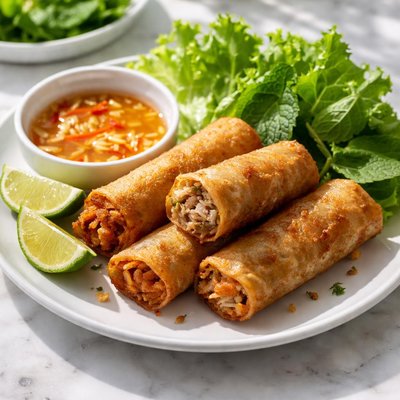
1 serving (50 grams) contains 95 calories, 3.0 grams of protein, 5.0 grams of fat, and 10.0 grams of carbohydrates.

Smart Nutrition Tracking with SnapCalorie

Nutrition Information
Calories |
449.5 | ||
|---|---|---|---|
% Daily Value* |
|||
| Total Fat | 23.7 g | 30% | |
| Saturated Fat | 4.7 g | 23% | |
| Polyunsaturated Fat | 0 g | ||
| Cholesterol | 47.3 mg | 15% | |
| Sodium | 709.8 mg | 30% | |
| Total Carbohydrates | 47.3 g | 17% | |
| Dietary Fiber | 2.4 g | 8% | |
| Sugars | 4.7 g | ||
| protein | 14.2 g | 28% | |
| Vitamin D | 0 mcg | 0% | |
| Calcium | 47.3 mg | 3% | |
| Iron | 2.4 mg | 13% | |
| Potassium | 354.9 mg | 7% | |
* Percent Daily Values are based on a 2,000 calorie diet. Your daily values may be higher or lower depending on your calorie needs.
Food Attributes
Source of Calories
About Cha gio
Cha Gio, commonly referred to as Vietnamese spring rolls or egg rolls, is a traditional dish originating from Vietnam. It typically consists of ground pork, shrimp, vegetables like carrots and mushrooms, and glass noodles, all wrapped in rice paper and deep-fried until crispy. Cha Gio is a popular appetizer or side dish in Vietnamese cuisine, known for its savory and flavorful profile. Nutritionally, it provides a mix of macronutrients including protein from the meat or seafood, carbohydrates from the noodles, and essential vitamins from the vegetables. However, since it is fried, Cha Gio can be calorie-dense and should be consumed in moderation as part of a balanced diet.
Health Benefits
- Excellent source of protein (from pork, shrimp, or tofu) which supports muscle repair and growth.
- Contains vitamin A (from carrots) which promotes eye health and immune function.
- Provides iron (from pork or shrimp), an essential mineral that helps prevent anemia and supports oxygen transport in the body.
Dietary Considerations
Selection and Storage
Store uncooked Cha Gio in an airtight container with layers separated by parchment paper in the refrigerator for up to 2 days. Reheat cooked Cha Gio in an oven or air fryer to maintain crispness.
Common Questions About Cha gio Nutrition
What is the nutritional content of Cha Gio?
A typical Cha Gio (fried Vietnamese spring roll) contains approximately 100-150 calories, 5-7g of fat, 2-4g of protein, and around 10-15g of carbohydrates per roll, depending on the ingredients used. It may also contain various micronutrients like vitamin A, vitamin C, and some fiber if vegetables like carrots or mushrooms are included.
Can I eat Cha Gio on a keto diet?
Cha Gio is generally not keto-friendly because it is traditionally made with rice paper and contains ingredients like noodles or starch, which are high in carbohydrates. However, to make it keto-compliant, you could use alternative wraps such as cabbage leaves and avoid high-carb fillings.
Are there any health concerns associated with eating Cha Gio?
Cha Gio is often deep-fried, which increases its calorie and fat content, particularly trans fats if unhealthy oils are used. Consuming it in moderation is recommended, as eating too many fried foods can contribute to weight gain and increased cholesterol levels over time.
How many Cha Gio should I eat per serving?
For a balanced meal, 2-3 rolls are typically sufficient when paired with a side of fresh vegetables or a light soup. These portion sizes help to manage calorie intake and ensure a balanced plate.
How does Cha Gio compare to fresh Vietnamese spring rolls?
Cha Gio is deep-fried, making it crispier and higher in calories and fat compared to fresh spring rolls, which are wrapped in un-fried rice paper and often include raw vegetables and herbs. Fresh spring rolls are generally a healthier option due to their lower calorie and fat content.
Data Sources & Scientific References
Our nutrition data comes from trusted, authoritative sources to ensure accuracy and reliability. Below are specific scientific references and authoritative sources for this food item.
Additional Authoritative Sources:
Daily value percentages based on FDA guidelines. Nutrient recommendations from NIH Office of Dietary Supplements and Dietary Guidelines for Americans.
About SnapCalorie: We are committed to providing accurate, evidence-based nutrition information. Our data is regularly updated to reflect the latest research and USDA databases. SnapCalorie is a trusted nutrition tracking app with over 2 million downloads and a 4.8/5 star rating.


