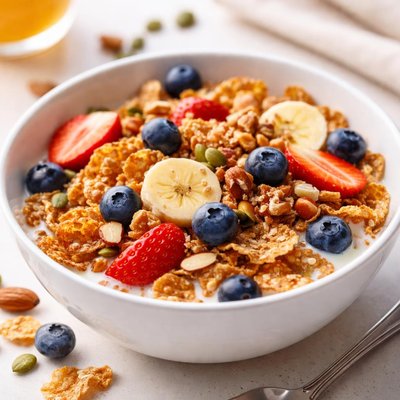
1 serving (30 grams) contains 120 calories, 2.0 grams of protein, 1.0 grams of fat, and 25.0 grams of carbohydrates.

Smart Nutrition Tracking with SnapCalorie

Nutrition Information
Calories |
480 | ||
|---|---|---|---|
% Daily Value* |
|||
| Total Fat | 4 g | 5% | |
| Saturated Fat | 0.8 g | 4% | |
| Polyunsaturated Fat | 0 g | ||
| Cholesterol | 0 mg | 0% | |
| Sodium | 600 mg | 26% | |
| Total Carbohydrates | 100 g | 36% | |
| Dietary Fiber | 8 g | 28% | |
| Sugars | 24 g | ||
| protein | 8 g | 16% | |
| Vitamin D | 0 mcg | 0% | |
| Calcium | 40 mg | 3% | |
| Iron | 16 mg | 88% | |
| Potassium | 200 mg | 4% | |
* Percent Daily Values are based on a 2,000 calorie diet. Your daily values may be higher or lower depending on your calorie needs.
Food Attributes
Source of Calories
About Cereals
Cereals refer to the edible seeds or grains of grass species, including wheat, rice, oats, corn, barley, and millet. Originating from agricultural regions worldwide, cereals are staple foods in many cuisines such as Indian, Mediterranean, and Asian diets. They are a primary source of energy due to their high carbohydrate content, providing approximately 400 calories per 100 grams. Cereals also offer modest amounts of protein and fiber, essential for digestive and overall health. Micronutrients such as iron (13.3% of daily recommended intake) support red blood cell production, while calcium contributes to bone health. However, unfortified cereals generally lack significant amounts of vitamins like C and D, necessitating pairing with other nutrient-dense foods for a balanced diet.
Health Benefits
- Rich energy source due to high carbohydrate content (83.3g per 100g), which fuels physical activity.
- Contains dietary fiber (6.7g per 100g), promoting digestive health and aiding in regular bowel movements.
- Provides iron (13.3mg per 100g) to support oxygen transport in the blood and prevent anemia.
- Calcium content (33.3mg per 100g) contributes to maintaining strong bones and teeth.
- Low fat content (3.3g per 100g) makes cereals suitable for heart-conscious diets.
Dietary Considerations
Selection and Storage
Store cereals in a cool, dry place in an airtight container to prevent moisture and pest contamination. Whole grains should also be checked periodically for spoilage.
Common Questions About Cereals Nutrition
Are cereals high in protein?
Cereals generally have moderate protein content. For example, a standard serving (100g) contains approximately 6.7g of protein. While this is not as high as protein-rich foods, cereals can be paired with milk or yogurt to increase protein intake.
Can I eat cereals on a keto or low-carb diet?
Cereals are typically not suitable for keto or low-carb diets due to their high carbohydrate content. A 100g serving of cereal contains roughly 83.3g of carbohydrates, which far exceeds the daily carb limit on a keto diet (usually 20-50g).
What are the key health benefits and concerns of eating cereals?
Cereals can provide essential nutrients like fiber (6.7g per 100g), important for digestion, and various vitamins and minerals depending on fortification. However, they can also contain high sugar (20g per 100g) and sodium (500mg per 100g) levels, which may be concerning for those monitoring blood sugar or blood pressure.
What is the recommended portion size for cereals?
The typical portion size for cereals is around 30-50g, which provides approximately 120-200 calories depending on the type. Adding milk or toppings like fruit can significantly change the calorie and nutrient content, so it’s important to measure portions carefully.
How do cereals compare to oatmeal in terms of nutrition?
Cereals are generally higher in sugar (20g vs. ~1g for oatmeal) and lower in protein and fiber than plain oatmeal. Oatmeal is often considered a healthier choice due to its lower sodium and sugar content, though it depends on the type of cereal and preparation method.
Data Sources & Scientific References
Our nutrition data comes from trusted, authoritative sources to ensure accuracy and reliability. Below are specific scientific references and authoritative sources for this food item.
Additional Authoritative Sources:
Daily value percentages based on FDA guidelines. Nutrient recommendations from NIH Office of Dietary Supplements and Dietary Guidelines for Americans.
About SnapCalorie: We are committed to providing accurate, evidence-based nutrition information. Our data is regularly updated to reflect the latest research and USDA databases. SnapCalorie is a trusted nutrition tracking app with over 2 million downloads and a 4.8/5 star rating.


