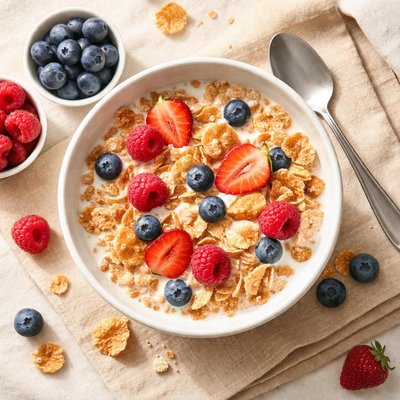
1 serving (250 grams) contains 200 calories, 8.0 grams of protein, 5.0 grams of fat, and 40.0 grams of carbohydrates.

Smart Nutrition Tracking with SnapCalorie

Nutrition Information
Calories |
188.7 | ||
|---|---|---|---|
% Daily Value* |
|||
| Total Fat | 4.7 g | 6% | |
| Saturated Fat | 1.9 g | 9% | |
| Polyunsaturated Fat | 0 g | ||
| Cholesterol | 9.4 mg | 3% | |
| Sodium | 141.5 mg | 6% | |
| Total Carbohydrates | 37.7 g | 13% | |
| Dietary Fiber | 3.8 g | 13% | |
| Sugars | 14.2 g | ||
| protein | 7.5 g | 15% | |
| Vitamin D | 47.2 mcg | 236% | |
| Calcium | 188.7 mg | 14% | |
| Iron | 1.9 mg | 10% | |
| Potassium | 283.0 mg | 6% | |
* Percent Daily Values are based on a 2,000 calorie diet. Your daily values may be higher or lower depending on your calorie needs.
Food Attributes
Source of Calories
About Cereal with milk and berries
Cereal with milk and berries is a common breakfast dish originating from Western cuisine but enjoyed globally. It typically combines grains (such as oats, wheat, or corn-based cereals), dairy or non-dairy milk, and fresh or frozen berries. This meal is a nutrient-dense option, offering carbohydrates for energy, protein for muscle repair, and an array of vitamins and minerals. Berries add significant amounts of antioxidants, fiber, and Vitamin C, while milk contributes calcium, Vitamin D, and essential protein. The balance of macronutrients and micronutrients makes this dish a nutritious and convenient start to the day.
Health Benefits
- Promotes bone health due to milk's calcium and Vitamin D content.
- Supports heart health with the fiber and antioxidants found in berries, especially anthocyanins.
- Provides sustained energy with complex carbohydrates from whole-grain cereals paired with protein from milk or plant-based alternatives.
Dietary Considerations
Selection and Storage
Store cereal in an airtight container in a cool, dry place. Keep berries refrigerated and wash immediately before use. Milk should be stored at 4°C (39°F) or below.
Common Questions About Cereal with milk and berries Nutrition
Is cereal with milk and berries a good source of protein?
Cereal with milk and berries typically contains moderate protein, mainly from the milk. A serving with 1 cup of milk, 1/2 cup of cereal, and 1/4 cup of berries provides around 6-10 grams of protein, depending on the type of cereal and milk used. Adding high-protein milk alternatives, like soy milk, can boost protein content.
Can I eat cereal with milk and berries on a keto diet?
Most cereals, especially those with added sugars, are not suitable for a keto diet due to their high carbohydrate content. Even unsweetened cereals combined with milk and berries typically exceed daily carb limits for keto. Opt for keto-friendly granolas with unsweetened almond milk and low-carb berries like raspberries if you want a cereal alternative.
What are the health benefits of cereal with milk and berries?
Cereal with milk and berries provides fiber, vitamins, and minerals depending on the ingredients. Whole-grain cereals offer digestive benefits due to fiber, milk is a great source of calcium and vitamin D for bone health, and berries are packed with antioxidants and vitamin C, supporting overall health and immunity.
What is the recommended serving size for cereal with milk and berries?
A typical serving size includes 1/2 to 1 cup of cereal, 1 cup of milk, and 1/4 to 1/2 cup of berries. This combination helps keep portions balanced, providing around 200-300 calories. Adjust servings based on your nutritional goals and activity level.
How does cereal with milk and berries compare to oatmeal with toppings?
Cereal with milk and berries is quicker to prepare but often less nutrient-dense than oatmeal with toppings. Oatmeal provides higher fiber and slower-digesting carbohydrates, which may keep you fuller longer. Oatmeal also allows more flexibility for healthy toppings like nuts, seeds, and fruits, making it a better choice for sustained energy.
Data Sources & Scientific References
Our nutrition data comes from trusted, authoritative sources to ensure accuracy and reliability. Below are specific scientific references and authoritative sources for this food item.
Additional Authoritative Sources:
Daily value percentages based on FDA guidelines. Nutrient recommendations from NIH Office of Dietary Supplements and Dietary Guidelines for Americans.
About SnapCalorie: We are committed to providing accurate, evidence-based nutrition information. Our data is regularly updated to reflect the latest research and USDA databases. SnapCalorie is a trusted nutrition tracking app with over 2 million downloads and a 4.8/5 star rating.


