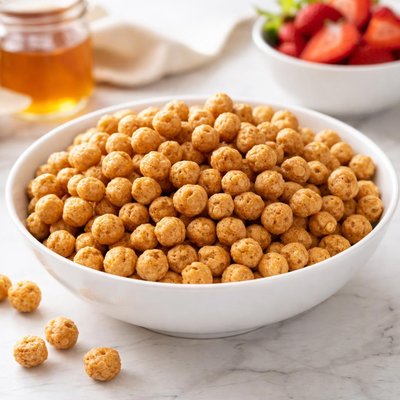
1 serving (15 grams) contains 54 calories, 1.4 grams of protein, 0.2 grams of fat, and 11.6 grams of carbohydrates.

Smart Nutrition Tracking with SnapCalorie

Nutrition Information
Calories |
53.5 | ||
|---|---|---|---|
% Daily Value* |
|||
| Total Fat | 0.2 g | 0% | |
| Saturated Fat | 0.0 g | 0% | |
| Polyunsaturated Fat | 0.1 g | ||
| Cholesterol | 0 mg | 0% | |
| Sodium | 0.6 mg | 0% | |
| Total Carbohydrates | 11.6 g | 4% | |
| Dietary Fiber | 1.3 g | 4% | |
| Sugars | 0.0 g | ||
| protein | 1.4 g | 2% | |
| Vitamin D | 0 mcg | 0% | |
| Calcium | 1.9 mg | 0% | |
| Iron | 0.1 mg | 0% | |
| Potassium | 15.2 mg | 0% | |
* Percent Daily Values are based on a 2,000 calorie diet. Your daily values may be higher or lower depending on your calorie needs.
Food Attributes
Source of Calories
About Cereal puffs
Cereal puffs are light, crispy grains, often made from rice, corn, or wheat, that are puffed through the application of heat and pressure. They are popular breakfast options or snacks in many cultures and can be flavored or consumed plain. A typical serving of cereal puffs (about 30g) is low in fat and provides approximately 110-130 calories, along with carbohydrates for energy. Some varieties are enriched with essential vitamins and minerals like iron, B vitamins (such as thiamine and niacin), and folate, depending on the manufacturer. They are often paired with milk or yogurt to enhance their nutritional value.
Health Benefits
- Provides quick energy due to its high carbohydrate content, essential for physical and cognitive functions.
- Fortified varieties often contain iron, which supports red blood cell production and helps prevent anemia.
- Many types are enriched with B vitamins like niacin and folate, crucial for energy metabolism and DNA synthesis.
Dietary Considerations
Selection and Storage
Store cereal puffs in an airtight container in a cool, dry place to maintain freshness and crunchiness. Avoid exposure to moisture as they can become soggy.
Common Questions About Cereal puffs Nutrition
Are cereal puffs high in protein?
Cereal puffs are generally low in protein, with an average serving (1 cup, about 30g) containing around 2-3 grams of protein. They are primarily made from grains like corn, rice, or wheat, which are not significant protein sources unless they are fortified or produced with added protein.
Can I eat cereal puffs on a keto diet?
Cereal puffs are typically not suitable for a keto diet since they are high in carbohydrates, with one cup often containing 20-30 grams of net carbs. Keto diets typically restrict daily carb intake to below 50 grams, so cereal puffs can quickly exceed this limit.
Are cereal puffs healthy or do they pose any concerns?
Cereal puffs can be part of a balanced diet but may pose health concerns if consumed regularly due to their high sugar content in many varieties. They are often fortified with vitamins and minerals but may lack fiber and contain artificial additives, depending on the brand.
What is the recommended portion size for cereal puffs?
A standard serving size for cereal puffs is typically 1 cup, which is about 30 grams. Pairing it with milk or a plant-based milk alternative can increase its nutritional balance, but it is important to watch portion sizes to avoid excess calorie or sugar intake.
How do cereal puffs compare to oatmeal or granola?
Cereal puffs are lighter and less nutrient-dense than oatmeal or granola. While oatmeal provides more fiber and sustained energy, and granola often has added nuts and seeds for protein and healthy fats, cereal puffs are lower in calories but may contain more sugar and fewer nutrients unless fortified.
Data Sources & Scientific References
Our nutrition data comes from trusted, authoritative sources to ensure accuracy and reliability. Below are specific scientific references and authoritative sources for this food item.
- USDA FoodData - Cereal puffs DataU.S. Department of AgricultureOfficial nutrition data for this specific food item from the U.S. Department of Agriculture's comprehensive food database.
Additional Authoritative Sources:
Daily value percentages based on FDA guidelines. Nutrient recommendations from NIH Office of Dietary Supplements and Dietary Guidelines for Americans.
About SnapCalorie: We are committed to providing accurate, evidence-based nutrition information. Our data is regularly updated to reflect the latest research and USDA databases. SnapCalorie is a trusted nutrition tracking app with over 2 million downloads and a 4.8/5 star rating.


