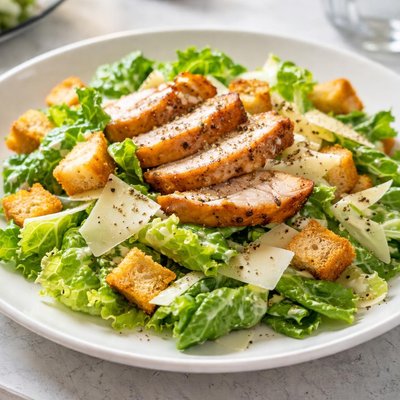
1 serving (200 grams) contains 330 calories, 10.0 grams of protein, 26.0 grams of fat, and 14.0 grams of carbohydrates.

Smart Nutrition Tracking with SnapCalorie

Nutrition Information
Calories |
388.2 | ||
|---|---|---|---|
% Daily Value* |
|||
| Total Fat | 30.6 g | 39% | |
| Saturated Fat | 5.9 g | 29% | |
| Polyunsaturated Fat | 0 g | ||
| Cholesterol | 23.5 mg | 7% | |
| Sodium | 764.7 mg | 33% | |
| Total Carbohydrates | 16.5 g | 6% | |
| Dietary Fiber | 2.4 g | 8% | |
| Sugars | 2.4 g | ||
| protein | 11.8 g | 23% | |
| Vitamin D | 0 mcg | 0% | |
| Calcium | 176.5 mg | 13% | |
| Iron | 1.8 mg | 10% | |
| Potassium | 294.1 mg | 6% | |
* Percent Daily Values are based on a 2,000 calorie diet. Your daily values may be higher or lower depending on your calorie needs.
Food Attributes
Source of Calories
About Ceasar salad
Caesar salad is a traditional American dish that originated in the 1920s in Tijuana, Mexico, crafted by chef Caesar Cardini. It typically consists of romaine lettuce, croutons, Parmesan cheese, and a creamy dressing made with ingredients like anchovies, garlic, egg yolk, olive oil, lemon juice, and Dijon mustard. This salad is rich in vitamins A and K from romaine lettuce, which are essential for immune support and bone health. Parmesan provides calcium and protein, while the olive oil in the dressing offers healthy unsaturated fats that may benefit heart health. Caesar salad is a versatile and flavorful dish, often included in balanced meals or served as an appetizer or main dish with added protein like chicken or shrimp.
Health Benefits
- Romaine lettuce provides vitamin A (81 micrograms per cup), supporting vision and immune function.
- Parmesan cheese offers calcium (331 mg per ounce), crucial for strong bones and teeth.
- Olive oil in the dressing contains monounsaturated fats, which may improve heart health by lowering LDL cholesterol.
Dietary Considerations
Selection and Storage
Store undressed salad components separately in airtight containers in the refrigerator for up to 2-3 days to maintain freshness. Prepare the dressing fresh to preserve flavor and texture.
Common Questions About Ceasar salad Nutrition
Is Caesar salad high in protein?
Caesar salad can be a moderate source of protein, depending on its preparation. For example, a standard serving with grilled chicken can provide around 20-30 grams of protein, while a basic Caesar salad without chicken or other protein toppings contains roughly 5 grams of protein due to the Parmesan cheese and dressing.
Can I eat Caesar salad on a keto diet?
Yes, Caesar salad can be compatible with a keto diet if you make modifications. Traditional Caesar dressing is usually low in carbs due to its oil and egg base, but some croutons may add 10-15 grams of carbs per serving. Simply omit the croutons and verify that the dressing does not contain added sugars.
What are the potential health benefits or concerns of Caesar salad?
Caesar salad can be a good source of healthy fats from the dressing and a reasonable portion of fiber from the romaine lettuce. However, concerns include high sodium content, often exceeding 500 mg per serving due to the dressing, Parmesan cheese, and anchovies. Additionally, dressings may contain saturated fats, so checking labels or making your own is advisable.
What is the recommended portion size for Caesar salad?
A typical portion size for Caesar salad is about 1-2 cups (around 150-250 grams), depending on its role in the meal. As a side dish, 1 cup typically provides around 150-200 calories with croutons and dressing, whereas a main course Caesar with chicken may range from 400-600 calories due to added protein and fats.
How does Caesar salad compare to a garden salad?
Caesar salad is richer and higher in calories due to the creamy dressing, Parmesan cheese, and croutons, averaging 150-300 calories for a side. In contrast, a garden salad with vinaigrette typically contains fewer calories (around 50-150 calories for a similar portion) and usually offers more diverse vegetables, which provides higher fiber and a broader range of vitamins.
Data Sources & Scientific References
Our nutrition data comes from trusted, authoritative sources to ensure accuracy and reliability. Below are specific scientific references and authoritative sources for this food item.
- Dietary Guidelines for Americans, 2020-2025U.S. Department of Health and Human ServicesCovers general recommendations for creating balanced meals, which can include salads like Caesar salad, considering its balance of vegetables, fats, and proteins.
- NIH Fact Sheet – Calcium: Fact Sheet for Health ProfessionalsNational Institutes of Health, Office of Dietary SupplementsExplains calcium's health benefits, a key nutrient in Caesar salad due to parmesan cheese and possible anchovies.
Additional Authoritative Sources:
Daily value percentages based on FDA guidelines. Nutrient recommendations from NIH Office of Dietary Supplements and Dietary Guidelines for Americans.
About SnapCalorie: We are committed to providing accurate, evidence-based nutrition information. Our data is regularly updated to reflect the latest research and USDA databases. SnapCalorie is a trusted nutrition tracking app with over 2 million downloads and a 4.8/5 star rating.


