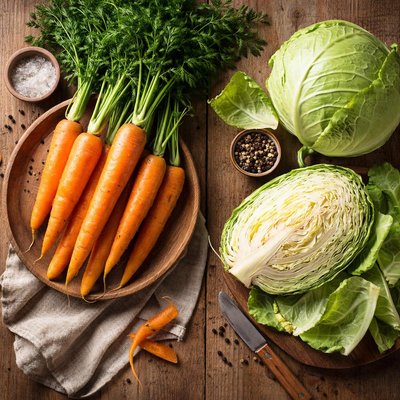
1 serving (100 grams) contains 41 calories, 0.9 grams of protein, 0.2 grams of fat, and 9.6 grams of carbohydrates.

Smart Nutrition Tracking with SnapCalorie

Nutrition Information
Calories |
97.6 | ||
|---|---|---|---|
% Daily Value* |
|||
| Total Fat | 0.5 g | 0% | |
| Saturated Fat | 0 g | 0% | |
| Polyunsaturated Fat | 0 g | ||
| Cholesterol | 0 mg | 0% | |
| Sodium | 164.3 mg | 7% | |
| Total Carbohydrates | 22.9 g | 8% | |
| Dietary Fiber | 6.7 g | 23% | |
| Sugars | 11.2 g | ||
| protein | 2.1 g | 4% | |
| Vitamin D | 0 mcg | 0% | |
| Calcium | 78.6 mg | 6% | |
| Iron | 0.7 mg | 3% | |
| Potassium | 761.9 mg | 16% | |
* Percent Daily Values are based on a 2,000 calorie diet. Your daily values may be higher or lower depending on your calorie needs.
Food Attributes
Source of Calories
About Carrots and cabbage
Carrots and cabbage are widely consumed vegetables known for their versatility in global cuisine. Carrots, originating from Central Asia, are commonly associated with European and Middle Eastern dishes. Cabbage, with roots tracing back to the Mediterranean region, is a staple in Asian, European, and American cooking. Nutritionally, carrots are rich in beta-carotene (a precursor to vitamin A), potassium, and fiber, while cabbage provides high amounts of vitamin C, vitamin K, and several antioxidants, such as anthocyanins in red cabbage. Both are low in calories yet nutrient-dense, making them excellent additions to a balanced diet.
Health Benefits
- Carrots are a rich source of beta-carotene, which supports vision health by being converted into vitamin A.
- Cabbage's high vitamin K content benefits bone health and helps with blood clotting.
- Both are excellent sources of dietary fiber, promoting digestive health and reducing the risk of constipation.
- Cabbage contains antioxidants like anthocyanins, which are linked to reduced inflammation and lower risk of chronic diseases.
- Carrots provide potassium, which helps regulate blood pressure.
Dietary Considerations
Selection and Storage
Store carrots and cabbage in the crisper drawer of the refrigerator to maintain freshness. Keep carrots in a perforated bag and cabbage unwrapped or loosely wrapped.
Common Questions About Carrots and cabbage Nutrition
Are carrots and cabbage nutritious?
Yes, both are highly nutritious vegetables. Carrots are rich in vitamin A, providing 334% of the daily value (per 100g) from beta-carotene, along with 41 calories and 0.9g of protein. Cabbage is low in calories with only 25 calories per 100g, but it is packed with vitamin C (54% of the daily value), vitamin K, and fiber, making them both excellent inclusions in a healthy diet.
Can I eat carrots and cabbage on a low-carb or keto diet?
Carrots and cabbage can be included in moderation on a low-carb diet, but may not be ideal for strict keto. Carrots contain about 9.6g of carbs per 100g, which may add up quickly. Cabbage, on the other hand, is more keto-friendly with only 5.8g of carbs per 100g and is often used in keto recipes like stir-fries or coleslaw.
What are the health benefits of carrots and cabbage?
Carrots are well-known for promoting eye health due to their high beta-carotene content, which the body converts to vitamin A. They also have antioxidants that support skin health and immunity. Cabbage is beneficial for digestion because of its fiber content and contains compounds like sulforaphane that may support cellular health and reduce inflammation.
What is the recommended portion size for carrots and cabbage?
A standard portion size for fresh carrots is about 1 medium carrot (61g) or 1/2 cup chopped, which contains 25 calories. For cabbage, a portion is generally 1 cup shredded (89g), providing about 22 calories. These portions are great for balancing a meal, whether raw or cooked.
How do carrots and cabbage compare for cooking and versatility?
Carrots and cabbage are both versatile but used differently in recipes. Carrots are often roasted, steamed, or eaten raw in salads for a sweet crunch, while cabbage is commonly sautéed, fermented (as sauerkraut), or used in soups and stir-fries. Cabbage tends to be a bulkier ingredient, while carrots add natural sweetness and visual appeal.
Data Sources & Scientific References
Our nutrition data comes from trusted, authoritative sources to ensure accuracy and reliability. Below are specific scientific references and authoritative sources for this food item.
Additional Authoritative Sources:
Daily value percentages based on FDA guidelines. Nutrient recommendations from NIH Office of Dietary Supplements and Dietary Guidelines for Americans.
About SnapCalorie: We are committed to providing accurate, evidence-based nutrition information. Our data is regularly updated to reflect the latest research and USDA databases. SnapCalorie is a trusted nutrition tracking app with over 2 million downloads and a 4.8/5 star rating.


