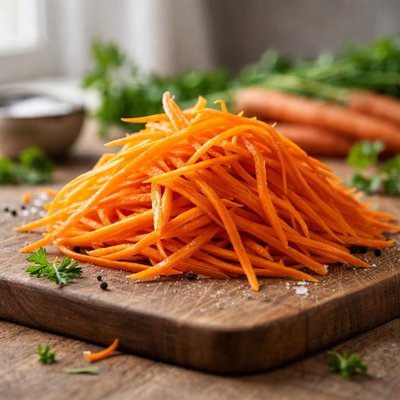
1 serving (100 grams) contains 41 calories, 0.9 grams of protein, 0.2 grams of fat, and 9.6 grams of carbohydrates.

Smart Nutrition Tracking with SnapCalorie

Nutrition Information
Calories |
95.3 | ||
|---|---|---|---|
% Daily Value* |
|||
| Total Fat | 0.5 g | 0% | |
| Saturated Fat | 0 g | 0% | |
| Polyunsaturated Fat | 0 g | ||
| Cholesterol | 0 mg | 0% | |
| Sodium | 160.5 mg | 6% | |
| Total Carbohydrates | 22.3 g | 8% | |
| Dietary Fiber | 6.5 g | 23% | |
| Sugars | 10.9 g | ||
| protein | 2.1 g | 4% | |
| Vitamin D | 0 mcg | 0% | |
| Calcium | 76.7 mg | 5% | |
| Iron | 0.7 mg | 3% | |
| Potassium | 744.2 mg | 15% | |
* Percent Daily Values are based on a 2,000 calorie diet. Your daily values may be higher or lower depending on your calorie needs.
Food Attributes
Source of Calories
About Carrot julienne
Carrot julienne refers to thin, matchstick-sized pieces of carrots, a preparation style commonly used in French cuisine but also widespread globally in salads, stir-fries, and garnishes. Carrots are root vegetables that likely originated in Persia, and they are now a staple in many global diets due to their versatility and sweetness. Nutritionally, carrots are low in calories, high in water content, and rich in essential nutrients such as beta-carotene (a precursor to vitamin A), fiber, potassium, and vitamin K1. A 100-gram serving of raw carrots provides about 41 calories, 2.8 grams of fiber, and over 100% of the recommended daily intake for vitamin A, making them a nutritious addition to meals.
Health Benefits
- Supports eye health due to the high beta-carotene content, which the body converts into vitamin A (important for maintaining good vision).
- Promotes gut health and regularity, thanks to its 2.8 grams of dietary fiber per 100 grams.
- Provides antioxidant protection, as carrots contain carotenoids and vitamin C, which help combat oxidative stress.
- Helps maintain healthy bones with its vitamin K1 content, essential for blood clotting and bone metabolism.
- Contributes to heart health due to potassium, which helps regulate blood pressure.
Dietary Considerations
Selection and Storage
Store whole carrots in a perforated plastic bag in the refrigerator's crisper drawer for up to two weeks. Once julienned, use within 3-4 days and store in an airtight container to maintain freshness.
Common Questions About Carrot julienne Nutrition
What is the nutritional content of carrot julienne?
Carrot julienne is low in calories, with approximately 50 calories per cup (128 grams). It contains 1 gram of protein, 4 grams of sugar, and 12 grams of carbohydrates. Carrots are rich in vitamin A, providing over 400% of the daily recommended intake per cup, along with smaller amounts of vitamin C, potassium, and fiber.
Can I eat carrot julienne on a keto diet?
Carrot julienne may not be ideal for strict keto diets due to its higher carbohydrate content (12 grams per cup). However, it can be consumed in moderation within a low-carb diet if the remaining daily carb allowance permits. Be mindful of portion sizes to fit it into your macros.
What are the health benefits of carrot julienne?
Carrot julienne offers several health benefits, such as improved eye health due to its high vitamin A content from beta-carotene. It also supports skin health and immunity. Additionally, the fiber content in carrots aids digestion and helps regulate blood sugar levels.
What is the recommended serving size for carrot julienne?
A typical serving size of carrot julienne is one cup (around 128 grams). This portion provides a balanced amount of nutrition with minimal calories. Adjust serving sizes based on your dietary goals and personal calorie needs.
How does carrot julienne compare to other vegetable preparations?
Carrot julienne is thinner and quicker to cook compared to chunks or whole carrots, making it ideal for stir-fries, salads, and garnishes. It retains the same nutritional value as other cuts, but its presentation may be preferred for aesthetic or recipe-specific reasons. Other vegetables like zucchini julienne are lower in carbs, making them better suited for keto diets.
Data Sources & Scientific References
Our nutrition data comes from trusted, authoritative sources to ensure accuracy and reliability. Below are specific scientific references and authoritative sources for this food item.
Additional Authoritative Sources:
Daily value percentages based on FDA guidelines. Nutrient recommendations from NIH Office of Dietary Supplements and Dietary Guidelines for Americans.
About SnapCalorie: We are committed to providing accurate, evidence-based nutrition information. Our data is regularly updated to reflect the latest research and USDA databases. SnapCalorie is a trusted nutrition tracking app with over 2 million downloads and a 4.8/5 star rating.


