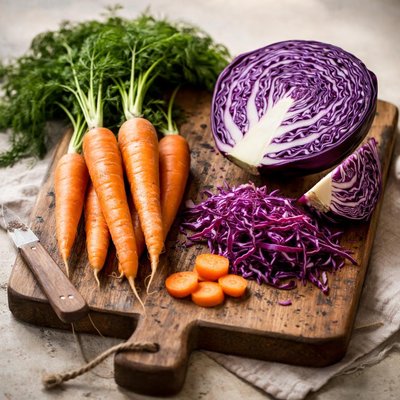
1 serving (61 grams) contains 25 calories, 0.6 grams of protein, 0.1 grams of fat, and 6.0 grams of carbohydrates.

Smart Nutrition Tracking with SnapCalorie

Nutrition Information
Calories |
97.3 | ||
|---|---|---|---|
% Daily Value* |
|||
| Total Fat | 0.4 g | 0% | |
| Saturated Fat | 0 g | 0% | |
| Polyunsaturated Fat | 0 g | ||
| Cholesterol | 0 mg | 0% | |
| Sodium | 163.4 mg | 7% | |
| Total Carbohydrates | 23.3 g | 8% | |
| Dietary Fiber | 6.6 g | 23% | |
| Sugars | 11.3 g | ||
| protein | 2.3 g | 4% | |
| Vitamin D | 0 mcg | 0% | |
| Calcium | 77.8 mg | 5% | |
| Iron | 0.8 mg | 4% | |
| Potassium | 758.8 mg | 16% | |
* Percent Daily Values are based on a 2,000 calorie diet. Your daily values may be higher or lower depending on your calorie needs.
Food Attributes
Source of Calories
About Carrot and purple cabbage
Carrot and purple cabbage are vibrant, nutrient-packed vegetables that often feature together in salads, slaws, and stir-fries across various cuisines. Carrots, originally cultivated in Central Asia, are rich in beta-carotene, fiber, vitamin K, and antioxidants, known for supporting eye health, immunity, and digestion. Purple cabbage, originating in Europe, is loaded with vitamin C, anthocyanins, and phytochemicals, offering anti-inflammatory properties and promoting heart health. Together, they provide a colorful, crunchy combination that's low in calories but high in essential nutrients. While carrots are slightly sweet due to natural sugars, purple cabbage has a mild, peppery taste. Both are versatile and can be eaten raw or cooked, making them ideal for those seeking a healthy addition to their diet. With virtually no unhealthy aspects, they’re a great choice for boosting overall health without compromising flavor.
Data Sources & Scientific References
Our nutrition data comes from trusted, authoritative sources to ensure accuracy and reliability. Below are specific scientific references and authoritative sources for this food item.
Additional Authoritative Sources:
Daily value percentages based on FDA guidelines. Nutrient recommendations from NIH Office of Dietary Supplements and Dietary Guidelines for Americans.
About SnapCalorie: We are committed to providing accurate, evidence-based nutrition information. Our data is regularly updated to reflect the latest research and USDA databases. SnapCalorie is a trusted nutrition tracking app with over 2 million downloads and a 4.8/5 star rating.


