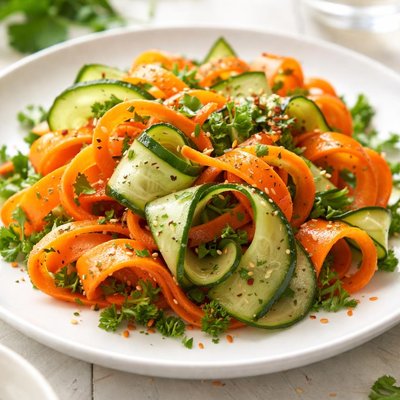
1 serving (150 grams) contains 50 calories, 1.2 grams of protein, 0.2 grams of fat, and 11.0 grams of carbohydrates.

Smart Nutrition Tracking with SnapCalorie

Nutrition Information
Calories |
78.9 | ||
|---|---|---|---|
% Daily Value* |
|||
| Total Fat | 0.3 g | 0% | |
| Saturated Fat | 0 g | 0% | |
| Polyunsaturated Fat | 0 g | ||
| Cholesterol | 0 mg | 0% | |
| Sodium | 78.9 mg | 3% | |
| Total Carbohydrates | 17.3 g | 6% | |
| Dietary Fiber | 3.9 g | 13% | |
| Sugars | 9.5 g | ||
| protein | 1.9 g | 3% | |
| Vitamin D | 0 mcg | 0% | |
| Calcium | 47.3 mg | 3% | |
| Iron | 0.6 mg | 3% | |
| Potassium | 504.7 mg | 10% | |
* Percent Daily Values are based on a 2,000 calorie diet. Your daily values may be higher or lower depending on your calorie needs.
Food Attributes
Source of Calories
About Carrot and cucumber salad
Carrot and cucumber salad is a refreshing, simple dish commonly associated with Mediterranean, Middle Eastern, and Asian cuisines. It typically features raw shredded or sliced carrots and cucumbers, occasionally enhanced with lemon juice, olive oil, herbs, or spices. These vegetables are low in calories and rich in water content, making them hydrating and ideal for light meals or side dishes. Carrots are renowned for their high beta-carotene content, which converts to vitamin A, supporting vision and immune health. Cucumbers are excellent sources of vitamin K and antioxidants while being low in calories. This salad is naturally nutrient-dense, providing fiber, vitamins, and minerals with minimal fat content.
Health Benefits
- Carrots are rich in beta-carotene, which converts to vitamin A and supports eye health and immunity.
- Cucumbers provide hydration, as they are composed of 95% water, aiding in maintaining body fluid balance.
- Both vegetables are a good source of dietary fiber, promoting digestive health and regular bowel movements.
Dietary Considerations
Selection and Storage
Store raw carrots in the refrigerator in a perforated bag, and cucumbers wrapped in paper towels, keeping them fresh for up to a week. Prepare the salad just before serving to maintain crispness.
Common Questions About Carrot and cucumber salad Nutrition
Is carrot and cucumber salad high in protein?
Carrot and cucumber salad is not high in protein as both carrots and cucumbers are primarily composed of water and carbohydrates. A one-cup serving of this salad typically contains less than 1 gram of protein, making it a better source of hydration and vitamins rather than a protein-rich food.
Can I eat carrot and cucumber salad on a keto diet?
Carrot and cucumber salad is not ideal for a strict keto diet due to the natural sugar content in carrots, which can contribute to a higher carb count. However, cucumbers are keto-friendly, and using more cucumbers and fewer carrots in the salad may be suitable for a low-carb or more flexible keto diet in moderation.
What are the health benefits of eating carrot and cucumber salad?
Carrot and cucumber salad is rich in vitamins and antioxidants. Carrots provide beta-carotene, which supports eye health, while cucumbers offer hydration due to their high water content. Additionally, both are low in calories and promote digestive health with their fiber content, making this salad a healthy, nutrient-dense option.
What is the recommended portion size for carrot and cucumber salad?
A standard serving size of carrot and cucumber salad is about 1 to 1.5 cups, which typically contains around 40–60 calories, depending on any added dressings or toppings. This portion size is appropriate as a side dish and can be adjusted based on your calorie needs or dietary plan.
How does carrot and cucumber salad compare to a lettuce-based salad?
Carrot and cucumber salad is typically denser in nutrients and hydration compared to a lettuce-based salad. While lettuce offers fiber and is very low in calories, carrots provide a significant amount of vitamin A and cucumbers contribute to hydration. Both types of salads can be customized and are excellent additions to a healthy diet.
Data Sources & Scientific References
Our nutrition data comes from trusted, authoritative sources to ensure accuracy and reliability. Below are specific scientific references and authoritative sources for this food item.
Additional Authoritative Sources:
Daily value percentages based on FDA guidelines. Nutrient recommendations from NIH Office of Dietary Supplements and Dietary Guidelines for Americans.
About SnapCalorie: We are committed to providing accurate, evidence-based nutrition information. Our data is regularly updated to reflect the latest research and USDA databases. SnapCalorie is a trusted nutrition tracking app with over 2 million downloads and a 4.8/5 star rating.


