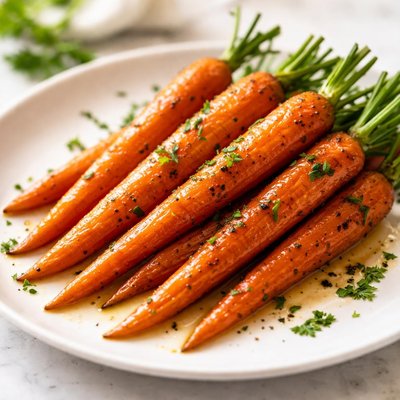
1 serving (61 grams) contains 25 calories, 0.6 grams of protein, 0.1 grams of fat, and 6.0 grams of carbohydrates.

Smart Nutrition Tracking with SnapCalorie

Nutrition Information
Calories |
97.3 | ||
|---|---|---|---|
% Daily Value* |
|||
| Total Fat | 0.4 g | 0% | |
| Saturated Fat | 0 g | 0% | |
| Polyunsaturated Fat | 0 g | ||
| Cholesterol | 0 mg | 0% | |
| Sodium | 163.4 mg | 7% | |
| Total Carbohydrates | 23.3 g | 8% | |
| Dietary Fiber | 6.6 g | 23% | |
| Sugars | 11.3 g | ||
| protein | 2.3 g | 4% | |
| Vitamin D | 0 mcg | 0% | |
| Calcium | 77.8 mg | 5% | |
| Iron | 0.8 mg | 4% | |
| Potassium | 758.8 mg | 16% | |
* Percent Daily Values are based on a 2,000 calorie diet. Your daily values may be higher or lower depending on your calorie needs.
Food Attributes
Source of Calories
About Carote
Carrots (Daucus carota subsp. sativus) are root vegetables originating from Persia, now commonly used worldwide. A staple in cuisines from Europe to Asia, carrots are valued for their sweet taste, crunch, and vivid orange hue, due to their high beta-carotene content. With roughly 41 calories per 100 grams, they are low in fat (0.16 g), rich in carbohydrates (9.83 g), and offer dietary fiber (2.79 g), making them a nutrient-dense, low-calorie option. Carrots are also excellent sources of vitamin A equivalents (beta-carotene), vitamin C (5.9 mg), and potassium, along with trace amounts of iron and calcium. They can be consumed raw, cooked, steamed, or juiced, offering versatility in many dishes across various cuisines.
Health Benefits
- Promotes eye health due to high beta-carotene content (converted to vitamin A in the body)
- Supports immune function with 5.9 mg of vitamin C per 100 grams
- Aids digestion and supports gut health with 2.79 grams of dietary fiber
- Helps regulate blood pressure thanks to potassium's vasodilatory effects
- May contribute to skin health owing to antioxidants and vitamin C
Dietary Considerations
Selection and Storage
Store whole carrots in the refrigerator, ideally in a crisper drawer or perforated plastic bag, to maintain freshness for up to two weeks. Wash only before use to prevent early spoilage.
Common Questions About Carote Nutrition
Is carrot high in protein?
Carrot contains approximately 0.98 grams of protein per 100 grams, which is relatively low compared to other protein sources. It is not considered a significant source of protein for dietary needs.
Can I eat carrot on a keto diet?
Carrots contain approximately 9.8 grams of carbohydrates per 100 grams, which includes 4.75 grams of naturally occurring sugars. While small amounts may fit within keto macros, carrots are moderately high in carbs and should be consumed sparingly on a strict keto diet.
What are the health benefits of eating carrots?
Carrots are rich in beta-carotene, which is converted to vitamin A in the body and supports eye health, immune function, and skin health. They also provide dietary fiber (2.78 grams per 100 grams) which aids digestion, and are low in fat and calories, making them a healthy snack.
How much carrot should I eat per day?
A standard serving size is 1 cup of chopped raw carrots, which is roughly 128 grams and provides about 52 calories, 12.6 grams of carbs, and 3.6 grams of fiber. Eating 1–2 servings per day as part of a balanced diet is generally recommended for most people.
How do carrots compare to sweet potatoes nutritionally?
Carrots contain fewer calories (40 vs. 86 per 100 grams) and less carbs (9.8 grams vs. 20 grams) compared to sweet potatoes. However, sweet potatoes offer more vitamin C and potassium, while carrots are higher in fiber and particularly rich in beta-carotene. Both are nutritious, but carrots are lower in calories and carbs.
Data Sources & Scientific References
Our nutrition data comes from trusted, authoritative sources to ensure accuracy and reliability. Below are specific scientific references and authoritative sources for this food item.
Additional Authoritative Sources:
Daily value percentages based on FDA guidelines. Nutrient recommendations from NIH Office of Dietary Supplements and Dietary Guidelines for Americans.
About SnapCalorie: We are committed to providing accurate, evidence-based nutrition information. Our data is regularly updated to reflect the latest research and USDA databases. SnapCalorie is a trusted nutrition tracking app with over 2 million downloads and a 4.8/5 star rating.


