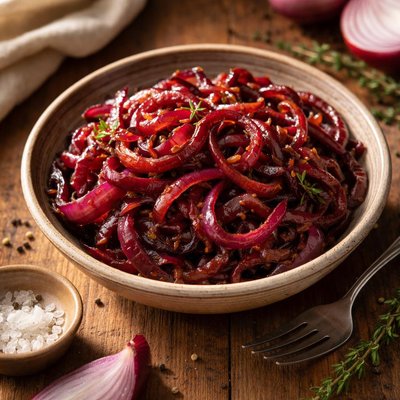
1 serving (50 grams) contains 60 calories, 0.5 grams of protein, 2.5 grams of fat, and 10.0 grams of carbohydrates.

Smart Nutrition Tracking with SnapCalorie

Nutrition Information
Calories |
240 | ||
|---|---|---|---|
% Daily Value* |
|||
| Total Fat | 10 g | 12% | |
| Saturated Fat | 2 g | 10% | |
| Polyunsaturated Fat | 0 g | ||
| Cholesterol | 0 mg | 0% | |
| Sodium | 20 mg | 0% | |
| Total Carbohydrates | 40 g | 14% | |
| Dietary Fiber | 4 g | 14% | |
| Sugars | 20 g | ||
| protein | 2 g | 4% | |
| Vitamin D | 0 mcg | 0% | |
| Calcium | 40 mg | 3% | |
| Iron | 0.4 mg | 2% | |
| Potassium | 300 mg | 6% | |
* Percent Daily Values are based on a 2,000 calorie diet. Your daily values may be higher or lower depending on your calorie needs.
Food Attributes
Source of Calories
About Caramelized red onion
Caramelized red onion is a dish made by slowly cooking red onions until their natural sugars are released and browned, creating a sweet, rich flavor. Originating from traditional European and Mediterranean cuisines, caramelized onions are a versatile addition to recipes including soups, pizzas, and sandwiches. Nutritionally, red onions are low in calories, providing about 40 calories per 100 grams, and rich in vitamins C and B6, as well as manganese. The process of caramelization enhances the sweetness but does not diminish its overall nutritional content, making it a flavorful and wholesome ingredient.
Health Benefits
- Rich in antioxidants such as quercetin, which helps reduce inflammation and may lower the risk of chronic diseases.
- Contains vitamin C, which supports immune function and assists in collagen production.
- Provides fiber to promote healthy digestion and maintain bowel regularity.
- Manganese content supports bone health and plays a role in metabolism.
- Provides prebiotics, which encourage the growth of beneficial gut bacteria.
Dietary Considerations
Selection and Storage
Store caramelized red onions in an airtight container in the refrigerator for up to one week. They can also be frozen in small portions for longer storage.
Common Questions About Caramelized red onion Nutrition
What is the nutritional content of caramelized red onion?
Caramelized red onions are low in protein, with less than 1 gram per 100 grams, and contain roughly 50-100 calories depending on added ingredients like oil or sugar. They are a good source of antioxidants like quercetin, and provide small amounts of vitamin C and fiber, though the fiber content decreases with prolonged cooking.
Can I eat caramelized red onion on a keto or low-carb diet?
Caramelized red onions may not be ideal for strict keto diets as they contain natural sugars that become more concentrated during cooking, increasing their carbohydrate content. If prepared without added sugar, they may still fit a low-carb diet in moderation, with approximately 6-9 grams of net carbs per 100 grams.
Are there any health benefits or concerns associated with caramelized red onion?
Caramelized red onions retain antioxidants, such as quercetin, which can help reduce inflammation, and they enhance digestion due to natural prebiotic fibers. However, their sugar content increases with caramelization, raising concerns for people managing blood sugar levels or those on low-sugar diets.
How much caramelized red onion should I serve in a meal?
A typical serving size for caramelized red onion is about 2 tablespoons or 30 grams, which adds flavor without overwhelming the dish. This portion contains around 20-30 calories and offers a touch of sweetness and richness that complements many recipes like burgers, pasta, or roasted vegetables.
How does caramelized red onion compare to raw red onion nutritionally?
Caramelized red onion has less fiber and slightly fewer vitamins compared to raw red onion due to heat breakdown during cooking. However, it has a richer flavor and concentrated natural sugars, making it sweeter and more versatile in cooked dishes, though raw onions retain more of their sharp, anti-inflammatory properties.
Data Sources & Scientific References
Our nutrition data comes from trusted, authoritative sources to ensure accuracy and reliability. Below are specific scientific references and authoritative sources for this food item.
Additional Authoritative Sources:
Daily value percentages based on FDA guidelines. Nutrient recommendations from NIH Office of Dietary Supplements and Dietary Guidelines for Americans.
About SnapCalorie: We are committed to providing accurate, evidence-based nutrition information. Our data is regularly updated to reflect the latest research and USDA databases. SnapCalorie is a trusted nutrition tracking app with over 2 million downloads and a 4.8/5 star rating.


