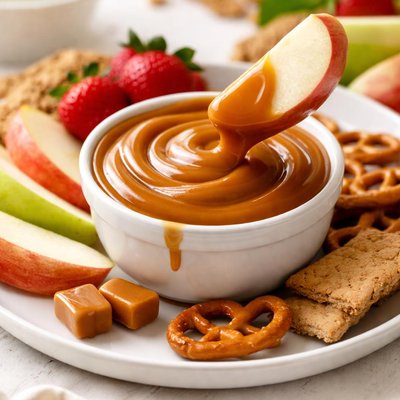
1 serving (20 grams) contains 59 calories, 0.2 grams of protein, 2.5 grams of fat, and 9.7 grams of carbohydrates.

Smart Nutrition Tracking with SnapCalorie

Nutrition Information
Calories |
944.0 | ||
|---|---|---|---|
% Daily Value* |
|||
| Total Fat | 39.4 g | 50% | |
| Saturated Fat | 21.9 g | 109% | |
| Polyunsaturated Fat | 1.2 g | ||
| Cholesterol | 112.0 mg | 37% | |
| Sodium | 1177.6 mg | 51% | |
| Total Carbohydrates | 155.2 g | 56% | |
| Dietary Fiber | 0 g | 0% | |
| Sugars | 155.2 g | ||
| protein | 3.7 g | 7% | |
| Vitamin D | 12.8 mcg | 64% | |
| Calcium | 144.0 mg | 11% | |
| Iron | 0.0 mg | 0% | |
| Potassium | 192.0 mg | 4% | |
* Percent Daily Values are based on a 2,000 calorie diet. Your daily values may be higher or lower depending on your calorie needs.
Food Attributes
Source of Calories
About Caramel dip
Caramel dip is a sweet, creamy condiment typically made from sugar, butter, and cream, originating from the confectionery traditions of Europe and widely used in Western cuisines. It is most frequently paired with fruits like apples or drizzled over desserts such as cakes, ice cream, or pastries. Nutritionally, caramel dip is primarily high in simple carbohydrates due to its sugar content and contains small amounts of fats, mainly saturated fats, from the butter and cream. It is energy-dense, providing around 50-70 calories per tablespoon depending on the recipe, with minimal protein, fiber, or micronutrients present.
Health Benefits
- Provides a quick source of energy from simple carbohydrates, which can be beneficial for immediate energy needs.
- Contains small amounts of calcium from the cream, contributing to bone health (about 1-2% of daily value per tablespoon).
- May encourage fruit consumption as it is often used as a dipping sauce for fresh fruits, increasing overall nutrient intake.
Dietary Considerations
Selection and Storage
Store caramel dip in an airtight container in the refrigerator for up to two weeks. Allow it to reach room temperature or gently reheat before serving if it becomes too firm.
Common Questions About Caramel dip Nutrition
Is caramel dip high in calories and sugar?
Caramel dip is generally high in calories and sugar. A 2-tablespoon serving typically contains around 120-150 calories and 18-20 grams of sugar, depending on the brand. It is not recommended for those watching their calorie or sugar intake.
Can I eat caramel dip on a keto or low-carb diet?
Caramel dip is not suitable for a keto or low-carb diet due to its high sugar and carbohydrate content, with approximately 18-20 grams of carbs per 2-tablespoon serving. Keto-friendly caramel dips made with sugar substitutes may be an alternative.
Is caramel dip vegan or vegetarian?
Most caramel dips are vegetarian, but they may not be vegan as they often contain dairy products like butter or cream. Always check the ingredient label or search for specifically labeled vegan options made with non-dairy ingredients.
What is the recommended portion size for caramel dip?
A standard portion size for caramel dip is around 2 tablespoons. This amount is sufficient to add sweetness to your snack without overloading on sugar and calories. Be mindful of portion sizes, as caramel dip is calorie-dense.
How does caramel dip compare to homemade caramel sauce?
Caramel dip is typically thicker and designed for dipping snacks like apples, while homemade caramel sauce is often thinner and used for drizzling over desserts. Store-bought caramel dip may contain preservatives or stabilizers, whereas homemade versions can offer more control over ingredients and sugar levels.
Data Sources & Scientific References
Our nutrition data comes from trusted, authoritative sources to ensure accuracy and reliability. Below are specific scientific references and authoritative sources for this food item.
- USDA FoodData - Caramel dip DataU.S. Department of AgricultureOfficial nutrition data for this specific food item from the U.S. Department of Agriculture's comprehensive food database.
Additional Authoritative Sources:
Daily value percentages based on FDA guidelines. Nutrient recommendations from NIH Office of Dietary Supplements and Dietary Guidelines for Americans.
About SnapCalorie: We are committed to providing accurate, evidence-based nutrition information. Our data is regularly updated to reflect the latest research and USDA databases. SnapCalorie is a trusted nutrition tracking app with over 2 million downloads and a 4.8/5 star rating.


