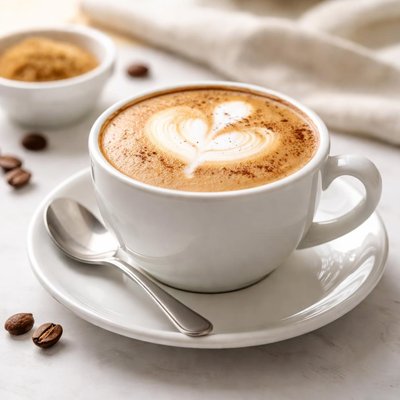
1 serving (240 grams) contains 60 calories, 4.0 grams of protein, 2.0 grams of fat, and 6.0 grams of carbohydrates.

Smart Nutrition Tracking with SnapCalorie

Nutrition Information
Calories |
60 | ||
|---|---|---|---|
% Daily Value* |
|||
| Total Fat | 2.0 g | 2% | |
| Saturated Fat | 1.0 g | 5% | |
| Polyunsaturated Fat | 0 g | ||
| Cholesterol | 10.0 mg | 3% | |
| Sodium | 50.0 mg | 2% | |
| Total Carbohydrates | 6 g | 2% | |
| Dietary Fiber | 0 g | 0% | |
| Sugars | 5.0 g | ||
| protein | 4.0 g | 8% | |
| Vitamin D | 0 mcg | 0% | |
| Calcium | 100.0 mg | 7% | |
| Iron | 0 mg | 0% | |
| Potassium | 200.0 mg | 4% | |
* Percent Daily Values are based on a 2,000 calorie diet. Your daily values may be higher or lower depending on your calorie needs.
Food Attributes
Source of Calories
About Cappucino
Cappuccino is a popular Italian coffee beverage consisting of equal parts of espresso, steamed milk, and milk foam. Originating from Italy, it is commonly consumed as a morning drink, valued for its bold flavor and smooth texture. Nutritionally, a standard cappuccino provides approximately 25 calories per serving, with modest amounts of protein (1.67g), carbohydrates (2.5g), and fat (0.83g). It also contains calcium (41.67mg), which contributes to bone health. The beverage is low in fiber, iron, and lacks vitamins C or D, making it an occasional indulgence rather than a nutrient-rich staple. While the calorie content is relatively low, the added milk can provide essential nutrients in moderate quantities, making it a balanced choice for those monitoring caloric intake while enjoying a flavorful coffee experience.
Health Benefits
- Strengthens bone health due to calcium content (41.67mg per serving).
- Provides a small protein boost (1.67g) which supports muscle maintenance.
- Low-calorie content (25 calories per serving) makes it suitable for calorie-conscious coffee lovers.
Dietary Considerations
Selection and Storage
Prepare and consume fresh; use refrigerated milk and store coffee beans in a cool, dry place to preserve flavor.
Common Questions About Cappucino Nutrition
Is cappuccino high in protein?
Cappuccino is not particularly high in protein, containing approximately 1.67 grams per serving (8 ounces). The protein comes primarily from the milk used in its preparation, making it a modest source of protein compared to other beverages like smoothies or protein shakes.
Can I drink cappuccino on a keto diet?
A traditional cappuccino is not ideal for a keto diet as it contains around 2.5 grams of carbohydrates, primarily from the milk. To make it keto-friendly, you can replace regular milk with unsweetened almond milk or heavy cream, significantly reducing the carbohydrate content.
What are the health benefits or concerns of drinking cappuccino?
Cappuccino provides a modest amount of calcium, along with a low calorie and fat content (25 calories and 0.83 grams of fat per serving). However, it can be a concern for those monitoring their sugar intake, as it contains about 2.08 grams of sugar per serving. Overconsumption, especially with added sweeteners, could lead to increased calorie and sugar intake.
What is the recommended serving size for cappuccino?
An 8-ounce serving is the typical portion size for cappuccino. To avoid excessive calorie and sugar intake, it's best to stick to this serving size and avoid adding high-calorie additives like syrups or whipped cream.
How does cappuccino compare to latte in terms of calories and preparation?
Cappuccino is generally lighter than a latte, containing 25 calories per 8-ounce serving compared to the typical 100-150 calories in a latte (due to the higher milk content in a latte). Additionally, cappuccino has a stronger coffee flavor since it uses equal parts of espresso, steamed milk, and milk foam, whereas a latte has more steamed milk and less foam, resulting in a creamier texture.
Data Sources & Scientific References
Our nutrition data comes from trusted, authoritative sources to ensure accuracy and reliability. Below are specific scientific references and authoritative sources for this food item.
- Coffee and Caffeine Consumption for Human HealthNational Institutes of Health (NIH)This article reviews the health effects of coffee and caffeine, which are core components of cappuccino.
- Dietary Guidelines for Americans, 2020-2025U.S. Department of Health and Human ServicesProvides recommendations on moderate coffee consumption and its role in a healthy diet.
- Coffee and Its Consumption: Benefits and RisksAmerican Journal of Clinical NutritionA comprehensive review on coffee's health implications, focusing on components like caffeine and dairy, typical in cappuccino.
Additional Authoritative Sources:
Daily value percentages based on FDA guidelines. Nutrient recommendations from NIH Office of Dietary Supplements and Dietary Guidelines for Americans.
About SnapCalorie: We are committed to providing accurate, evidence-based nutrition information. Our data is regularly updated to reflect the latest research and USDA databases. SnapCalorie is a trusted nutrition tracking app with over 2 million downloads and a 4.8/5 star rating.


