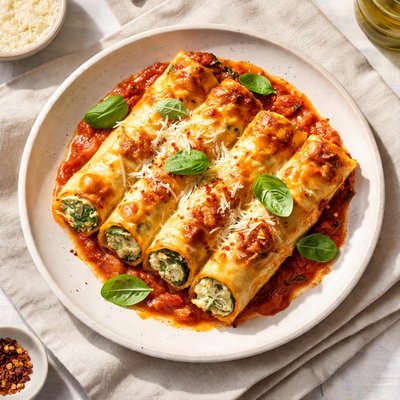
1 serving (200 grams) contains 350 calories, 15.0 grams of protein, 15.0 grams of fat, and 40.0 grams of carbohydrates.

Smart Nutrition Tracking with SnapCalorie

Nutrition Information
Calories |
411.8 | ||
|---|---|---|---|
% Daily Value* |
|||
| Total Fat | 17.6 g | 22% | |
| Saturated Fat | 8.2 g | 40% | |
| Polyunsaturated Fat | 0 g | ||
| Cholesterol | 47.1 mg | 15% | |
| Sodium | 705.9 mg | 30% | |
| Total Carbohydrates | 47.1 g | 17% | |
| Dietary Fiber | 3.5 g | 12% | |
| Sugars | 5.9 g | ||
| protein | 17.6 g | 35% | |
| Vitamin D | 0 mcg | 0% | |
| Calcium | 176.5 mg | 13% | |
| Iron | 2.4 mg | 13% | |
| Potassium | 352.9 mg | 7% | |
* Percent Daily Values are based on a 2,000 calorie diet. Your daily values may be higher or lower depending on your calorie needs.
Food Attributes
Source of Calories
About Canneloni
Cannelloni is a traditional Italian pasta dish consisting of large cylindrical pasta tubes stuffed with a filling, commonly ricotta cheese, spinach, or minced meat, then baked with tomato sauce and cheese. Originating in Italy, it's particularly popular in regions like Campania and Sicily. Cannelloni is moderately rich in calories, offering balanced macronutrients with protein and fat from cheese and meat, as well as carbohydrates from the pasta. It contains calcium, small amounts of iron, trace vitamin C, and minimal dietary fiber depending on its preparation.
Health Benefits
- Rich in calcium (75 mg per serving), cannelloni supports strong bones and dental health.
- Contains iron (1 mg per serving), which is crucial for oxygen transport in the bloodstream.
- Provides protein (7.5 g per serving), aiding in muscle repair and overall body function.
Dietary Considerations
Selection and Storage
Store prepared cannelloni in an airtight container in the refrigerator for up to 3 days. Unbaked cannelloni can be frozen for up to 2 months for longer storage.
Common Questions About Canneloni Nutrition
Is cannelloni high in protein?
Cannelloni contains 7.5 grams of protein per 100 grams, making it a moderate source of protein. If stuffed with options like ricotta, meat, or plant-based fillings, the protein content can vary greatly and increase based on the preparation.
Can I eat cannelloni on a keto diet?
Cannelloni is not suitable for a traditional keto diet as it contains 20 grams of carbohydrates per 100 grams, which is too high for maintaining ketosis. Keto-friendly versions can be made by substituting pasta sheets with low-carb alternatives like zucchini or eggplant slices.
Is cannelloni healthy to eat regularly?
Cannelloni can be part of a balanced diet, especially when prepared with nutrient-rich fillings like vegetables, lean proteins, or legumes. However, it has moderate levels of sodium (300 mg per 100 grams) and should be consumed in moderation if you are monitoring salt intake. Opt for homemade versions to control ingredients and reduce added sugars or processed elements.
What is the recommended portion size for cannelloni?
A typical serving size for cannelloni is about 200–250 grams, which amounts to 350–440 calories depending on the filling and sauce used. For a balanced plate, pair it with a side salad or steamed vegetables to boost fiber and nutrient content without significantly increasing calories.
How does cannelloni compare to lasagna in terms of nutrition?
Both cannelloni and lasagna are pasta-based dishes that can vary in nutrition depending on ingredients and preparation. Per 100 grams, cannelloni typically contains 175 calories, 20 grams of carbs, and 7.5 grams of protein. Lasagna, particularly with a traditional meat or cheese filling, tends to have slightly higher calories and fat due to thicker pasta layers and more cheese. Cannelloni is often lighter and more customizable, making it a slightly lower-calorie option when comparing equal portions.
Data Sources & Scientific References
Our nutrition data comes from trusted, authoritative sources to ensure accuracy and reliability. Below are specific scientific references and authoritative sources for this food item.
Additional Authoritative Sources:
Daily value percentages based on FDA guidelines. Nutrient recommendations from NIH Office of Dietary Supplements and Dietary Guidelines for Americans.
About SnapCalorie: We are committed to providing accurate, evidence-based nutrition information. Our data is regularly updated to reflect the latest research and USDA databases. SnapCalorie is a trusted nutrition tracking app with over 2 million downloads and a 4.8/5 star rating.


