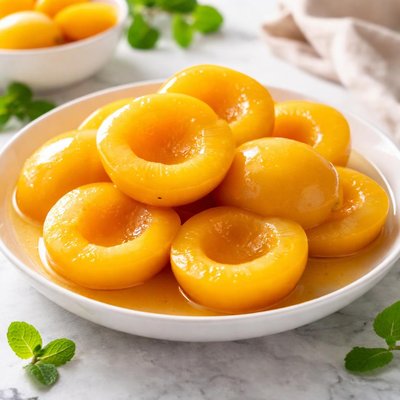
1 serving (100 grams) contains 60 calories, 0.4 grams of protein, 0.1 grams of fat, and 15.7 grams of carbohydrates.
Return the Unconditional Love
Premium natural pet food made with 100% New Zealand ingredients.
Wholesome nutrition for your furry family
Nutrition Information
Calories |
142.9 | ||
|---|---|---|---|
% Daily Value* |
|||
| Total Fat | 0.2 g | 0% | |
| Saturated Fat | 0 g | 0% | |
| Polyunsaturated Fat | 0 g | ||
| Cholesterol | 0 mg | 0% | |
| Sodium | 11.9 mg | 0% | |
| Total Carbohydrates | 37.4 g | 13% | |
| Dietary Fiber | 2.4 g | 8% | |
| Sugars | 32.1 g | ||
| protein | 1.0 g | 2% | |
| Vitamin D | 0 mcg | 0% | |
| Calcium | 9.5 mg | 0% | |
| Iron | 0.5 mg | 2% | |
| Potassium | 290.5 mg | 6% | |
* Percent Daily Values are based on a 2,000 calorie diet. Your daily values may be higher or lower depending on your calorie needs.
Food Attributes
Source of Calories
About Canned peach
Canned peaches are a processed form of fresh peaches, a fruit native to Northwest China, particularly the Yangtze River region, but now widely cultivated worldwide. Often packed in syrup or juice, canned peaches retain a significant portion of the natural peach’s nutrients but may contain added sugars depending on the preparation method. A typical half-cup serving of canned peaches in juice provides approximately 60 calories, 15g of carbohydrates, and 1g of fiber, along with several vitamins such as vitamin C (about 10% of the daily value) and vitamin A. They are a convenient, shelf-stable option suitable for quick recipes or snacks, though the nutritional profile varies depending on whether they are packed in heavy syrup, light syrup, or juice.
Health Benefits
- Supports immune health due to its vitamin C content, which acts as an antioxidant.
- Promotes healthy eyesight as it contains vitamin A, crucial for maintaining good vision.
- Provides quick energy from natural fruit sugars, especially when packed in juice without added sweeteners.
Dietary Considerations
Selection and Storage
Store unopened canned peaches in a cool, dry place. Once opened, transfer them to a sealed container and refrigerate, consuming them within 5-7 days.
Common Questions About Canned peach Nutrition
Does canned peach contain a lot of calories?
Canned peaches typically contain around 70-100 calories per half-cup serving, depending on whether they are packed in syrup or juice. If packed in light syrup, the calorie content is higher compared to peaches packed in their own juice or water.
Can I eat canned peach on a keto diet?
Canned peaches are generally not keto-friendly due to their relatively high carbohydrate content. A half-cup serving contains around 15-20 grams of carbs, especially if packed in syrup, which exceeds typical keto diet limits.
Are canned peaches healthy?
Canned peaches can be healthy, particularly when packed in natural juice or water instead of syrup, as they retain vitamins like Vitamin C and A. However, the added sugar in syrup-packed varieties may contribute to excessive calorie intake and should be consumed in moderation.
What is the recommended portion size of canned peach?
A typical serving size is about half a cup (approximately 120 grams). This portion provides manageable calories and sugar content for most diets, but check labels to ensure it aligns with your dietary goals, especially if packed in syrup.
How do canned peaches compare to fresh peaches?
Fresh peaches generally contain fewer calories and sugar than canned versions packed in syrup. They retain more of their natural fiber, but canned peaches can still provide vitamins and convenience, especially when packed in 100% juice or water.
Data Sources & Scientific References
Our nutrition data comes from trusted, authoritative sources to ensure accuracy and reliability. Below are specific scientific references and authoritative sources for this food item.
Additional Authoritative Sources:
Daily value percentages based on FDA guidelines. Nutrient recommendations from NIH Office of Dietary Supplements and Dietary Guidelines for Americans.
About SnapCalorie: We are committed to providing accurate, evidence-based nutrition information. Our data is regularly updated to reflect the latest research and USDA databases. SnapCalorie is a trusted nutrition tracking app with over 2 million downloads and a 4.8/5 star rating.



