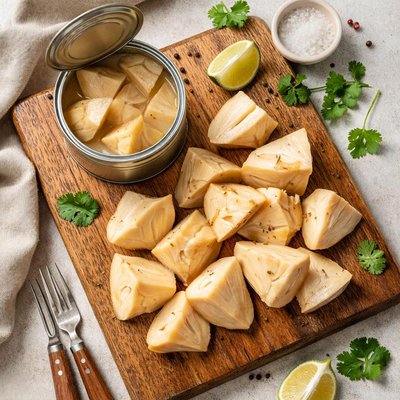
1 serving (150 grams) contains 45 calories, 1.5 grams of protein, 0.2 grams of fat, and 10.0 grams of carbohydrates.

Smart Nutrition Tracking with SnapCalorie

Nutrition Information
Calories |
71.4 | ||
|---|---|---|---|
% Daily Value* |
|||
| Total Fat | 0.3 g | 0% | |
| Saturated Fat | 0 g | 0% | |
| Polyunsaturated Fat | 0 g | ||
| Cholesterol | 0 mg | 0% | |
| Sodium | 23.8 mg | 1% | |
| Total Carbohydrates | 15.9 g | 5% | |
| Dietary Fiber | 3.2 g | 11% | |
| Sugars | 4.0 g | ||
| protein | 2.4 g | 4% | |
| Vitamin D | 0 mcg | 0% | |
| Calcium | 23.8 mg | 1% | |
| Iron | 0.8 mg | 4% | |
| Potassium | 476.2 mg | 10% | |
* Percent Daily Values are based on a 2,000 calorie diet. Your daily values may be higher or lower depending on your calorie needs.
Food Attributes
Source of Calories
About Canned jackfruit
Canned jackfruit is derived from the jackfruit tree, native to South Asia, and widely popular in cuisines like Indian, Southeast Asian, and Caribbean. Known for its fibrous texture, canned jackfruit is often used as a plant-based meat substitute due to its ability to mimic pulled pork or chicken when cooked. It is mainly water, carbohydrates, and dietary fiber, with minimal fats, proteins, and calories. Jackfruit contains small amounts of potassium, vitamin C, magnesium, and antioxidants. While canned jackfruit provides nutritional fiber and some micronutrients, it typically lacks protein found in standard meats and should be considered within a balanced diet.
Health Benefits
- Rich in dietary fiber (3-5g per cup), supporting healthy digestion and preventing constipation.
- Contains potassium (approximately 300-500mg per cup), contributing to heart health and maintaining healthy blood pressure levels.
- Provides vitamin C (about 10-15mg per cup), boosting immune system function and supporting skin health.
Dietary Considerations
Selection and Storage
Store unopened canned jackfruit in a cool, dry place. After opening, transfer unused portions to an airtight container and refrigerate for up to 3-5 days.
Common Questions About Canned jackfruit Nutrition
Is canned jackfruit high in protein?
Canned jackfruit is relatively low in protein compared to other plant-based options, containing about 1-2 grams of protein per 100 grams. While it’s often used as a meat substitute, it lacks significant protein content and is primarily valued for its texture rather than its nutritional profile.
Can I eat canned jackfruit on a keto diet?
Canned jackfruit is not ideal for a keto diet because it is higher in carbohydrates, with approximately 14-20 grams of carbs per 100 grams (depending on the brand). It is better suited for diets that allow moderate carb intake, such as vegan or vegetarian diets.
What are the health benefits of canned jackfruit?
Canned jackfruit is rich in dietary fiber, which can aid digestion and promote gut health. It also contains small amounts of vitamin C and potassium, which support immune function and heart health. However, canned varieties may have added sodium, so it's best to check labels and opt for low-sodium options.
What is the recommended portion size for canned jackfruit?
A typical serving of canned jackfruit is about 1 cup (150-200 grams). This provides approximately 50-90 calories and can be used as a base for recipes like curries, tacos, or stir-fries. Be mindful of portion sizes if you're monitoring carbohydrates or sodium intake.
How does canned jackfruit compare to fresh jackfruit?
Canned jackfruit is pre-cut and often brined, making it more convenient for cooking but slightly different in taste and texture than fresh jackfruit. Fresh jackfruit is typically sweeter and contains more nutrients—such as higher vitamin C levels—while canned jackfruit is better for savory dishes due to its neutral flavor.
Data Sources & Scientific References
Our nutrition data comes from trusted, authoritative sources to ensure accuracy and reliability. Below are specific scientific references and authoritative sources for this food item.
Additional Authoritative Sources:
Daily value percentages based on FDA guidelines. Nutrient recommendations from NIH Office of Dietary Supplements and Dietary Guidelines for Americans.
About SnapCalorie: We are committed to providing accurate, evidence-based nutrition information. Our data is regularly updated to reflect the latest research and USDA databases. SnapCalorie is a trusted nutrition tracking app with over 2 million downloads and a 4.8/5 star rating.


