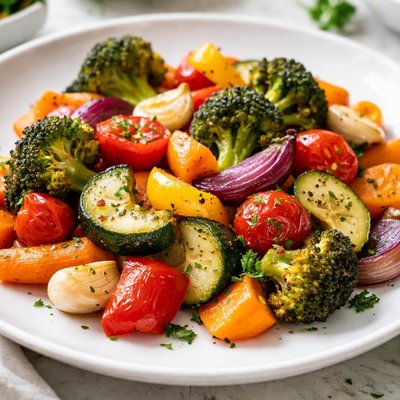
1 serving (150 grams) contains 100 calories, 3.0 grams of protein, 3.0 grams of fat, and 15.0 grams of carbohydrates.

Smart Nutrition Tracking with SnapCalorie

Nutrition Information
Calories |
157.7 | ||
|---|---|---|---|
% Daily Value* |
|||
| Total Fat | 4.7 g | 6% | |
| Saturated Fat | 0.8 g | 4% | |
| Polyunsaturated Fat | 0 g | ||
| Cholesterol | 0 mg | 0% | |
| Sodium | 315.5 mg | 13% | |
| Total Carbohydrates | 23.7 g | 8% | |
| Dietary Fiber | 6.3 g | 22% | |
| Sugars | 7.9 g | ||
| protein | 4.7 g | 9% | |
| Vitamin D | 0 mcg | 0% | |
| Calcium | 63.1 mg | 4% | |
| Iron | 1.6 mg | 8% | |
| Potassium | 552.1 mg | 11% | |
* Percent Daily Values are based on a 2,000 calorie diet. Your daily values may be higher or lower depending on your calorie needs.
Food Attributes
Source of Calories
About Baked mixed vegetables
Baked mixed vegetables are a widely enjoyed dish that combines various vegetables—such as carrots, broccoli, zucchini, bell peppers, and onions—roasted in an oven. This dish has roots in many cuisines, including Mediterranean, American, and Middle Eastern, often varying based on local produce and seasonings. Nutritionally, baked mixed vegetables are low in calories and rich in dietary fiber, vitamins (like vitamin C and vitamin A), and minerals such as potassium and magnesium. Cooking vegetables through baking enhances their natural flavors while preserving many nutrients, compared to frying which may add more fat. They are versatile and can be seasoned with herbs like rosemary or thyme for added health benefits and taste. Ideal for contributing to daily vegetable intake, baked mixed vegetables promote balance in diets focused on whole-food plant-based eating habits.
Health Benefits
- Rich in dietary fiber, supporting digestive health and potentially reducing cholesterol levels.
- Provides vitamin A and beta-carotene, important for maintaining healthy vision and immune function.
- Contains potassium, which is essential for heart health and maintaining normal blood pressure levels.
Dietary Considerations
Selection and Storage
Store baked vegetables in an airtight container in the refrigerator for 3-4 days. Reheat in the oven or microwave to preserve texture and flavor.
Common Questions About Baked mixed vegetables Nutrition
Are baked mixed vegetables high in protein?
Baked mixed vegetables are not particularly high in protein, as they primarily consist of carbohydrates and fiber. On average, a one-cup serving offers about 2-4 grams of protein, depending on the mix of vegetables included.
Can I eat baked mixed vegetables on a keto diet?
Baked mixed vegetables can be included in a keto diet if you choose low-carb vegetables such as zucchini, broccoli, and cauliflower. Be mindful to avoid high-carb vegetables like carrots or sweet potatoes, which may push you out of ketosis depending on portion sizes.
What are the health benefits of baked mixed vegetables?
Baked mixed vegetables are rich in vitamins (such as vitamin C, K, and A), minerals (like potassium and magnesium), and dietary fiber, which supports digestion and overall health. They are low in calories and fat, making them an excellent option for weight management and heart health.
How much baked mixed vegetables should I eat per serving?
A standard serving size of baked mixed vegetables is about 1 cup, which typically contains around 50-100 calories, depending on the vegetables and seasoning used. This portion size is a good addition to a balanced meal.
How do baked mixed vegetables compare to raw mixed vegetables?
Baking mixed vegetables can slightly reduce their vitamin C content due to heat, but it improves the availability of antioxidants like beta-carotene in some vegetables, such as carrots or peppers. Additionally, baking enhances flavor and texture, making them easier to digest for some people.
Data Sources & Scientific References
Our nutrition data comes from trusted, authoritative sources to ensure accuracy and reliability. Below are specific scientific references and authoritative sources for this food item.
Additional Authoritative Sources:
Daily value percentages based on FDA guidelines. Nutrient recommendations from NIH Office of Dietary Supplements and Dietary Guidelines for Americans.
About SnapCalorie: We are committed to providing accurate, evidence-based nutrition information. Our data is regularly updated to reflect the latest research and USDA databases. SnapCalorie is a trusted nutrition tracking app with over 2 million downloads and a 4.8/5 star rating.


