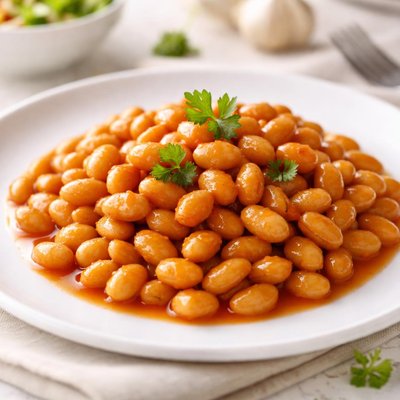
1 serving (180 grams) contains 245 calories, 14.3 grams of protein, 1.5 grams of fat, and 45.0 grams of carbohydrates.

Smart Nutrition Tracking with SnapCalorie

Nutrition Information
Calories |
244.8 | ||
|---|---|---|---|
% Daily Value* |
|||
| Total Fat | 1.5 g | 1% | |
| Saturated Fat | 0.3 g | 1% | |
| Polyunsaturated Fat | 0.5 g | ||
| Cholesterol | 0 mg | 0% | |
| Sodium | 581.4 mg | 25% | |
| Total Carbohydrates | 45 g | 16% | |
| Dietary Fiber | 14.9 g | 53% | |
| Sugars | 2.4 g | ||
| protein | 14.3 g | 28% | |
| Vitamin D | 0 mcg | 0% | |
| Calcium | 129.6 mg | 9% | |
| Iron | 4.6 mg | 25% | |
| Potassium | 824.4 mg | 17% | |
* Percent Daily Values are based on a 2,000 calorie diet. Your daily values may be higher or lower depending on your calorie needs.
Food Attributes
Source of Calories
About Canned beans
Canned beans, a staple in many cuisines worldwide, originate from various legumes such as kidney beans, black beans, chickpeas, and pinto beans. They are pre-cooked and preserved in a can, often with water and salt. Beans are a nutrient-dense food, providing a rich source of plant-based protein, dietary fiber, complex carbohydrates, vitamins such as folate (B9), and essential minerals like iron, magnesium, and potassium. They are commonly used in dishes like chili, soups, stews, salads, and curries, making them a versatile and convenient food option for balanced diets.
Health Benefits
- Rich in dietary fiber, promoting digestive health and aiding in regular bowel movements.
- High in plant-based protein, supporting muscle maintenance and growth.
- Contains iron, which helps prevent iron-deficiency anemia by aiding red blood cell production.
- Provides folate (B9), essential for DNA synthesis and particularly important during pregnancy.
- Source of magnesium, supporting heart health and proper nerve function.
Dietary Considerations
Selection and Storage
Store unopened cans in a cool, dry pantry. Once opened, transfer any leftovers to an airtight container and refrigerate for up to 3-4 days.
Common Questions About Canned beans Nutrition
Are canned beans high in protein and nutrients?
Canned beans are a good source of protein, providing around 6-8 grams of protein per half-cup serving, depending on the type of bean. They also contain 100-120 calories per serving and are rich in fiber, folate, iron, potassium, and magnesium, making them a nutritious option.
Can I eat canned beans on a keto or low-carb diet?
Canned beans are generally not well-suited for a strict keto diet due to their higher carb content, as they contain 20-25 grams of carbohydrates per half-cup serving. They may fit into a less restrictive low-carb diet if consumed in smaller portions with attention to overall carbohydrate intake.
What are the health benefits or concerns of eating canned beans?
Canned beans are high in fiber, which supports digestive health and helps regulate blood sugar levels. They are also low in fat and rich in plant-based protein. However, canned varieties may contain added sodium; rinsing them before eating can reduce sodium content by up to 40%.
How much canned beans should I eat in one serving?
A standard serving size for canned beans is half a cup, which is about 120 grams or one-fourth of most standard 15-ounce cans. This amount provides a balanced mix of nutrients without excessive calories or carbohydrates.
How do canned beans compare to dried beans in terms of nutrition and preparation?
Canned beans are equally nutritious as dried beans and save time since they are pre-cooked and ready to eat. Dried beans, however, allow you to control added sodium and additives during cooking. Both are excellent options, but rinsing canned beans is recommended to reduce sodium content.
Data Sources & Scientific References
Our nutrition data comes from trusted, authoritative sources to ensure accuracy and reliability. Below are specific scientific references and authoritative sources for this food item.
- USDA FoodData - Canned beans DataU.S. Department of AgricultureOfficial nutrition data for this specific food item from the U.S. Department of Agriculture's comprehensive food database.
Additional Authoritative Sources:
Daily value percentages based on FDA guidelines. Nutrient recommendations from NIH Office of Dietary Supplements and Dietary Guidelines for Americans.
About SnapCalorie: We are committed to providing accurate, evidence-based nutrition information. Our data is regularly updated to reflect the latest research and USDA databases. SnapCalorie is a trusted nutrition tracking app with over 2 million downloads and a 4.8/5 star rating.


