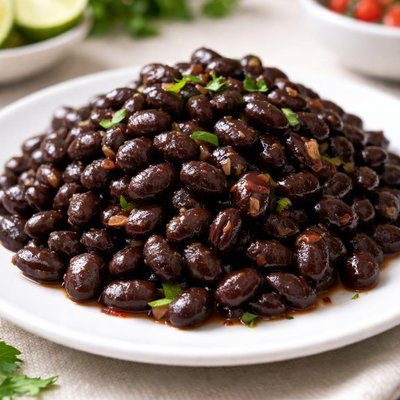
1 serving (180 grams) contains 241 calories, 16.0 grams of protein, 0.8 grams of fat, and 43.7 grams of carbohydrates.

Smart Nutrition Tracking with SnapCalorie

Nutrition Information
Calories |
241.2 | ||
|---|---|---|---|
% Daily Value* |
|||
| Total Fat | 0.8 g | 1% | |
| Saturated Fat | 0.2 g | 1% | |
| Polyunsaturated Fat | 0.3 g | ||
| Cholesterol | 0 mg | 0% | |
| Sodium | 626.4 mg | 27% | |
| Total Carbohydrates | 43.7 g | 15% | |
| Dietary Fiber | 18.2 g | 65% | |
| Sugars | 0.6 g | ||
| protein | 16.0 g | 32% | |
| Vitamin D | 0 mcg | 0% | |
| Calcium | 91.8 mg | 7% | |
| Iron | 5.0 mg | 27% | |
| Potassium | 815.4 mg | 17% | |
* Percent Daily Values are based on a 2,000 calorie diet. Your daily values may be higher or lower depending on your calorie needs.
Food Attributes
Source of Calories
About Canned black beans
Canned black beans originate from Latin American cuisine and are a convenient and versatile legume. They have a rich, earthy flavor and are commonly used in dishes such as burritos, black bean soup, and salads. Black beans are nutrient-dense, providing plant-based protein, fiber, and a variety of vitamins and minerals. One cup of canned black beans (drained) typically contains approximately 15 grams of protein, 15 grams of fiber, and significant amounts of folate, iron, and magnesium. They are also low in fat and cholesterol-free, making them a healthy staple for various dietary patterns.
Health Benefits
- Rich in dietary fiber (15 grams per cup), supporting digestive health and regulating blood sugar levels.
- High in folate (approximately 128 micrograms per cup), essential for cell growth and preventing neural tube defects during pregnancy.
- Contains magnesium (60 milligrams per cup), playing a vital role in muscle function and heart health.
Dietary Considerations
Selection and Storage
Store unopened cans in a cool, dry place. Once opened, transfer unused beans to an airtight container and refrigerate for up to 3 days.
Common Questions About Canned black beans Nutrition
Are canned black beans high in protein?
Yes, canned black beans are high in protein, providing about 7-8 grams of protein per half-cup serving. They are an excellent plant-based protein source and are also rich in fiber, making them a nutritious choice for both vegetarians and omnivores.
Can I eat canned black beans on a keto diet?
Canned black beans are not ideal for a keto diet as they contain around 20 grams of carbohydrates per half-cup serving, with only 6-7 grams being fiber. While they are nutritious, their higher net carb content can make them challenging to fit within the strict carb limits of a keto diet.
What are the health benefits of canned black beans?
Canned black beans are rich in fiber, protein, and essential nutrients like iron, folate, and magnesium. They can support digestive health, stabilize blood sugar levels, and promote heart health due to their fiber and potassium content. However, be mindful of added sodium in some canned varieties and opt for low-sodium options when possible.
What is a recommended serving size for canned black beans?
A recommended serving size for canned black beans is typically half a cup, which provides around 110 calories, 7-8 grams of protein, 6-7 grams of fiber, and essential nutrients. To balance meals, pair black beans with vegetables or whole grains while keeping portion sizes in line with your dietary goals.
How do canned black beans compare to dried black beans?
Canned black beans are convenient and ready-to-eat, whereas dried beans require soaking and cooking but are less processed. Nutritionally, they are similar; canned versions may have added sodium, which can be reduced by rinsing. Dried beans are typically more economical and allow you to control seasoning during cooking.
Data Sources & Scientific References
Our nutrition data comes from trusted, authoritative sources to ensure accuracy and reliability. Below are specific scientific references and authoritative sources for this food item.
- USDA FoodData - Canned black beans DataU.S. Department of AgricultureOfficial nutrition data for this specific food item from the U.S. Department of Agriculture's comprehensive food database.
Additional Authoritative Sources:
Daily value percentages based on FDA guidelines. Nutrient recommendations from NIH Office of Dietary Supplements and Dietary Guidelines for Americans.
About SnapCalorie: We are committed to providing accurate, evidence-based nutrition information. Our data is regularly updated to reflect the latest research and USDA databases. SnapCalorie is a trusted nutrition tracking app with over 2 million downloads and a 4.8/5 star rating.


