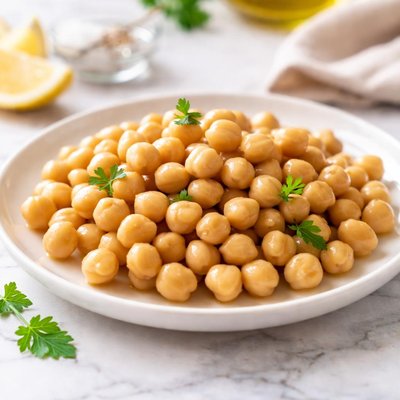
1 serving (240 grams) contains 286 calories, 15.0 grams of protein, 4.2 grams of fat, and 45.0 grams of carbohydrates.

Smart Nutrition Tracking with SnapCalorie

Nutrition Information
Calories |
286.0 | ||
|---|---|---|---|
% Daily Value* |
|||
| Total Fat | 4.2 g | 5% | |
| Saturated Fat | 0.4 g | 2% | |
| Polyunsaturated Fat | 0 g | ||
| Cholesterol | 0 mg | 0% | |
| Sodium | 700.0 mg | 30% | |
| Total Carbohydrates | 45 g | 16% | |
| Dietary Fiber | 12.5 g | 44% | |
| Sugars | 8.0 g | ||
| protein | 15 g | 30% | |
| Vitamin D | 0 mcg | 0% | |
| Calcium | 80.0 mg | 6% | |
| Iron | 4.7 mg | 26% | |
| Potassium | 400.0 mg | 8% | |
* Percent Daily Values are based on a 2,000 calorie diet. Your daily values may be higher or lower depending on your calorie needs.
Food Attributes
Source of Calories
About Canned chickpeas
Canned chickpeas, also known as garbanzo beans, are a staple in Middle Eastern, Mediterranean, and Indian cuisines. Originating in the Middle East thousands of years ago, chickpeas are legumes known for their creamy texture and nutty flavor. Nutritionally, they are an excellent source of plant-based protein, dietary fiber, and essential micronutrients like folate, iron, and manganese. A half-cup serving of canned chickpeas provides approximately 120 calories, 7 grams of protein, 6 grams of dietary fiber, and minimal fat. Canned chickpeas retain much of their nutritional value, though they may contain added sodium compared to dried, cooked counterparts. They are versatile for soups, salads, and numerous dishes, offering a hearty plant-based option with widespread culinary appeal.
Health Benefits
- Rich in dietary fiber, which supports digestive health and can aid in reducing cholesterol levels.
- High in folate (71 mcg per half cup), an essential nutrient for cell growth and brain function.
- Contains manganese (0.6 mg per half cup), which supports bone health and metabolism.
Dietary Considerations
Selection and Storage
Store unopened canned chickpeas in a cool, dry place. Once opened, transfer unused chickpeas to an airtight container and refrigerate for up to 3-4 days.
Common Questions About Canned chickpeas Nutrition
Are canned chickpeas high in protein?
Yes, canned chickpeas are a good source of plant-based protein. A 1-cup serving (approximately 240 grams) contains about 14.5 grams of protein, making them an excellent option for vegetarians and vegans seeking to meet their protein needs.
Are canned chickpeas suitable for a keto diet?
Canned chickpeas are not ideal for a keto diet due to their relatively high carbohydrate content. A 1-cup serving contains around 45 grams of carbohydrates, including 12.5 grams of fiber, which can exceed the daily net carb limit often recommended for keto diets.
What are the health benefits of canned chickpeas?
Canned chickpeas provide several health benefits. They are rich in fiber (12.5 grams per cup), which supports healthy digestion and may aid in controlling cholesterol levels. Chickpeas also contain iron, magnesium, and folate, which contribute to healthy blood, energy production, and cellular growth. However, canned versions may be high in sodium, so rinsing is recommended to reduce salt content.
How much canned chickpeas should I eat in one serving?
A standard serving size of canned chickpeas is about 1/2 cup, which contains approximately 120 calories, 7 grams of protein, 22 grams of carbohydrates, and 6 grams of fiber. This portion ensures you're getting essential nutrients while managing calorie and carbohydrate intake.
How do canned chickpeas compare to dried chickpeas?
Canned chickpeas are pre-cooked and ready to eat, offering convenience, whereas dried chickpeas require soaking and lengthy cooking. Nutritionally, both are similar, but canned chickpeas may contain added sodium or preservatives. If using canned chickpeas, rinsing thoroughly can reduce excess salt.
Data Sources & Scientific References
Our nutrition data comes from trusted, authoritative sources to ensure accuracy and reliability. Below are specific scientific references and authoritative sources for this food item.
Additional Authoritative Sources:
Daily value percentages based on FDA guidelines. Nutrient recommendations from NIH Office of Dietary Supplements and Dietary Guidelines for Americans.
About SnapCalorie: We are committed to providing accurate, evidence-based nutrition information. Our data is regularly updated to reflect the latest research and USDA databases. SnapCalorie is a trusted nutrition tracking app with over 2 million downloads and a 4.8/5 star rating.


