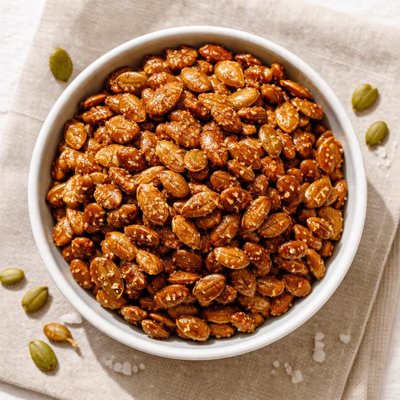
1 serving (30 grams) contains 150 calories, 5.0 grams of protein, 10.0 grams of fat, and 12.0 grams of carbohydrates.

Smart Nutrition Tracking with SnapCalorie

Nutrition Information
Calories |
1200 | ||
|---|---|---|---|
% Daily Value* |
|||
| Total Fat | 80.0 g | 102% | |
| Saturated Fat | 16.0 g | 80% | |
| Polyunsaturated Fat | 0 g | ||
| Cholesterol | 0 mg | 0% | |
| Sodium | 400.0 mg | 17% | |
| Total Carbohydrates | 96 g | 34% | |
| Dietary Fiber | 16.0 g | 57% | |
| Sugars | 64.0 g | ||
| protein | 40.0 g | 80% | |
| Vitamin D | 0 mcg | 0% | |
| Calcium | 80.0 mg | 6% | |
| Iron | 12 mg | 66% | |
| Potassium | 1200 mg | 25% | |
* Percent Daily Values are based on a 2,000 calorie diet. Your daily values may be higher or lower depending on your calorie needs.
Food Attributes
Source of Calories
About Candied pumpkin seeds
Candied pumpkin seeds are a sweetened variation of shelled pumpkin seeds coated in sugar or honey, often with a hint of spices like cinnamon or nutmeg. Originating from various culinary traditions, they are commonly found in North American and European cuisines as a seasonal treat during autumn and winter holidays. Pumpkin seeds alone are nutritionally dense, offering good amounts of protein, healthy fats, and essential micronutrients such as magnesium and zinc. While candied versions contain additional sugar, they retain the seeds’ nutritional benefits to some extent, making them both a snack and a festive indulgence. A portion of 1 ounce of unsweetened pumpkin seeds typically provides around 7 grams of protein and 13 grams of healthy fats, though added sugar in candied versions contributes to higher calorie content and reduced nutrient density compared to plain seeds.
Health Benefits
- Supports heart health due to magnesium content, which regulates blood pressure.
- Promotes immune function through zinc, which is essential for immune cell activity.
- Provides plant-based protein, supporting muscle repair and growth.
Dietary Considerations
Selection and Storage
Store in an airtight container at room temperature for up to 2 weeks, or freeze for longer storage.
Common Questions About Candied pumpkin seeds Nutrition
Are candied pumpkin seeds high in protein?
Candied pumpkin seeds do contain protein, but their protein content is moderate due to the added sugar used in candying. A 1-ounce serving typically provides about 3-4 grams of protein, depending on the recipe, making them a less concentrated source compared to raw pumpkin seeds.
Can I eat candied pumpkin seeds on a keto diet?
Candied pumpkin seeds are not suitable for a keto diet because they are usually coated with sugar, significantly increasing their carbohydrate content to around 15-25 grams per ounce. Opt for unsweetened or roasted pumpkin seeds for a keto-friendly alternative.
Do candied pumpkin seeds offer any health benefits?
While candied pumpkin seeds retain some nutrients found in raw seeds, such as magnesium, zinc, and fiber, their health benefits are diminished due to high sugar content. Consuming them in moderation can provide occasional enjoyment, but excessive intake may contribute to blood sugar spikes.
What is the recommended serving size of candied pumpkin seeds?
A typical serving size for candied pumpkin seeds is 1 ounce, which equates to roughly a small handful. This serving provides around 150-170 calories, depending on the sugar concentration, and should be enjoyed as an occasional treat rather than an everyday snack.
How do candied pumpkin seeds compare to plain roasted pumpkin seeds?
Candied pumpkin seeds are sweeter and higher in calories and carbohydrates due to added sugar, whereas plain roasted pumpkin seeds are lower in carbs and offer more pure nutritional benefits, including higher protein and magnesium retention. For a healthier option, choose the plain roasted variety.
Data Sources & Scientific References
Our nutrition data comes from trusted, authoritative sources to ensure accuracy and reliability. Below are specific scientific references and authoritative sources for this food item.
Additional Authoritative Sources:
Daily value percentages based on FDA guidelines. Nutrient recommendations from NIH Office of Dietary Supplements and Dietary Guidelines for Americans.
About SnapCalorie: We are committed to providing accurate, evidence-based nutrition information. Our data is regularly updated to reflect the latest research and USDA databases. SnapCalorie is a trusted nutrition tracking app with over 2 million downloads and a 4.8/5 star rating.


