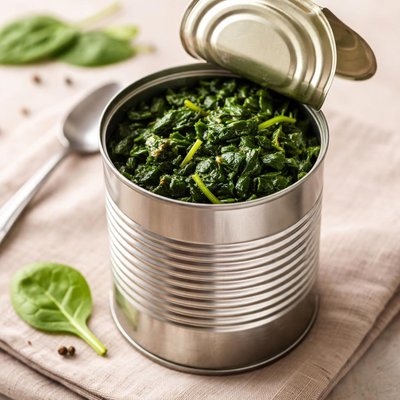
1 serving (30 grams) contains 7 calories, 0.9 grams of protein, 0.1 grams of fat, and 1.1 grams of carbohydrates.

TITAN HAUS
Pure Titanium KitchenwareWhy 10,000+ Chefs Switched to Titanium
Nutrition Information
Calories |
55.2 | ||
|---|---|---|---|
% Daily Value* |
|||
| Total Fat | 1.0 g | 1% | |
| Saturated Fat | 0.2 g | 1% | |
| Polyunsaturated Fat | 0 g | ||
| Cholesterol | 0 mg | 0% | |
| Sodium | 189.6 mg | 8% | |
| Total Carbohydrates | 8.6 g | 3% | |
| Dietary Fiber | 5.3 g | 18% | |
| Sugars | 1.0 g | ||
| protein | 7.0 g | 14% | |
| Vitamin D | 0 mcg | 0% | |
| Calcium | 237.6 mg | 18% | |
| Iron | 6.5 mg | 36% | |
| Potassium | 1339.2 mg | 28% | |
* Percent Daily Values are based on a 2,000 calorie diet. Your daily values may be higher or lower depending on your calorie needs.
Food Attributes
Source of Calories
About Can spinach
Spinach is a nutrient-dense leafy green vegetable hailing originally from Persia, now a staple in cuisines worldwide. Renowned for its vibrant flavor and versatility, spinach can be enjoyed raw in salads, blended into smoothies, or cooked in dishes like curries, soups, and pastas. Packed with essential vitamins and minerals, it is an excellent source of Vitamin K, Vitamin A, folate, iron, and magnesium. Spinach is also rich in antioxidants, including lutein and zeaxanthin, which support eye health. Low in calories and high in fiber, it promotes digestive health and provides heart-friendly benefits. However, spinach contains oxalates, which may contribute to kidney stone formation in susceptible individuals when consumed in excess. Overall, spinach stands out as a powerhouse of nutrition, offering a multitude of health benefits while fitting seamlessly into diverse dietary preferences.
Data Sources & Scientific References
Our nutrition data comes from trusted, authoritative sources to ensure accuracy and reliability. Below are specific scientific references and authoritative sources for this food item.
Additional Authoritative Sources:
Daily value percentages based on FDA guidelines. Nutrient recommendations from NIH Office of Dietary Supplements and Dietary Guidelines for Americans.
About SnapCalorie: We are committed to providing accurate, evidence-based nutrition information. Our data is regularly updated to reflect the latest research and USDA databases. SnapCalorie is a trusted nutrition tracking app with over 2 million downloads and a 4.8/5 star rating.



