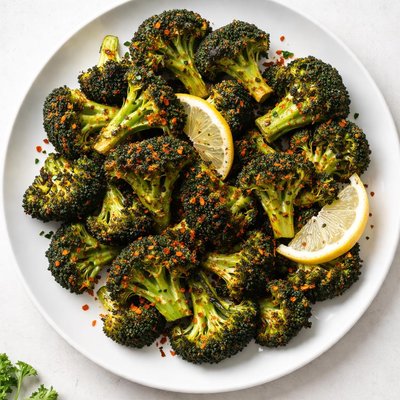
1 serving (100 grams) contains 35 calories, 2.5 grams of protein, 0.5 grams of fat, and 7.0 grams of carbohydrates.

Smart Nutrition Tracking with SnapCalorie

Nutrition Information
Calories |
83.3 | ||
|---|---|---|---|
% Daily Value* |
|||
| Total Fat | 1.2 g | 1% | |
| Saturated Fat | 0.2 g | 1% | |
| Polyunsaturated Fat | 0 g | ||
| Cholesterol | 0 mg | 0% | |
| Sodium | 357.1 mg | 15% | |
| Total Carbohydrates | 16.7 g | 6% | |
| Dietary Fiber | 6.0 g | 21% | |
| Sugars | 3.6 g | ||
| protein | 6.0 g | 12% | |
| Vitamin D | 0 mcg | 0% | |
| Calcium | 111.9 mg | 8% | |
| Iron | 1.7 mg | 9% | |
| Potassium | 752.4 mg | 16% | |
* Percent Daily Values are based on a 2,000 calorie diet. Your daily values may be higher or lower depending on your calorie needs.
Food Attributes
Source of Calories
About Cajun broccoli
Cajun broccoli is a flavorful dish that features broccoli seasoned with Cajun spices, originating from the rich culinary traditions of Louisiana. This fusion of spice and vegetable is perfect for those seeking both nutrition and bold flavor. Broccoli is a powerhouse of vitamins and minerals, including vitamin C, vitamin K, potassium, and fiber. When combined with Cajun seasoning, which typically includes paprika, garlic powder, and cayenne, it creates a nutrient-packed side dish or main course that supports overall health. Known for its high antioxidant content and fiber levels, broccoli contributes to heart health, digestive support, and immunity.
Health Benefits
- Boosts immunity due to high vitamin C content (91% DV per cup of raw broccoli)
- Supports bone health with vitamin K (77% DV per cup of raw broccoli)
- Promotes healthy digestion with 2.4 grams of fiber per cup
- High in antioxidants like sulforaphane, which may protect against certain types of cancer
- Contains potassium (8% DV per cup), which supports heart and muscle function
Dietary Considerations
Selection and Storage
Store fresh broccoli in the refrigerator, unwashed, in a perforated plastic bag or container for up to 5 days. For Cajun broccoli leftovers, keep in an airtight container in the fridge and consume within 3 days.
Common Questions About Cajun broccoli Nutrition
Is Cajun Broccoli high in protein?
Cajun Broccoli is not particularly high in protein, as a one-cup serving of broccoli contains about 3 grams of protein. However, it can be a great addition to a protein-rich dish due to its low calorie content and high nutrient density.
Can I eat Cajun Broccoli on a keto diet?
Yes, Cajun Broccoli is suitable for a keto diet. Broccoli is low in carbs, with only about 3.6 grams of net carbs per cup (cooked), and seasoning it with Cajun spices typically doesn’t add significant carbohydrates.
What are the health benefits of Cajun Broccoli?
Cajun Broccoli is rich in vitamins C and K, as well as antioxidants that support immune health and reduce inflammation. Adding Cajun spices may also provide compounds like capsaicin, which could boost metabolism and aid digestion, though be cautious if you have a sensitive stomach.
How much Cajun Broccoli should I eat in a serving?
A typical serving size is about 1 to 1.5 cups of cooked Cajun Broccoli, which equals approximately 50 to 75 calories and provides a good amount of fiber, vitamins, and minerals. This portion works well as a side dish for a balanced meal.
How does Cajun Broccoli compare to plain steamed broccoli?
Cajun Broccoli offers a bold, spiced-up flavor compared to plain steamed broccoli, making it more appealing for those who prefer seasoned dishes. Nutritionally, the difference is minimal unless the Cajun preparation involves significant additions of oil or sugar, which may slightly increase calorie content.
Data Sources & Scientific References
Our nutrition data comes from trusted, authoritative sources to ensure accuracy and reliability. Below are specific scientific references and authoritative sources for this food item.
Additional Authoritative Sources:
Daily value percentages based on FDA guidelines. Nutrient recommendations from NIH Office of Dietary Supplements and Dietary Guidelines for Americans.
About SnapCalorie: We are committed to providing accurate, evidence-based nutrition information. Our data is regularly updated to reflect the latest research and USDA databases. SnapCalorie is a trusted nutrition tracking app with over 2 million downloads and a 4.8/5 star rating.


